

April 25, 2026
Orlando Can Keep Walt Disney. We've Got George Jenkins.
George Jenkins arrived in Florida at seventeen with nine dollars and built something Lakeland still lives inside. The story of Publix, told from the city that never let him leave.
There is a thing that happens to a man when he arrives in a place with nothing. George Washington Jenkins Jr. came into Tampa in the summer of 1925 with nine dollars in his pocket and a change of clothes, dropped off in the middle of a city he did not know, his plans for real estate already dissolving in the Florida heat before he'd so much as knocked on a door. He was seventeen years old. He had meant to make his fortune and go back to Georgia Tech. He did neither, and Florida has never been the same for it.
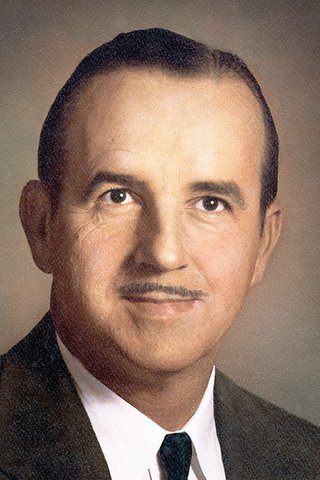 George Washington Jenkins Jr., founder of Publix Super Markets, Lakeland Florida
His people were grocers. His father ran a general store up in Harris City, Georgia, catering to the farming families of the piedmont, and the boy had grown up behind that counter learning what it meant to tend to people's needs. His sister Libby would say of him later, "He liked to get up and go. There was not a lazy bone in his body. I never saw anybody enjoy work as much as George." He was barely tall enough to see over the counter, she remembered, but he liked to wait on his father's customers, and customers called him Mr. Little George, which is as fine a thing as a small boy can be called. When the boll weevil came through in the twenties and took the cotton, it took Harris City with it, and the Jenkins family moved on, as families do when the land gives out. But the son had already absorbed the essential lesson — that a man who feeds people, feeds people well, earns something that goes beyond commerce. He earns their trust.
He did not set out to be a grocer. He pushed a broom for a Piggly Wiggly in St. Petersburg, then stocked shelves, then found himself managing the store within months, because that is what happens when a man who has been watching his whole life finally gets his hands on something. The store's weekly sales were thirteen hundred dollars when he took it. Eight months later they were six thousand. They moved him to the chain's largest location in Winter Haven, and he stayed four years, long enough to understand everything about the business except why it had to be done so poorly.
In 1930, with the Depression settling over the country like a long season with no end in sight, he quit. He took his savings of thirteen hundred dollars, sold stock to a handful of men who believed in him, and opened a store right next door to the Piggly Wiggly he had just left. There is something in that act worth considering. Not across town. Not in another city. Next door. He opened next door, because he was not running from something. He was running toward it.
The Piggly Wiggly brought in a handsome manager from Miami, charming and capable, and the two stores went at each other the way only two determined men who share a wall can go at each other. Piggly Wiggly would offer a premium; Publix would offer something better. It went on like that until the Piggly Wiggly closed, and George Jenkins was left standing.
But it was 1940 when you begin to understand what kind of man he truly was. He had an orange grove by then, bought during the worst of the Depression, and he put it up as collateral for a seventy-thousand-dollar loan to build what his bankers called, not without some bewilderment, his marble, glass, and stucco food palace. He closed his two existing stores. He put everything he had into one building in Winter Haven. It had air conditioning in a Florida that mostly did not. It had fluorescent lighting and wide aisles and music playing softly overhead and dairy cases designed to his specifications because nothing adequate yet existed. And at the entrance, there was a door that opened by itself — an electric eye, the kind he'd seen once at Penn Station in New York, installed now so that a woman carrying her groceries would not have to push her way out into the afternoon sun with her arms full. That door cost a great deal of money. He put it in anyway.
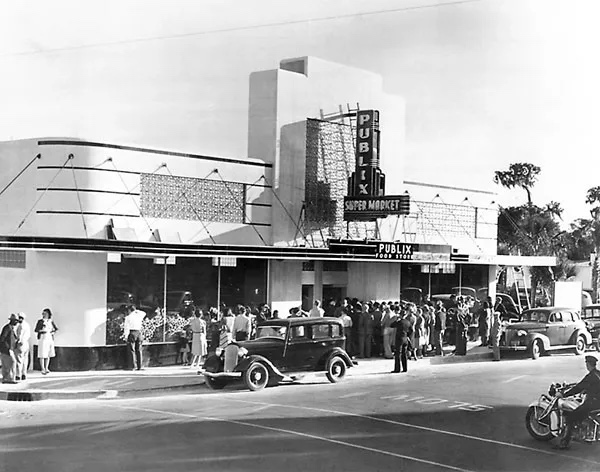 Publix Super Market grand opening circa 1940s Florida, crowd gathered outside George Jenkins' original food palace storefront
He did not invent the supermarket. He would have told you that himself. What he said was that the grocery business was not a science. "It's an art," he told the Tampa Tribune in 1988, and he had spent sixty years proving it.
By 1945 he had moved his headquarters to Lakeland, purchased a failing chain of nineteen stores, and set about rebuilding them one by one into something worthy of the name. Lakeland would remain the heart of it all. Not Orlando, not Miami, not Tampa. Lakeland — sitting there in the middle of the state on its chain of lakes, unhurried and unassuming, the kind of place that suits a man who never needed the flash of a thing, only the substance of it.
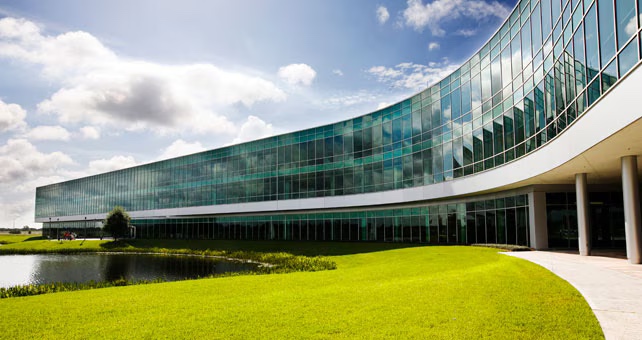 Publix Super Markets headquarters building in Lakeland, Florida — the company George Jenkins moved to Polk County in 1945
He called his employees associates, and he meant it. From the beginning he had wanted to give them stock in the company, make them owners of the thing they were building together — but on the heels of the Depression, he knew how hard it would be for them to buy in. So he gave each of them a two-dollar-a-week raise, held the money, and in fifty weeks it was paid in full and everyone in the store was a stockholder. Mark Hollis, who would rise to vice chairman of the company, understood what Jenkins was doing. "Mr. George knew," he said, "that if you own part of a company, you'll care more for it." They called him Mr. George, and they meant that too — because it let them be on a first-name basis with him while still showing their respect, which is a delicate thing to arrange and rarer than it sounds.
He kept on his desk, facing whatever nervous soul had come to see him, a small plaque that read: Begin. The Rest Is Easy. He did more listening than talking in those meetings. He traveled on what he called idea-seeking trips, reading everything, watching everything, always looking for what could be better. "I give them a free hand just as much as possible," he said of his store managers in 1965. "Even if I'm convinced an idea won't work, it's better to let a man spend a few hundred dollars to see for himself. He develops his resources that way, and his next idea probably will work." People told him, in the years of growth, that he'd never have a hundred stores — that fifty was already a lot. A short time later, he had a hundred stores.
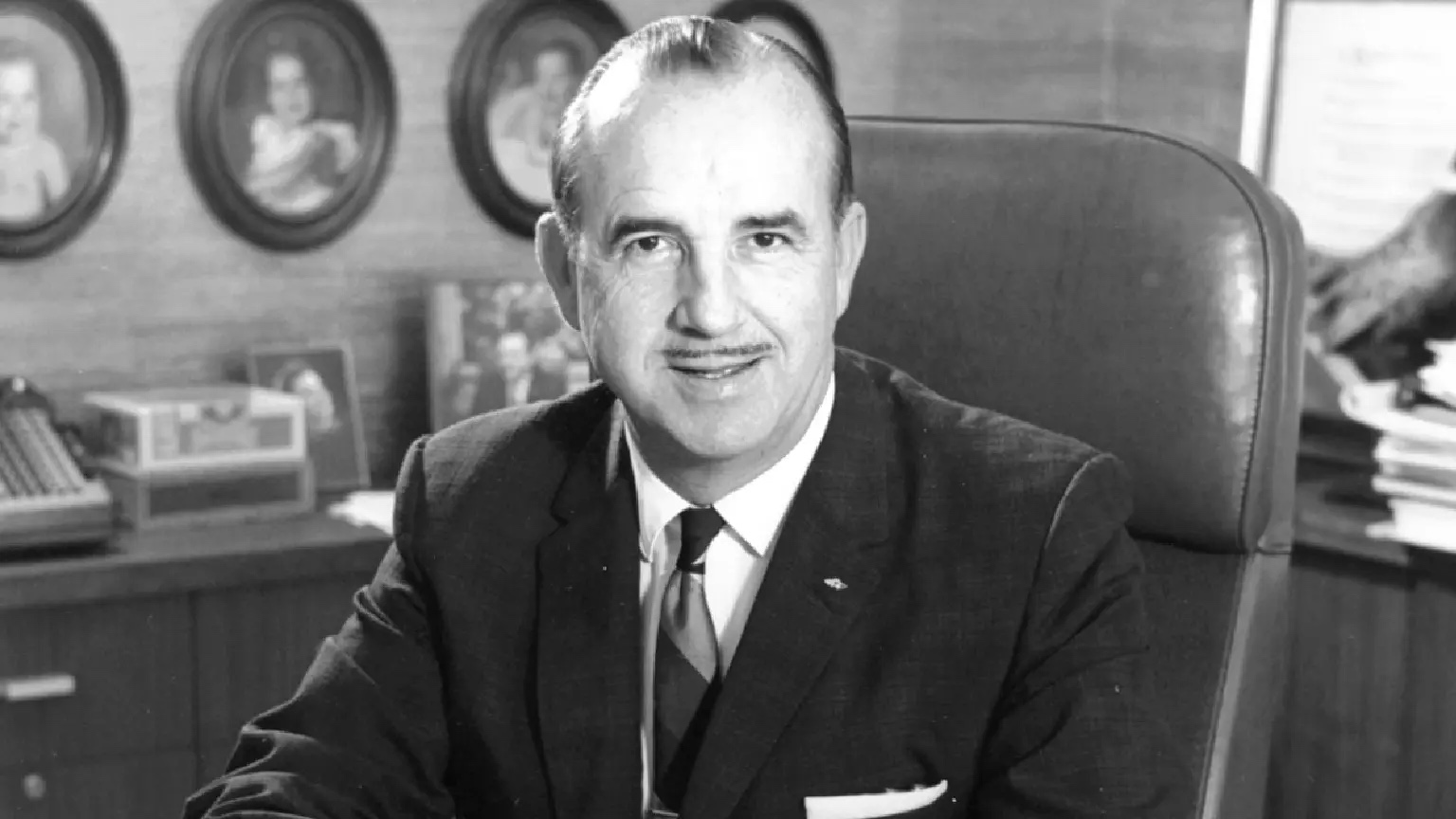 Publix founder George Jenkins at his desk, Lakeland Florida — the plaque on his desk read "Begin. The Rest Is Easy."
Frederick Meijer, who knew something himself about building a grocery empire, said of him: "George was a merchant's merchant who felt the thrill and the romance of the retail business and radiated that feeling at all times." His competitor, Dan Davis, chairman of Winn-Dixie, said upon his death that the passing of George Jenkins "probably marks the end of an era in our business, especially in Florida. He was one of a group of men — like my dad and uncles — who gambled and survived in relatively rough times." There is no finer tribute than the one offered by a rival who competed against a man for forty years and still could find nothing unkind to say.
He suffered a stroke in 1989 and kept working. He traveled the stores in a wheelchair, talking to customers and associates, bagging groceries when he felt like it, because his greatest joy, those who knew him said, was simply to be among his people. He died in Lakeland in the spring of 1996, at the regional medical center of the city he had made his own, and was buried in Oak Hill Burial Park. He was eighty-eight years old. Four days before he died, he had been in a store. Late Publix president Joe Blanton perhaps said it best, standing on the eve of a store opening years before: "Just consider the effect on all of our lives of George Jenkins' having opened that first store in Winter Haven in 1930. Where would we all be tonight if that had not happened?"
Someone once asked him how much he thought he'd be worth if he hadn't given so much away. He didn't hesitate. "Probably nothing," he said.
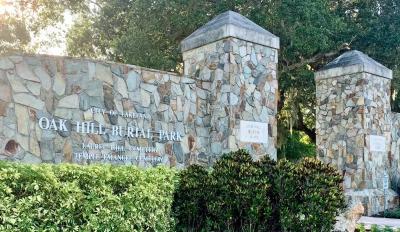 Oak Hill Burial Park entrance, Lakeland Florida — where Publix founder George Jenkins was buried in 1996
Correction, September 15, 2026: An earlier version of this story ended with a closing section written in the first person, which does not belong in an unbylined story. It has been removed, and the headline on the page now matches the story's title.
Presented by

Central Florida is built at the edge of land and water.
Horizon Marine works where that history meets today's lakefront properties — docks, seawalls, shoreline protection, and permitted marine construction across Polk County and surrounding areas. License #SCC131154313.
About Horizon Marine →The Town That Kept Its Oranges
Christmas Day 1894 was one of Florida's most beautiful days, and four days later the citrus industry was gone
Read →
The Trooper Who Never Reached Cuba
Two Tenth Cavalry troopers were arrested in downtown Lakeland in May 1898 for a killing no two accounts describe the same way, and one of them never got out of Bartow
Read →
Four Million Acres at Twenty-Five Cents
In 1881, a Pennsylvania saw manufacturer wrote a check to the State of Florida for one million dollars and walked out owning four million acres
Read →
The Land: The Empty Money Box
In May of 1918, H.G. Browning came to return a horse he believed belonged to Isham Stewart — and knew something was wrong before he got to the door
Read →
Planning waterfront work in Orlando?
Free waterfront assessment · License #SCC131154313