Services
Seawall Construction & Repair in Central Florida
Owner-led assessments. Permits handled. Built for long-term shoreline protection.
A small crack, a little washout, or a section that starts to lean rarely feels urgent at first. We help waterfront owners understand what is cosmetic, what is structural, and what the right next step looks like.
What we do
- →Seawall construction
- →Seawall repair and restoration
- →Vinyl seawall systems
- →Wood seawall systems
- →Cap and tie-back restoration
- →Shoreline stabilization
What you can expect
- →Owner-led site assessment
- →Repair vs. replacement guidance
- →Permits handled end to end
- →Written estimate after site visit
- →Standards matched to local conditions
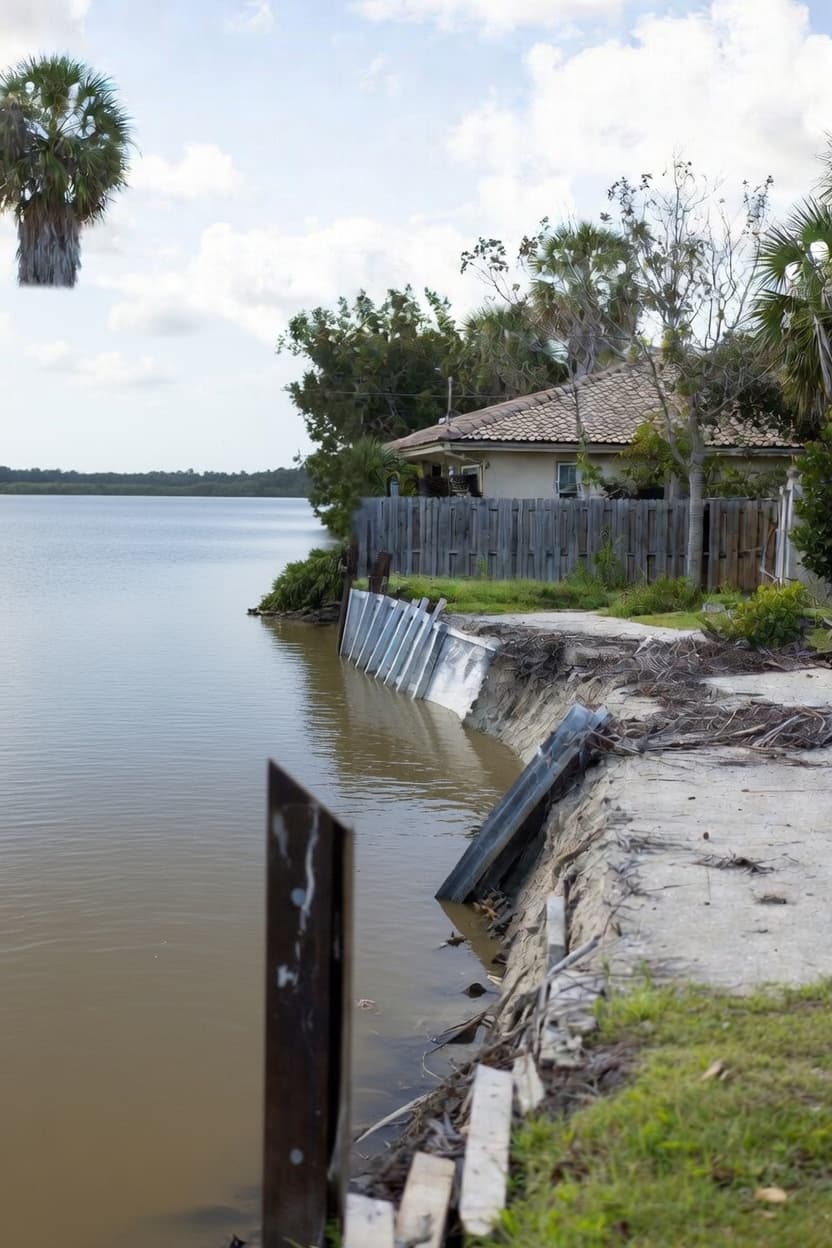
Seawall problems don't announce themselves. A small crack, a little soil washing out behind the wall, a panel that's started to lean — none of it looks urgent until it is. By the time a homeowner on Lake Ariana or the Chain of Lakes notices something worth worrying about, the wall has usually been working on that problem for a while.
Horizon Marine — formerly Strawnix Marine — is a state-certified marine contractor based in Lakeland. We build new seawalls and repair existing ones for residential and community properties throughout Polk County. Our crew brings hands-on experience reading Polk County's lake-bottom soils — phosphate-origin sites, washout zones, and chain-of-lakes wave conditions. That kind of background shows up in the assessment, not just the installation.
A surprising amount of our new construction work isn't on properties that have never had a seawall. It's on properties that have one — built within the last five years. The wall looks fine from the yard. The homeowner thought they'd handled it. Then we show up and find pilings that didn't reach bearing, drainage that was never addressed, or soil conditions that the original contractor clearly never accounted for. "Recently built" and "built right" aren't the same thing in Polk County.
What We Do
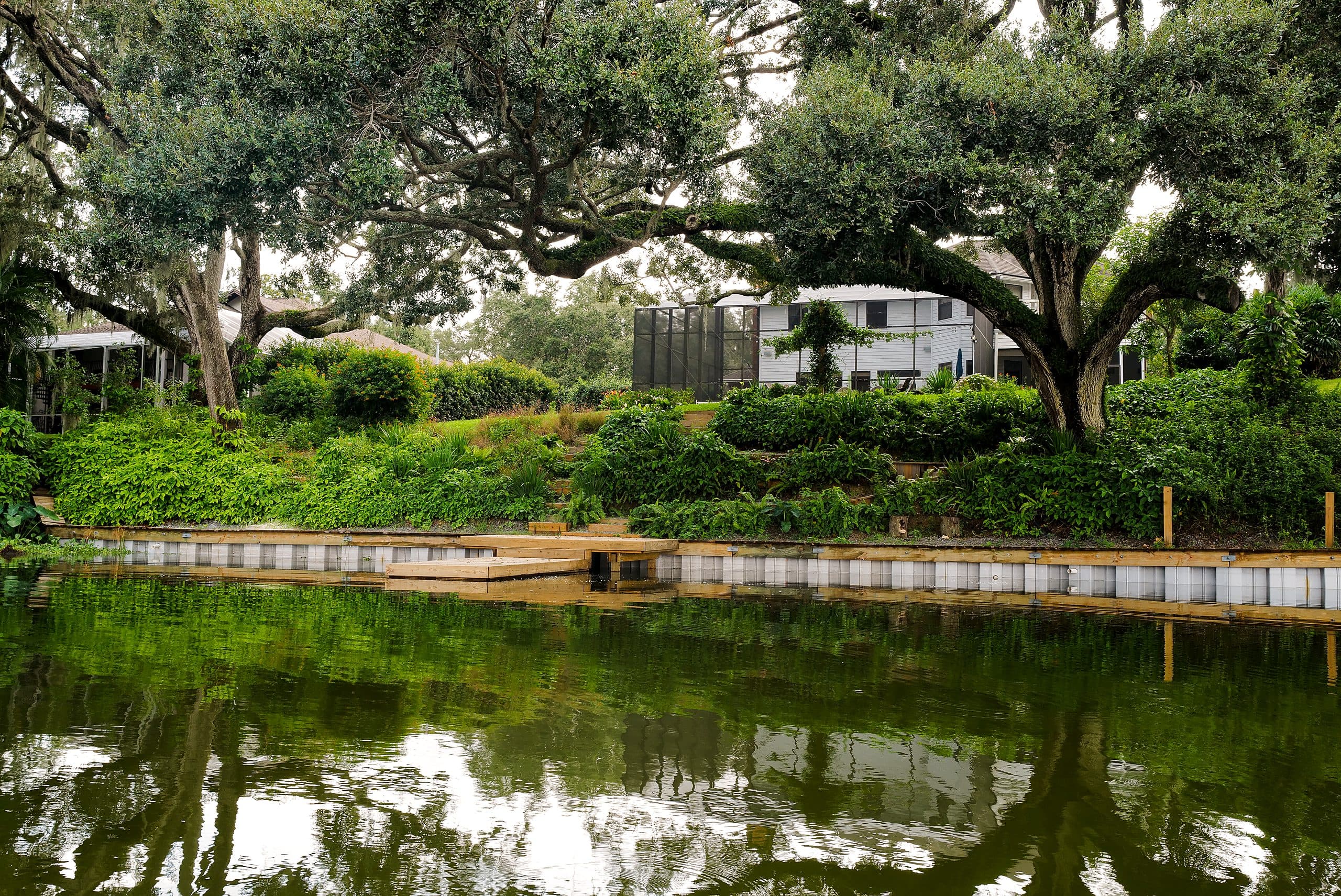
Seawall services in Central Florida
Seawall Repair & Stabilization
Not every failing wall needs to come out. Targeted repair — structural correction, cap work, addressing soil loss before it gets worse — is often the more economical path when the failure is localized. The key is catching it early enough that the option still exists.
New Seawall Construction
When a wall is beyond saving, replacement gives you a chance to do it right — correct drainage, proper alignment, materials matched to the specific conditions of your lake. A new wall installed correctly shouldn't need major attention for decades.
Vinyl Seawall Systems
Vinyl sheet pile performs well in freshwater. It doesn't rust, doesn't rot, and holds up in low-corrosion environments with less long-term maintenance than alternatives. For many Polk County lake properties, it's the right material.
Wood Seawall Systems
Pressure-treated wood is a practical choice for many freshwater lake applications — cost-effective, code-familiar, and appropriate where conditions support it. We build wood seawalls and assess aging ones to determine whether repair or replacement makes more sense.
Cap & Tie-Back Restoration
The seawall cap and tie-back system are where most slow failures start. Cracking caps and corroding tie-backs can often be repaired without replacing the whole wall — but only if the problem is identified before it compromises the structure behind it.
Concerned about your seawall?
Free waterfront assessment · License #SCC131154313
Local Knowledge
The phosphate lake problem — what most contractors don't know
Roughly half the seawall work we do in Polk County is on phosphate-mining lakes, reclaimed ponds, or retention pits that have been developed into residential or commercial waterfront. If you own one of those properties, what's under your bank matters as much as what's in front of it.
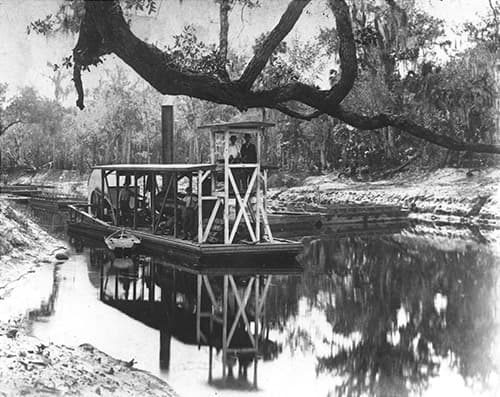
Polk County sits in the heart of Florida's "Bone Valley" — the 1.3-million-acre phosphate mining region. Since the late 1800s, draglines have been stripping 30 to 60 feet of overburden and matrix from the land. What's left after mining and "reclamation" is a landscape that looks like a normal Polk County neighborhood on the surface, but often isn't.
The phosphatic clay slime deposits left behind — unstable, water-saturated — can run 30 to 40 feet deep. Engineers building the Polk Parkway described this as "a special problem encountered by developers and builders in Polk County and hardly anywhere else in the world." They don't compact the way natural soil does. They don't anchor pilings the way natural lake bottoms do.
What this means for your seawall:
Unpredictable piling depth
On a natural lake, an experienced contractor can estimate piling depth from known soil conditions. On a reclaimed phosphate pit, you can hit refusal at 8 feet in one spot and find nothing solid at 20 feet in the next.
Accelerated soil washout
Phosphatic clay and sand tailings migrate through seawall joints and weep holes faster than natural soil. Voids form behind the wall sooner than expected — sometimes within a few years of installation.
No historical baseline
On a reclaimed pit that became a subdivision in 1998, nobody has a record of how the shoreline behaves. We're often the first ones to put eyes on what's actually going on beneath the surface.
We quoted a customer recently on 16-foot vinyl sheets — a reasonable spec for most Polk County freshwater installations. First sheet went in and didn't meet resistance at depth. We pulled it immediately. That's not a decision you make after the second or third sheet — you make it on the first one, or you end up with a wall that's in the ground but not anchored to anything that matters. We switched to 20-foot sheets on the spot and adjusted depth wherever the soil firmed back up. The finished wall is solid. The 16-foot wall would have moved within a few years, and the homeowner would never have known why.
— Vince Strawbridge, Horizon Marine
What to Watch For
Signs your seawall may be failing
Any one of these is worth a call. Caught early, most are repair situations. Left alone, they become replacement situations.
- →Cracking in panels or cap — hairline cracks can be monitored; wide or horizontal cracks indicate structural stress
- →Bowing or bulging — the wall is responding to pressure it can no longer resist
- →Soil washout behind the wall — voids, sinkholes, or lawn depressions near the wall mean soil is migrating through or under the structure
- →Gap between cap and panels — separation here usually means the tie-back system is losing its grip
- →Leaning sections — especially at the ends of wall runs
- →Persistent waterlogging near the wall — inadequate drainage building pressure the wall has to absorb
Credentials
Why state certification matters
Florida's distinction between state certified and county-registered contractors matters more on seawall work than almost anywhere else. Seawall projects cross environmental permit lines, structural requirements, and agency jurisdictions that county-only contractors often aren't equipped to handle.
Our license is SCC131154313 — state certified through the Florida DBPR, valid statewide. You can verify it on the DBPR website.
Workers' compensation is the other issue most homeowners never think about until it's too late. Marine construction carries WC class code 06006 — a specific classification that general construction policies may not cover. If a contractor's workers' comp doesn't apply and a worker is injured on your property, Florida law can make you responsible.
Before hiring any seawall contractor, ask:
- →Are you Florida state certified, and what's your license number?
- →Does your workers' comp policy cover marine work under class code 06006?
- →Who pulls the permits — you or a sub?
- →Do you manage Polk County and DEP approvals directly?
- →Have you worked on reclaimed phosphate land, and how does that change your approach?
We answer all of these before a contract is signed.
Materials
Seawall materials for Polk County lakes
Vinyl Sheet Pile (Vanguard)
Our recommendation for most new residential seawall installations. Vanguard vinyl sheet pile carries a 50-year manufacturer warranty and a service life to match with proper installation. On phosphate-origin soils where soil chemistry can be acidic, vinyl's resistance to chemical degradation is an additional advantage over alternatives. Our installation carries a one-year craftsmanship warranty — if something ever doesn't look right, call us. We'll come out.
Wood
A practical choice for many freshwater lake applications. Cost-effective, appropriate where soil conditions support it, and familiar to the permitting process. Requires real maintenance to get full service life out of Florida conditions — but installed correctly, it performs.
Aluminum
Used in certain commercial and high-load applications. Less common on residential freshwater projects but available where site conditions call for it.
Existing Concrete Walls
Many Central Florida properties have aging concrete seawalls. We assess condition, repair caps and tie-backs, and give a straight answer on whether the wall has useful life remaining or whether replacement makes more economic sense.
Concerned about your seawall?
Free waterfront assessment · License #SCC131154313
Service Area
Areas we serve
Lake Hollingsworth · Lake Bonny · Lake Morton · and numerous reclaimed residential lakes
Winter Haven / Chain of Lakes
Lake Eloise · Lake Shipp · Lake Howard · Lake Cannon · Lake Roy · Lake Lula
Auburndale
Lake Ariana · Lake Juliana · Lake Lena · Lake Van
And throughout: Polk City · Lake Alfred · Haines City · Eagle Lake · Lake Wales · Davenport
FAQ
Common questions
How much does a seawall cost per foot in Florida?+
It varies enough that a per-foot number without a site assessment is almost meaningless — wall height, material, soil conditions, access, and repair versus replacement all move the number significantly. On phosphate-origin soils, the assessment is especially important before committing to any spec. We provide written estimates after seeing the property.
How long does a seawall last?+
Vanguard vinyl sheet pile seawalls carry a 50-year manufacturer warranty and a service life to match with proper installation. Concrete seawalls typically perform well for 25–40 years. On reclaimed phosphate land, service life depends heavily on soil conditions and how the wall was originally spec'd for that environment.
What are the warning signs of seawall failure?+
Cracking, bowing, soil washout behind the wall, gaps between cap and panels, leaning sections, and persistent waterlogging near the base. On phosphate-origin properties, voids can form behind the wall faster than on natural lakes — if your property sits on reclaimed land, it's worth having a look even if you haven't noticed obvious problems.
My property is on a reclaimed phosphate pit. Does that change things?+
Yes, in ways that matter. The soil profile on reclaimed phosphate land — layers of sand tailings, phosphatic clay, and disturbed overburden — behaves differently than natural lake-bottom soil. Piling depth, bearing capacity, and drainage all need to be assessed for what's actually there, not a natural lake baseline. We do this assessment before any design work.
Do I need a permit for seawall work in Polk County?+
Yes. Seawall construction and significant repair requires a Polk County local permit and, depending on scope and location, a Florida DEP permit. We handle all permit applications.
Can a damaged seawall be repaired, or does it need full replacement?+
Often repair is the right answer — localized cracking, cap damage, and tie-back issues can frequently be addressed without replacing the whole wall. Full replacement is required when panels are structurally compromised throughout or the wall type has reached end of life. The site assessment gives you a clear answer.
Get a free waterfront assessment
If you're concerned about your seawall — or it's been a few years since anyone looked at it closely — call us. If you're on a reclaimed phosphate lake and have never had the soil conditions assessed, that conversation is worth having before a problem develops.
Our roots in Polk County go back generations. Vince's grandfather and father built custom homes here — structures still standing today that will outlast their grandchildren. That's the standard we bring to every wall we install.
(863) 934-6218State Certified Marine Contractor · License #SCC131154313 · Fully insured · Polk County & surrounding areas