May 5, 2026
East Lake Tohopekaliga, St. Cloud: The Lake That Grew Florida's First Sugar Mill
Before St. Cloud was a town, the south shore of East Lake Tohopekaliga held the first sugar factory ever built in Florida
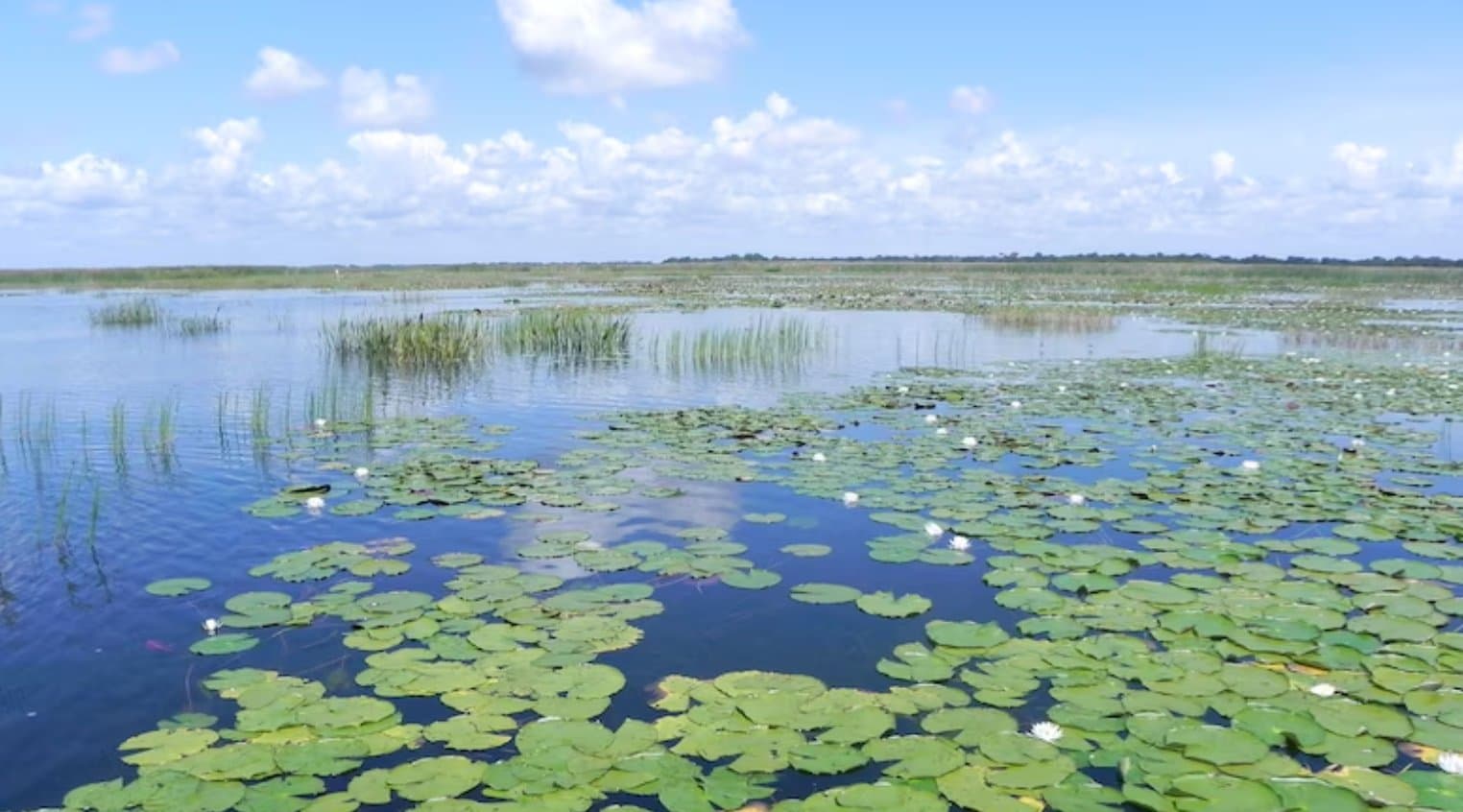
Hamilton Disston — Philadelphia saw manufacturer, fishing tourist, and at one point the largest single private landowner in the United States — chose the south shore of East Lake Tohopekaliga to build the first sugar factory in Florida. In the 1880s that shoreline was the working edge of an industrial experiment.
Disston had been coming down to fish the Kissimmee chain since the 1870s. By 1881 he had cut a deal with the state for four million acres at twenty-five cents an acre, an arrangement that pulled Florida out of bankruptcy and handed him four million acres of palmetto, sawgrass and shallow water. He wanted to drain it, and he wanted to plant cane on it. The trial ground was Southport, on the south end of Lake Tohopekaliga, where early sugarcane plots did well.
The operation that followed went up at St. Cloud Plantation, on East Lake Toho. The mill could process cane into raw sugar on site — the first time that had been done at industrial scale in the state. Cane fields spread back from the lake. Workers came in. A small settlement grew around the factory, and the lake itself served as both water source and transport corridor; the Kissimmee chain, after Disston's dredging, ran navigable from here south to Lake Okeechobee.
For a few years it worked. Florida cane competed, on paper, with Louisiana and Cuba. Disston drew federal agricultural inspectors down to look at the operation. Then the freezes of the mid-1890s wrecked the fields, Disston's finances collapsed, and in 1896 he died in Philadelphia. The St. Cloud Plantation mill went quiet, and the cane fields went back to pasture and palmetto.
In 1909 the Grand Army of the Republic — the Union veterans' fraternal organization — bought a large piece of the old Disston holdings and platted a retirement colony for Civil War veterans on cleared, drained, surveyed land. They came by the thousands. That is why Mount Peace Cemetery, a few blocks from the lake, holds the remains of more than four hundred Union soldiers, one of the largest concentrations of Union Civil War burials anywhere in the country.
Boggy Creek, rising up by what is now Orlando International Airport, feeds the lake from the north. Canal 31 connects the south end to Big Toho, and from there the water keeps moving south toward Okeechobee along the path Disston's dredges first opened. East Lake Toho stayed the quieter of the two — twelve thousand acres to Big Toho's twenty-three thousand, less tournament pressure, clearer water in the winter months, and a bass fishery that locals talk up because it doesn't draw the crowds the bigger lake does.
Powerboat racers ran the Florida State Offshore Championships here in 1989. The Runnymede Road bridge collapsed during the 1990 drawdown when loose sand undercut the structure. The beach was closed for bacteria in 1991 after stormwater pipes dumped road runoff onto the swimming area. A long-running FWC habitat enhancement project, building on the drawdown methods proven up the chain at Big Toho, has been working the shoreline since 2019, scraping muck and replanting native vegetation.
Presented by

Own waterfront in Kissimmee?
Lake history is interesting. Shoreline conditions are practical. Horizon Marine builds docks, seawalls, and shoreline protection on Kissimmee's lakes — and gives a straight answer on what your property actually needs.
Edward Medard Reservoir, Plant City: The Drawdown That Fed the Food Banks
When Hillsborough County's busiest reservoir was emptied in 2009 to rebuild its eroding bank, more than 1,300 of the stranded tilapia and catfish were filleted and sent to local food banks
Read →
Hardee Lakes, Bowling Green: The County That Had No Lakes Until a Mine Made Four
Every one of Hardee County's four lakes was dug by a phosphate dragline in the 1990s — the county had no natural lakes at all until a worked-out mine was handed back as water
Read →
Lake Pierce, Lake Wales: The Five-Day Haul From Net to Railroad
Before it was a fish camp, the north shore of Lake Pierce was a commercial netting operation that hauled its catch out over log roads on a five-day round trip to the railroad — back when the lake was called Cat Fish Lake.
Read →
Hardee Lakes, Bowling Green: The Lake That Stayed Closed Until the Fish Grew
Lake 3 at Hardee Lakes Park was stocked with sunshine bass in 2001 and then kept shut to anglers while they grew, and when it finally opened one Saturday morning in October 2005 all eight spots were already taken
Read →
Building on East Lake Tohopekaliga or another Kissimmee lake?
Free waterfront assessment · License #SCC131154313