

September 24, 2026
Lake Mattie, Auburndale: The Lake Florida Measures Other Lakes Against
Lake Mattie is one of the 71 lakes Florida uses as a reference for what a minimally disturbed lake looks like — and in 2019 the state's own update listed it at a Lake Vegetation Index score of 41 and asked whether it still qualified
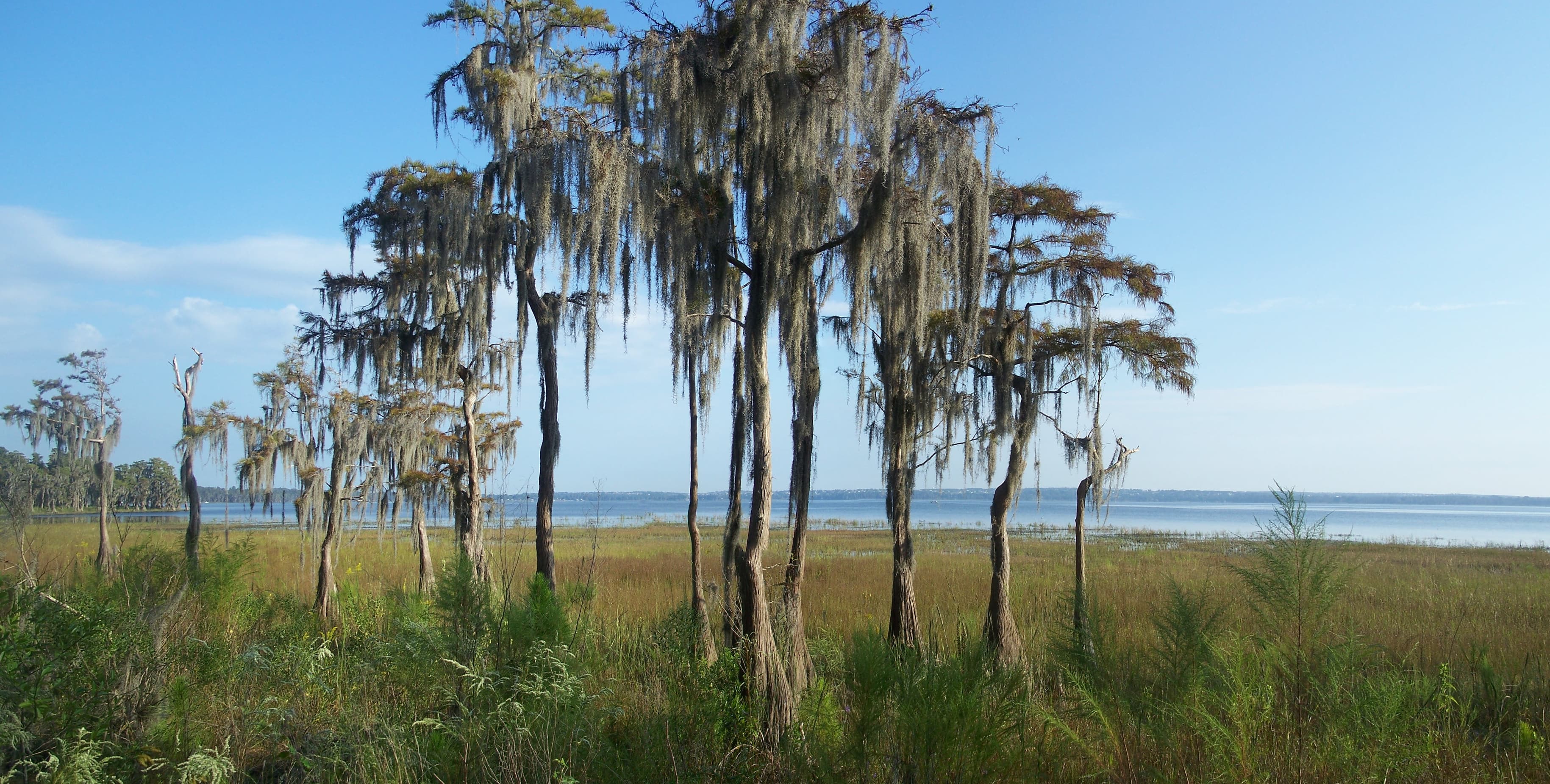
In November 2019, Florida's set of reference lakes — the minimally disturbed waters the Department of Environmental Protection measures other lakes against, chosen because so little has been done to the land around their shorelines — held 71 sites spread across 25 lake regions. One of them was Lake Mattie, 1,058 acres of water in unincorporated Polk County, in the Withlacoochee River watershed, averaging eight feet deep. The Polk County boat access directory lists it as canal access only: you come in from Lake Juliana, when the water is high enough. Juliana's outlet canal, on its eastern side, discharges into Mattie.
The department began its reference lake sampling program in 2016, to record water quality and plant communities in minimally disturbed lakes across as many of the state's lake regions as it could reach. Qualifying takes a number. The Landscape Development Intensity index scores the ring of land within 100 meters of a lake by what people have made of it: natural, undeveloped cover carries a value of one, and the Florida scale runs to a maximum near 42. At or below two, a lake counts as minimally disturbed.
On November 5, 2019, DEP presented a Reference Lakes Status Update at the biocriteria meeting in Palatka. One slide was headed Low Scoring Lakes. Of the reference sites sampled between 2016 and 2019, twelve had come back with Lake Vegetation Index scores under 50, and listed among them under the Southwestern flatlands region was Lake Mattie, at 41. The slide closes on a question the department put to itself: do these lakes qualify as minimally disturbed?
The Lake Vegetation Index is how Florida scores a lake's plants. A qualified crew divides the water into twelve pie-shaped segments, works four of them, lists every aquatic species found, and grades the result on how tightly those plants track undisturbed Florida. Below 43, the lake is impaired.
Polk County had the index run on Lake Mattie on May 18, 2023. David Eilers and Karina Gonthier of the USF Water Institute scored it 27. The previous assessment, on June 10, 2020, had scored 38. Averaged, 32.5, and the report classifies the lake as impaired.
The same report put the Landscape Development Intensity of Mattie's 100-meter buffer at 1.64, inside the threshold of two — 83 percent natural land, another 14 percent agricultural, shorelines recorded as typically undeveloped, with most stormwater reaching the lake as sheet flow across natural cover. The crew counted 39 species of wetland vegetation across the four segments, and 32 of them were native.
What pulled the score down was which plants had taken over. Peruvian primrose-willow, Ludwigia peruviana, was dominant in segments 3 and 6 and co-dominant in 9. Water hyacinth, Eichhornia crassipes, was co-dominant in 9 and 12. Both carry a coefficient of conservatism of 0.00, the floor of a scale that runs to 10. No submerged aquatic vegetation was observed anywhere in the survey. A Secchi disk vanished at 0.7 meters, about 2.3 feet, which the report notes is near the ten-year mean for the lake.
The last slide of the 2019 update lists, first among next steps, reviewing and updating the reference lake sites, then prioritizing lakes in regions with no data: six lake regions had no sample set at all.
Lake Mattie's 2023 species list still runs to saw-grass, Cladium jamaicense, at a coefficient of conservatism of 8.00, recorded in two of the four segments. The highest-scoring plant on the whole list is swamp lily, Crinum americanum, at 9.00, and the crew found it in one.
Sources
Every factual claim in this story was checked against the page it came from before the story was saved. These are those pages. Our standards are on the masthead.
- Reference Lakes Status Update, Biocriteria Meeting, November 5, 2019, Palatka, FL (Florida DEP)
- Lake Vegetation Index Survey Results for Florida DEP Reference Lakes (Florida Lake Management Society abstract)
- Lake Mattie | Lake Details - Polk County Water Atlas
- Lake Mattie, Polk County Public Lakes / Boat Access Directory (2014)
- Nutrient TMDL for Lake Juliana (WBID 1484B), Florida DEP, December 2016
- Lake Mattie Lake Vegetation Index Assessment, USF Water Institute, May 18, 2023 (Polk County Water Atlas)
- Water hyacinth (Pontederia crassipes, previously Eichhornia crassipes) — UF/IFAS Center for Aquatic and Invasive Plants Plant Directory
- Ludwigia peruviana, Peruvian primrose-willow — UF/IFAS Center for Aquatic and Invasive Plants Plant Directory
- Cladium jamaicense, Saw-grass — UF/IFAS Center for Aquatic and Invasive Plants Plant Directory
- Crinum americanum, Swamp lily — UF/IFAS Center for Aquatic and Invasive Plants Plant Directory
Lake Hancock Is Held a Foot and a Half Higher for the Peace River
The 1963 weir let Lake Hancock spill over its top at 98.7 feet; the structure that replaced it in 2013 holds the lake to 100, and the extra foot and a half is stored for a river between Bartow and Zolfo Springs
Read →
Middle Lake Hamilton, Polk County: The One Passing Grade Came From Four Wedges of Twelve
Middle Lake Hamilton's only passing biological score, a 46 on September 3, 2020, came from four of the lake's twelve LVI wedges - two of which scored below the failing line - and ten months later the same assessor walked a different four and got 27
Read →
Lake Juliana, Auburndale: The County Park Permit Polk's Own Planners Turned Down
On June 6, 2012 the Polk County Planning Commission voted 5-1 to deny Polk County's own permit for a boat ramp on Lake Juliana — by the parks department's account the first county park permit ever rejected — and the appeal that reversed it turned on who owned the bottom of the lake.
Read →
Lake Pierce, Lake Wales: The Five-Day Haul From Net to Railroad
Before it was a fish camp, the north shore of Lake Pierce was a commercial netting operation that hauled its catch out over log roads on a five-day round trip to the railroad — back when the lake was called Cat Fish Lake.
Read →