
May 2, 2026
Scott Lake, Lakeland: The Day the Lake Drained Into the Ground
In June 2006, a sinkhole opened beneath Scott Lake and drained all 251 acres of it into the Floridan Aquifer — and then, slowly, the lake came back
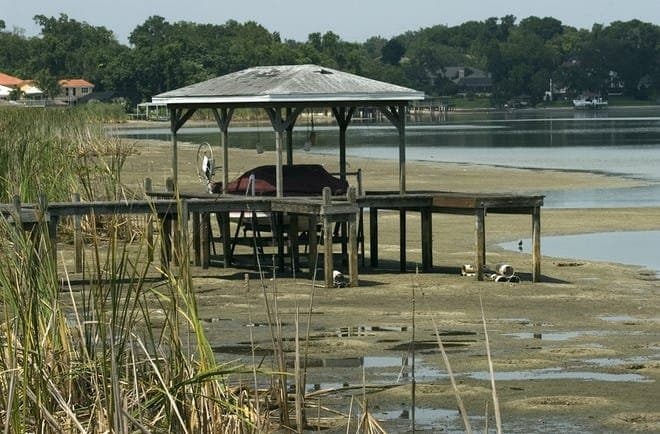
On June 14, 2006, the south shore of Scott Lake started doing something lakes are not supposed to do. The water near Pier Point began turning, then pulling, then leaving. By the time the day was out, a sinkhole had opened on the lake bottom and taken a boat ramp, a dock, and a gazebo with it. Over the following weeks, the lake — all 251 acres of it — drained like a bathtub into the limestone below.
The water went into the Floridan Aquifer. That is the underground reservoir that supplies most of Central Florida's drinking water, and Scott Lake, in essence, poured itself directly into it through a hole in its own floor. Residents who had grown up on the lake watched fish strand on drying mud. Docks ended over dirt. The shoreline kept retreating from the houses that had been built to face it.
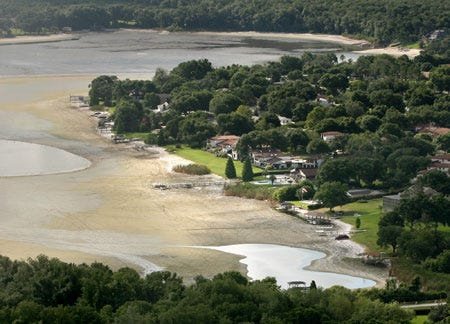
What happened underneath is the kind of geology Floridians live on without thinking about. The peninsula sits on porous limestone, and the rainwater that filters down through the soil is mildly acidic. Over thousands of years, that water dissolves voids in the rock. When the roof of one of those voids gives way, the surface above it collapses. Most Florida lakes — Scott Lake included — are themselves old sinkhole basins that filled with water long ago and stayed full because sediment had sealed the bottom. When the seal breaks, the lake remembers what it was.
Scott Lake had done this before, in a smaller way, in geological memory. The 2006 collapse was a reactivation — what hydrogeologists call a paleo-sinkhole reopening. A 2012 paper presented at an engineering conference described the Scott Lake event specifically as part of "the cycle of formation of lake basins within the mantled karst upland areas in Central Florida." Translation: this is how these lakes are made, and occasionally unmade, and made again.
The lake bed sat largely empty for years. Some residents were furious. Some were resigned. A neighbor named Gene Pryor, quoted in the Tampa Bay Times that same month, reportedly laughed as the water left — he had been telling people for a long time that a lake in Florida is never a guarantee. Property owners learned, the hard way, that a private lake is not insured the way a house is. The water was gone and nobody was coming to put it back.
Nature did, though, on its own clock. Sediment — clay, sand, organic muck stirred up by storms and slow groundwater movement — began working its way back into the throat of the sinkhole. Year by year, the void clogged. Rain that had been pouring straight through to the aquifer started to pool again. By 2013, The Ledger reported the lake was gradually refilling. By 2018, residents were celebrating its return: open water, wading birds, fish populations re-establishing themselves, the shoreline back where the deeds said it should be.
The recovery was never guaranteed. It took roughly a decade, and it required the geology to seal itself without human help — there was no engineered plug, no grout injection, no fix. Just sediment finding its way to the right place. Joe Curry, a spokesman for the Scott Lake Association, told The Ledger in 2013 that the frustration of those early years had largely settled into acceptance. "It's an act of nature," he said, "just like that sinkhole over there in Seffner."
Another of the neighborhood's inhabitants was widely quoted as saying, "I don't care if you have to stuff it full of one hundred dollar bills, just stop the lake from disappearing."
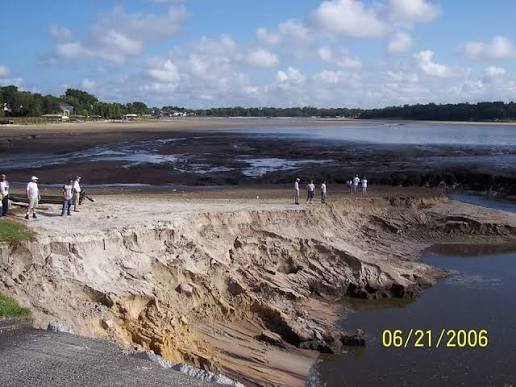
The ground has not entirely stopped moving. In June 2023, a new sinkhole opened off Scott Lake Road during a well-drilling operation, then reopened that September after heavy rain. Polk County officials called it active but stable. Anyone who lived through 2006 understood what that phrase actually meant.
From a boat today, Scott Lake looks like any other Polk County lake — that tilted Christmas-stocking outline, cypress along the edges, houses set back from the water on the high ground. The sinkhole's location, near the upper forefoot of the stocking, is unmarked from the surface. The water above it is the same color as the rest of the lake. What is different is what the people who live here know: that the bottom of a Florida lake is not a floor. It is a lid. And lids, sometimes, come off.
Presented by

Have a waterfront project in Central Florida?
Free waterfront assessment · License #SCC131154313
(863) 934-6218