

April 27, 2026
Lake Tohopekaliga, Kissimmee: The Lake That Went Dry in 1987
In the 1980s, biologists tried something on Lake Toho that had never been attempted on a lake its size — scraping the muck off the bottom to bring it back
In the mid-1980s, fisheries biologists proposed dropping Lake Tohopekaliga several feet, exposing the lake bottom to the sun, and physically scraping the accumulated muck off the shoreline. The technique had been tried on small residential water bodies — the Orlando Sentinel reported in 1986 that it had worked on 100-acre Lake Hunter. Toho covers 22,000 acres. Nobody had attempted muck removal at that scale. The biologists pushed for it anyway, proposing to remove the organic sediment that had built up over the sandy bottom where bass spawn.
The drawdown happened in 1987. Top state officials came out to watch. The Department of Environmental Regulation put $248,000 into the project, $100,000 of it collected through environmental fines levied elsewhere in Central Florida. Crews moved onto the dried lake bottom and hauled away the black, nutrient-loaded sediment covering the sandy substrate where bulrush and maidencane root. Photographs from the period show heavy equipment sitting on what is normally lake bottom.
Toho sits at a low point in a chain that drains a large piece of Central Florida. Shingle Creek runs 23 miles down from the Pine Hills area of Orlando before emptying in, and the Boggy Creek headwaters reach back to what is now Orlando International Airport. As Orlando grew, the load came south — fertilized lawns, wastewater plants, paved acreage. By the late 20th century secondary effluent from nearby cities was flowing in, cyanobacteria that had existed only at trace levels were blooming, and the muck on the bottom kept getting deeper. Wastewater diversions in the 1980s cut the phosphorus inputs sharply. The drawdown handled what had already settled.
Toho has since hosted multiple Bassmaster Classics. The spawning flats that produce its trophy largemouth are the sandy substrate the 1987 crews uncovered.
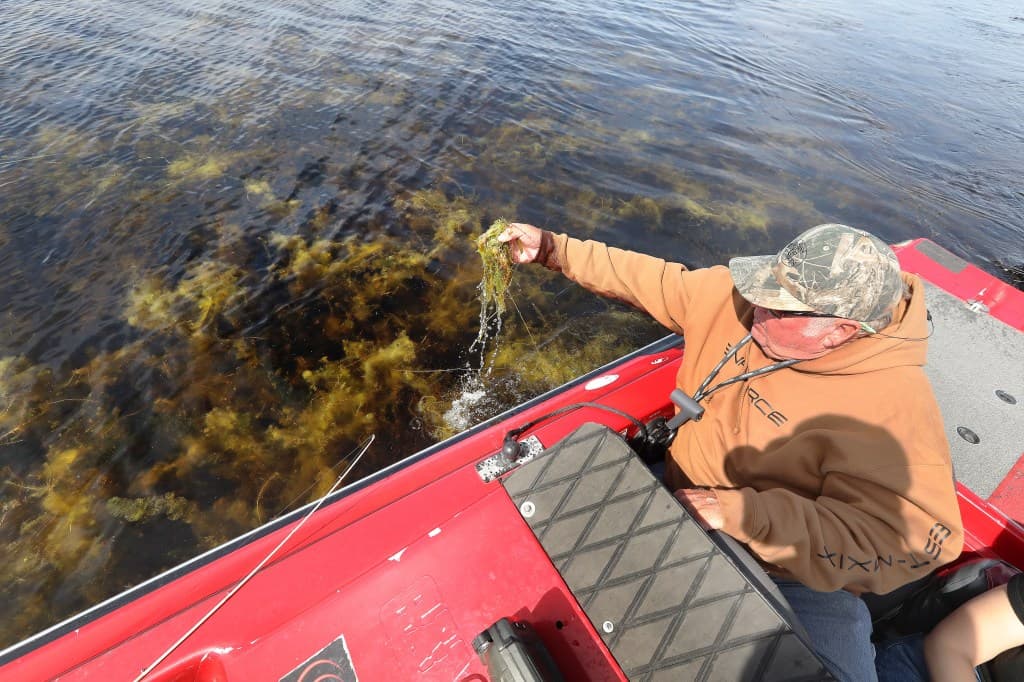
In March 2024, the Sentinel reported that hydrilla had taken hold on West Lake Toho in one of the worst infestations in Central Florida, and that there was no money available to eradicate it.
The drawdown-and-scrape model has been repeated across the Kissimmee Chain and on lakes throughout Florida. East Lake Toho got the same treatment. So did Lake Kissimmee downstream. The Florida Fish and Wildlife Conservation Commission still lists managed drawdowns and organic sediment removal as core tools for shallow-lake habitat enhancement.
Presented by

Own waterfront in Kissimmee?
Lake history is interesting. Shoreline conditions are practical. Horizon Marine builds docks, seawalls, and shoreline protection on Kissimmee's lakes — and gives a straight answer on what your property actually needs.
Edward Medard Reservoir, Plant City: The Drawdown That Fed the Food Banks
When Hillsborough County's busiest reservoir was emptied in 2009 to rebuild its eroding bank, more than 1,300 of the stranded tilapia and catfish were filleted and sent to local food banks
Read →
Lake Tracy, Haines City: The Ditch That Got Its Own Government
A drainage ditch that begins at the north end of Lake Tracy has had its own unit of Florida government since 1929, and it still assesses $50 an acre to keep the channel open
Read →
Little Lake Harris, Howey-in-the-Hills: The Summer Nobody Could Get Off the Dock
In August 2018 hydrilla filled Little Lake Harris so thickly that people couldn't get a boat away from their own docks, and by November the state was treating 2,700 acres of a 2,744-acre lake
Read →
Lake Jessie, Winter Haven: The 180-Acre Lake Where the World Learns to Land on Water
About 500 pilots a year earn their seaplane rating on a 180-acre lake beside the Winter Haven airport — more, by one industry count, than every other seaplane school in the United States combined
Read →
Building on Lake Tohopekaliga or another Kissimmee lake?
Free waterfront assessment · License #SCC131154313