

September 18, 2026
Edward Medard Reservoir, Plant City: The Drawdown That Fed the Food Banks
When Hillsborough County's busiest reservoir was emptied in 2009 to rebuild its eroding bank, more than 1,300 of the stranded tilapia and catfish were filleted and sent to local food banks
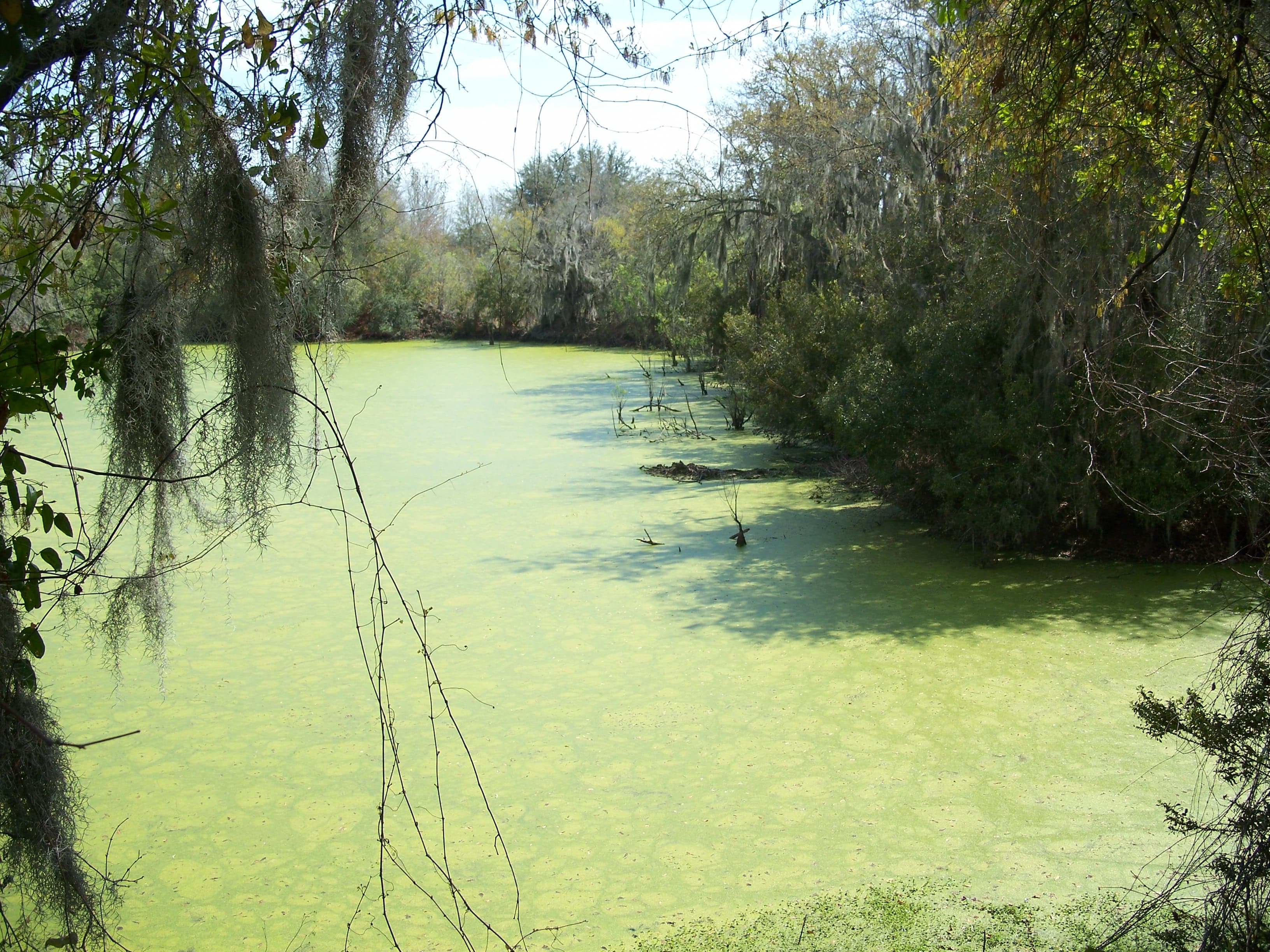
On Oct. 22, 2009, the Florida Fish and Wildlife Conservation Commission announced that starting that Friday there would be no bag limits and no size limits on bass, bream and speckled perch at Edward Medard Reservoir. Anglers could keep whatever they pulled out, as long as they used a rod and reel or a cane pole — netting sportfish stayed off limits, though cast nets were allowed for tilapia and catfish. The lake was about to be drained.
The Southwest Florida Water Management District was drawing the 770-acre impoundment down to roughly 150 acres of surface water so crews could repair the embankment holding it in. Erosion had undermined the concrete rip-rap bags that made up the bank. Jeff Hagberg, the district's field operations manager, told the Osprey Observer in September 2009 that apart from an emergency spillway renovation in 2004, no major construction had been done at the reservoir. The repair carried a $2.3 million price tag. Three emergency notification sirens went up downstream that fall, set to sound for about 15 seconds on the first Saturday of every month at noon.
FWC expected large fish kills as the lake receded and water quality fell. Biologists from FWC and the University of Florida worked the shrinking pools instead, relocating bass and speckled perch to other Florida lakes and tagging the large bass before they went. More than 4,000 pounds of fish were harvested out of the reservoir. More than 1,300 tilapia and catfish were filleted and donated to America's Second Harvest, which passed the fish to local food banks. The Tampa Tribune reported in January 2012 that state Sen. Ronda Storms had urged the donation.
Draining was finished on Dec. 31, 2009. Across most of the bed, the water left standing was only four to five feet deep, and bird populations at the park rose — white pelicans among them — as the shallows made feeding easier.
Construction began in January 2010. Crews strung roughly 3,000 feet of concrete mats across the berm and worked approximately 8,000 tons of recycled concrete gravel into the new bank. The rock that had lined the old, failing shoreline never left the property: under FWC's direction, the district built it into fish attractors on the floor of the emptied reservoir. Construction was complete in June 2010.
Refilling was left to rainfall. Hagberg said that April the reservoir might be back to normal within a year, though it could take as long as two or as little as six months depending on rain. It took closer to two. As the water came up, FWC stocked more than 1.2 million fish to speed the fishery's recovery.
On Dec. 31, 2011, after two years closed, the reservoir reopened to boaters and anglers — catch-and-release only. Bill Pouder, a biologist with FWC's fisheries division, told a community meeting in November that most of the fish in the water had been put there the previous fall and spring and still needed time to mature, and that the agency's own recommendation had been to keep fishing closed for another two years. "But there was a large outcry," Pouder said.
The catch-and-release rule ran through 2012. Temporary restrictions on harvesting freshwater sport fish and catfish were set to expire on Jan. 1, 2013, and FWC scheduled a public meeting for 6 p.m. on Wednesday, Nov. 28, 2012, at the Turkey Creek Recreation Center on Connell Road to take input on what should replace them. Under an agreement among the water management district, Hillsborough County and FWC, the reservoir was on course to become a Fish Management Area with its own restrictions on harvest.
The bank rock is still down there. FWC's current fishing forecast for Medard tells anglers to work small jigs and spinners over the rock piles in open water once water temperatures climb heading into May. The agency's statewide freshwater fish attractor list carries five entries for Medard Reservoir, one of them logged as a single rock pile at 27.9141, -82.16945.
Sources
Every factual claim in this story was checked against the page it came from before the story was saved. These are those pages. Our standards are on the masthead.
- No Limits on Bass, Bluegill, Specks at Medard Reservoir Before It's Drained — The Ledger, Oct. 22, 2009
- Embankment Repair . . . — Osprey Observer, Sept. 4, 2009
- Medard Reservoir Renovatons Scheduled For May Reopening — Osprey Observer, April 15, 2010
- Medard Park reopens with fortified embankments, fish and fish habitat — George Wilkens, The Tampa Tribune, Jan. 23, 2012 (preserved at StructureSpot)
- Fishing to Open at Edward Medard Reservoir on Dec. 31 — Tampa Bay Water Atlas, Nov. 29, 2011
- Meeting on Edward Medard Reservoir fishery planned — Hillsborough County Water Atlas, Nov. 29, 2012
- Edward Medard Reservoir — Florida Fish and Wildlife Conservation Commission
- Freshwater Fish Attractor List (PDF) — Florida Fish and Wildlife Conservation Commission
Presented by

Own waterfront in Plant City?
Lake history is interesting. Shoreline conditions are practical. Horizon Marine builds docks, seawalls, and shoreline protection on Plant City's lakes — and gives a straight answer on what your property actually needs.
Lake Denton, Avon Park: The 51-Foot Hole Where Divers Certify
A shallow-state lake that drops to 51 feet with 30 to 40 feet of visibility became one of inland Florida's go-to lakes for learning to scuba dive
Read →
Spring Lake, Brooksville: The Grove That Turned Into an Attraction
A hard freeze wiped out a Spring Lake citrus grower's living in the early 1960s, and rather than replant, the Boyett family turned the survivors into a roadside attraction that outlived the groves around it
Read →
Lake Padgett, Land O' Lakes: The Sinkhole That Was Measured From the Inside
On July 14, 2017, a sinkhole opened in the Lake Padgett Estates subdivision, swallowed two homes and a boat, and grew to 260 feet across — and a USF researcher climbed in with a 3D scanner to study it
Read →
Lake John, Lakeland: The Lake a Dragline Left Behind
The 99-acre lake behind the ballfields at Curtis Peterson Park in Lakeland wasn't shaped by any river — it's water sitting in ground a phosphate dragline emptied out in the 1950s
Read →
Building on Edward Medard Reservoir or another Plant City lake?
Free waterfront assessment · License #SCC131154313