

October 23, 2026
Lake Lowery, Polk County: The County Owns Shoreline It Can't Reach
Polk County owns lakefront land on Lake Lowery, left over after flood buyouts cleared the houses off it - and in July 2014 the parks director told the county's own lakes committee that a public ramp there was impractical because the only way in is a private road.
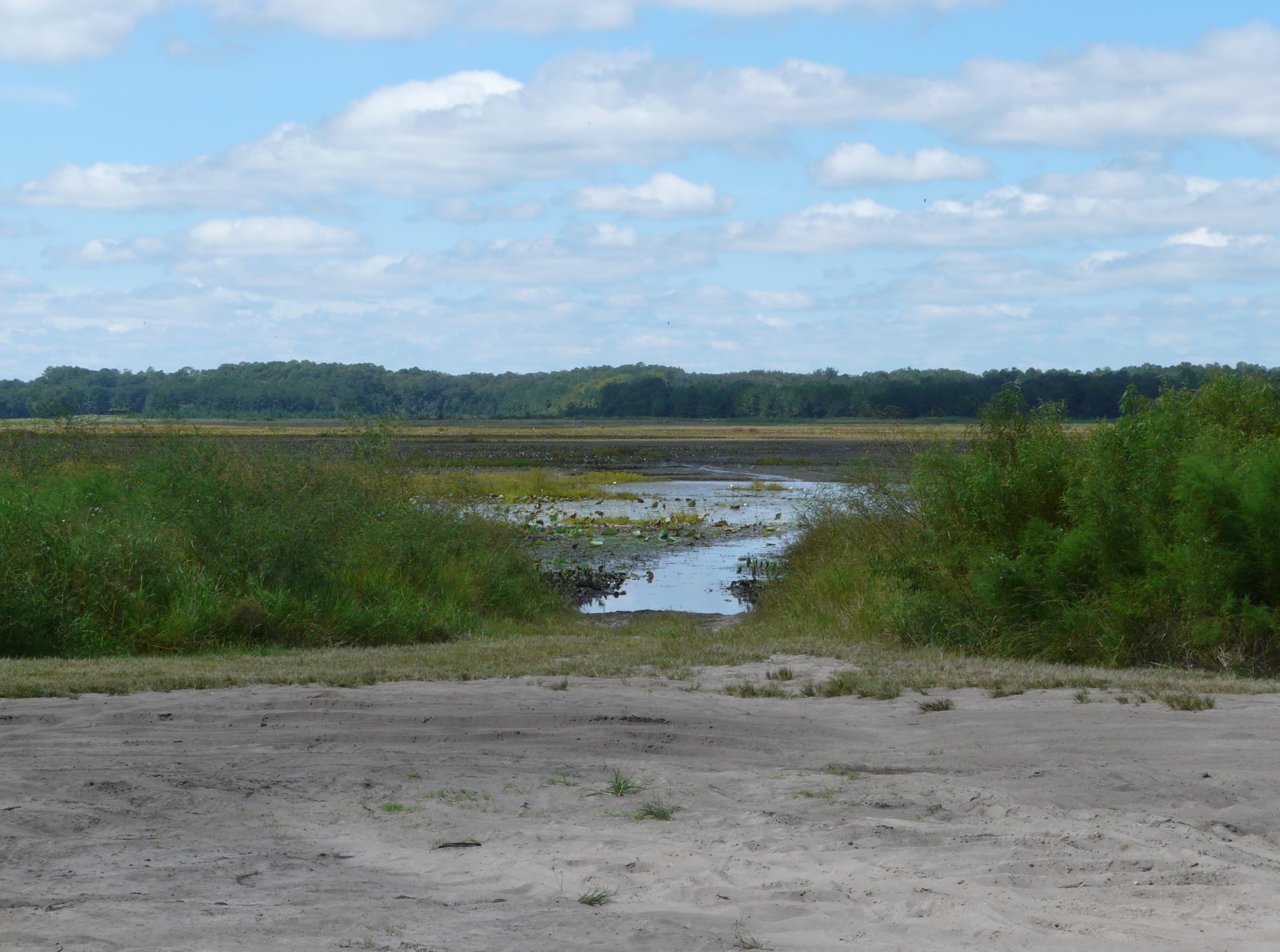
Polk County owns lakefront land on Lake Lowery and cannot build a boat ramp on it, because the only way to the land is a private road.
Jeff Spence, Polk's director of parks and natural resources, set this out for the county's Lakes Access Advisory Committee in July 2014. Work to secure public access to the 900-acre lake near Haines City was stalled for now, he said. The county held lakefront property it had acquired after the Federal Emergency Management Agency purchased the lots and demolished homes that had sustained repeated flooding. Access to that property was via a private road, and it would be impractical to develop a public boat ramp unless the public could use the road. Lake Lowery, The Ledger noted in its account of the meeting, is the largest lake in Polk County with no public boat ramp.
Lake Lowery has never had a county boat ramp. Writing in The Ledger in February 2010, Tom Palmer set down what access there had been: the 896-acre lake once had public access via Fletcher's Fish Camp on the south side, the fish camp had been closed for decades, and Lake Lowery never had a county boat ramp as far as he knew. What remained was access by lakefront property owners, or by residents and guests at Oak Harbor, a private vacation resort established in 1971. Palmer also noted that the county owned lakefront lots there and that the catch was the private road; committee chairman David Hupp had been asking County Attorney Michael Craig about options without result.
The county's land there came out of the flooding. Lake Lowery sits between Lake Alfred and Haines City, and the homes that generated the complaints stand between the lake's northern shore and Lake Lowery Road. Spence, then the county's natural resources manager, told commissioners the lake basin was unique because no civil improvement project could solve the flooding that inundated the neighborhood during El Nino. Six of the most seriously affected Lake Lowery homes were purchased by FEMA.
In 1998 Polk commissioners approved a program to buy vacant lots lying within Lake Lowery's flood plain, and tightened development standards. There were only a handful of takers. In August 2001 the commission rejected the first attempt in two and a half years to use what it called the Lake Lowery Corridor Project, voting 4-1 against buying a vacant three-acre parcel from William and Mary Overstreet for up to $32,595. Commissioner Don Gifford led that vote. Commissioner Bruce Parker cast the one vote for it, saying a previous board had made a commitment.
Polk County has held the power to cut a legal route since 1958. That year, county voters approved a referendum authorizing the County Commission to condemn land for secure access to water bodies. The committee kept coming back to it. At its June 2011 meeting, Hupp asked about the chances of using the 1958 referendum to improve lake access. Mike Callender, Polk County's parks and recreation manager, said that would be up to the commission, which would have to decide whether there was an important enough public purpose. "The commission would rather negotiate than take," he said. By July 2014 the county's legal staff was asking the committee for specific proposals rather than a blanket endorsement of using eminent domain in all cases.
The committee had been created in 2008 at the urging of then-County Commissioner Jean Reed, when about 80 of Polk County's 500 water bodies had public access. Lake Hatchineha, the other water named in the same testimony, had had no direct public access for some time, and the purchase that fixed that was part of the same effort Reed led to secure public access to as many lakes as possible. The Port Hatchineha Restaurant and Marina closed its doors to guests on April 30, 2006, which stopped local fishermen from reaching one of the few boat ramps on Lake Hatchineha; the owners, Patsy and Charles Russell, were making the three-acre marina off Hatchineha Road a members-only facility and looking to sell. The County Commission agreed to buy Port Hatchineha for $1.35 million, and the Lake Hatchineha boat ramp reopened on a Saturday in late November 2008 as a county facility.
The Spring 2014 Public Access Lakes directory from the county's Parks and Natural Resources Division lists Lena, Link and Livingston among its lakes, and Hatchineha as well, and nothing for Lowery. The one entry named Lowery in the state's boat ramp inventory is Lowery Lake, in Clay County, reached off Highway 21 by Greble Road and Treat Road.
Sources
Every factual claim in this story was checked against the page it came from before the story was saved. These are those pages. Our standards are on the masthead.
- Polk County Officials Updated on Lakefront Access - The Ledger, July 2, 2014
- Lake Access a Complicated Issue - The Ledger, Feb. 16, 2010
- Five Years Later, Polk County Lakes Panel Sees Results in Public Access - The Ledger, July 17, 2013
- Polk's Lake Committee Members Want to Focus on Access - The Ledger, June 7, 2011
- Commission rejects Lake Lowery buyout - The Ledger, Aug. 9, 2001
- Nature of Things: Lake Lowery flooding has no easy solution - The Ledger, Aug. 22, 2020
- Minimum and Guidance Levels for Lake Lowery in Polk County, Florida - SWFWMD, July 26, 2017
- Public Access Lakes: Directory of Ramps and Canals, Polk County BoCC Parks and Natural Resources Division, Spring 2014
- FWC Florida Boat Ramp Inventory - query, WaterBodyName like Lowery
- Polk County GIS - PNR Map_Park Boat Ramps layer, query for Hatchineha
- Marina Closes to Public - The Ledger, June 3, 2006
- Opening of Hatchineha Boat Ramp Getting Closer - The Ledger, Nov. 14, 2008
- Lake Hatchineha Boat Ramp to Open Saturday - The Ledger, Nov. 19, 2008
Lake May Holds Almost as Much Muck as Water
In November 2005 a crew pushed an aluminum pole into the bottom of Lake May at 167 places. Under 8 to 10 feet of water they found another 6 to 10 feet of muck — 302.4 acre-feet of it, against 316.0 acre-feet of lake.
Read →
Peace River, Fort Meade: The Thirteen Miles Where the River Drains Into the Ground
Between Bartow and Fort Meade the Peace River loses water into holes in its own bed — on one day in June 2002 the USGS measured about 32 million gallons going into the ground — and Fort Meade is where the leaking stops
Read →
Hardee Lakes, Bowling Green: The Lake That Stayed Closed Until the Fish Grew
Lake 3 at Hardee Lakes Park was stocked with sunshine bass in 2001 and then kept shut to anglers while they grew, and when it finally opened one Saturday morning in October 2005 all eight spots were already taken
Read →
Mountain Lake, Lake Wales: The Winter Home That Led to Bok Tower
Bok Tower sits on Iron Mountain because a Philadelphia magazine editor first bought a winter-home lot on the 92-acre private lake next door, and hired the lake colony's landscape architect
Read →