

September 8, 2026
Lake Griffin, Leesburg: The Drawdown That Brought the Bass Back
In the mid-1980s, biologists drained part of Lake Griffin on purpose — and the bass came back so hard the creel surveys still mark those years as the high water line
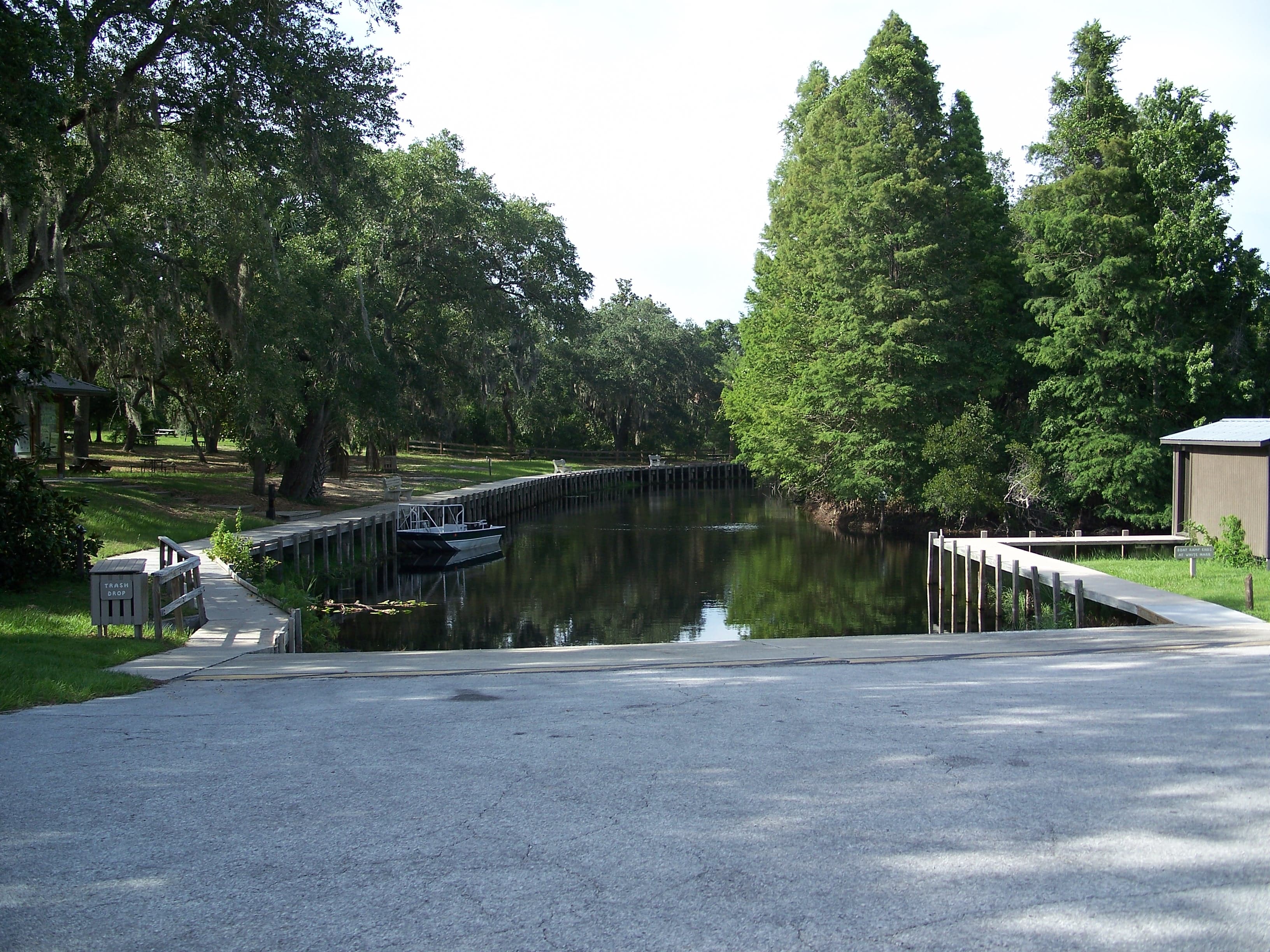
For three years in the mid-1980s, Lake Griffin fished like a different lake. Anglers working the Leesburg waterfront and the marshy northern shoreline filled stringers. The Florida Game and Fresh Water Fish Commission's creel census picked it up: 1986, 1987, 1988 — banner years, on the record, in a lake that had been declining for decades.
By the early 1980s, Lake Griffin was in trouble. As the eastern terminus of the Harris Chain — the catch basin where water from Apopka, Beauclair, Dora, Eustis, Harris, Yale, Carlton and Little Lake Harris all eventually drains before heading north into the Ocklawaha — Griffin had spent a century absorbing whatever the upstream lakes sent its way. Muck farms on the floodplain north of the lake pumped phosphorus-rich water back into the system. Leesburg sewage discharges added their share. The bottom went soft and deep with organic sediment. Native bulrush and pickerelweed thinned out. Algae blooms recurred each summer. The bass fishery fell off.
In 1984, the Lake County Water Authority and state agencies proposed something Florida had only rarely done to a major lake: drop the water level several feet below normal, expose the muck flats around the shoreline to sun and air, let them oxidize and consolidate, and give native shoreline vegetation a chance to root in the firmer substrate before the lake came back up. Docks that ordinarily sit in water stand on dry mud while it is happening.
Residents opposed the plan. Lake Griffin was the only lake in the Ocklawaha chain ever targeted for a drawdown, and when the technique came up again a decade later the Orlando Sentinel, in 1994, described the fight as one that set residents against the state. The state went ahead anyway.
When the water came back, so did the bass. The exposed lake bottom had hardened. New vegetation took hold along the shoreline — the kind of structure that bass spawn against and ambush bait from. Forage fish populations rebounded in the cleaner shallows. By 1986 the creel surveys were registering it. By 1988, Lake Griffin was again a destination, and the drawdown entered the toolkit that managers would later apply to other shallow Florida lakes, including the larger scrape at Lake Tohopekaliga.
By the late 1990s, alligators on Lake Griffin were dying in numbers nobody could explain, and national specialists came to Leesburg to work on it. The Sentinel reported in 2000 that testing had ruled out mercury, other toxic metals, and the pesticides used around the lake for decades. The cause was eventually traced to a neurotoxin associated with the lake's persistent blue-green algae blooms.
The St. Johns River Water Management District bought up former muck farms north of the lake under the Save Our Rivers and Preservation 2000 programs, consolidating thousands of acres into what is now the Emeralda Marsh Conservation Area. Wetlands were rebuilt to filter water before it reached Griffin. Harris Bayou was reconnected to improve flow between Lake Harris and Lake Griffin. Hydrilla management continues, year by year, with no end date.
Gizzard shad, which move phosphorus out of the sediment and back into the water column, have been harvested from Lake Griffin by the ton.
Presented by

Own waterfront in Tavares?
Lake history is interesting. Shoreline conditions are practical. Horizon Marine builds docks, seawalls, and shoreline protection on Tavares's lakes — and gives a straight answer on what your property actually needs.
Lake Eva, Haines City: Sixty Years of Piped Stormwater
For roughly sixty years the centerpiece of Haines City's signature park was fed the runoff of city streets — and it took a chemical pump and a state grant to start pulling it back
Read →
Lake Padgett, Land O' Lakes: The Sinkhole That Was Measured From the Inside
On July 14, 2017, a sinkhole opened in the Lake Padgett Estates subdivision, swallowed two homes and a boat, and grew to 260 feet across — and a USF researcher climbed in with a 3D scanner to study it
Read →
Hardee Lakes, Bowling Green: The Lake That Stayed Closed Until the Fish Grew
Lake 3 at Hardee Lakes Park was stocked with sunshine bass in 2001 and then kept shut to anglers while they grew, and when it finally opened one Saturday morning in October 2005 all eight spots were already taken
Read →
Lake Tracy, Haines City: The Ditch That Got Its Own Government
A drainage ditch that begins at the north end of Lake Tracy has had its own unit of Florida government since 1929, and it still assesses $50 an acre to keep the channel open
Read →
Building on Lake Griffin or another Tavares lake?
Free waterfront assessment · License #SCC131154313