
May 25, 2026
Lake Harris, Tavares: 36 Pounds in a Day
In January 2022, two brothers fishing a college tournament on Lake Harris brought a five-bass limit to the scales that weighed more than any single-day catch in the history of the Bassmaster College Series
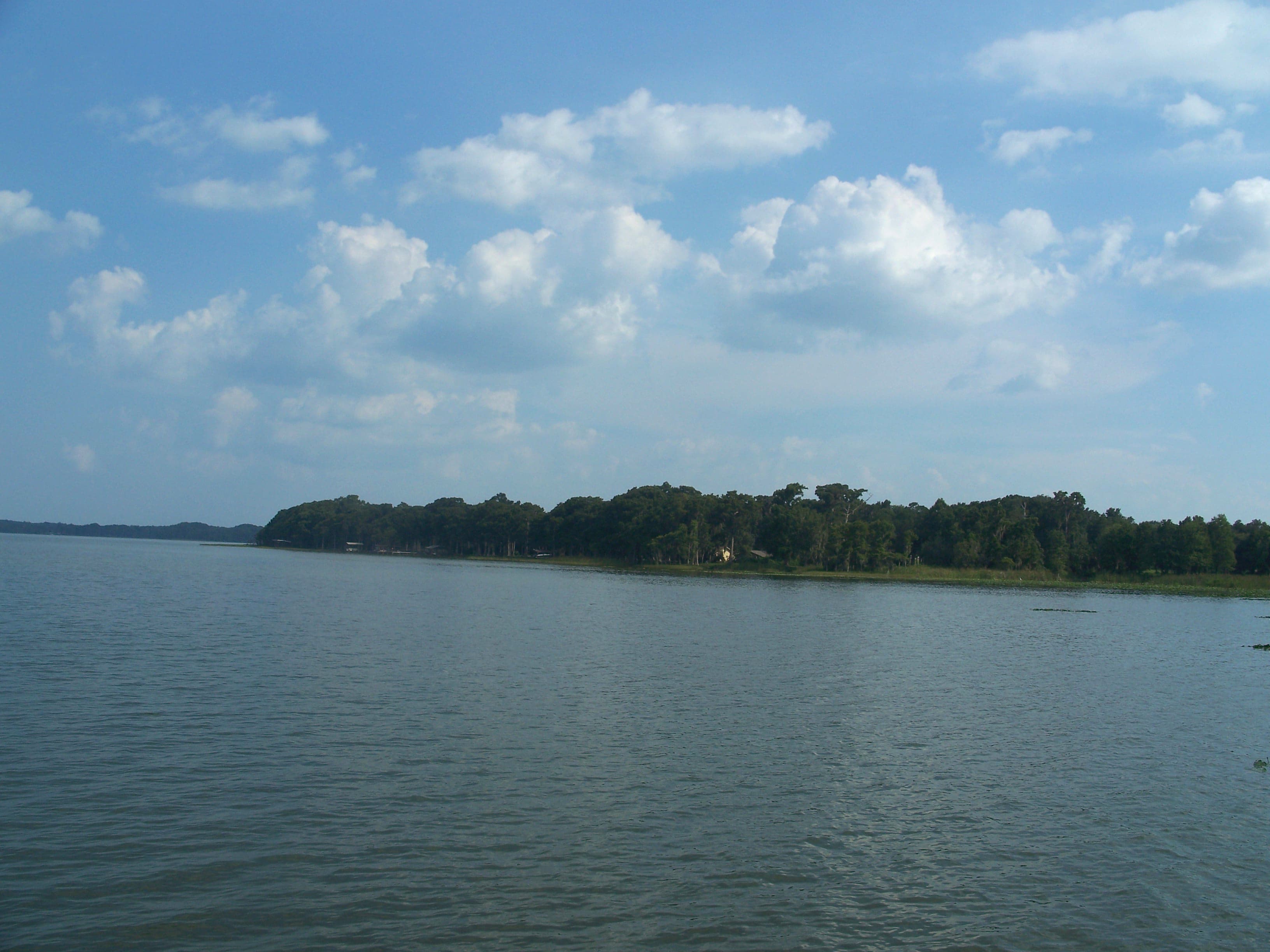
Thirty-six pounds, seven ounces. Five fish. One day on Lake Harris.
That is what Matt and Lafe Messer carried to the weigh-in stage in January 2022, and when it was done they held the single-day weight record for the Bassmaster College Series. Five-bass limits are the standard tournament currency in Florida, and a good bag for an amateur team runs somewhere in the high teens or low twenties. The Messers nearly doubled that. They averaged better than seven pounds a fish.
Much of that has to do with what is under the boat. At 15,672 acres, Harris is the largest lake in the Harris Chain, sprawling across Astatula, Eustis, Tavares, and Howey-in-the-Hills, and it has long stretches of hard bottom — sand and shell — rather than the muck that floors the shallow lakes on the Kissimmee chain. Bassmaster's hot-spot writeup on the Harris Chain singles out that hard bottom as the structural difference between Harris, Eustis, Dora, and Beauclair and the softer lakes elsewhere in the state. Anglers work the shellbeds, the Kissimmee grass along the edges, the hydrilla where it has been allowed to grow, and the clean bottom in between. Hard bottom holds spawning fish, and in January those fish are heavy.
The Messers fished their bag during the pre-spawn window, when the biggest females stage on hard-bottom points and shellbeds before moving up. Harris had hosted FLW and Major League Fishing events for years by then, so the water was no secret to the pros. What the Messers did was put together a bigger single day than any college team had managed anywhere.
The Florida Department of Environmental Protection has a TMDL listing on both Lake Harris and Little Lake Harris, the product of a long stretch of phosphorus loading from agriculture and stormwater and the loss of clarity that came with it. Blooms still occur — the Florida Department of Health issued a blue-green algae alert for sections of Lake Harris in January 2024. Hydrilla, which provides bass cover and fouls props, has drawn steady money: in 2019, Lake County, the Lake County Water Authority, and FWC committed nearly $2.2 million to treat it across the chain.
The lake carries a lot besides bass. The Orlando Sentinel once put the Lake Harris large-gator count at 750, with roughly 1,200 total — about 30 per mile of shoreline. Manatees occasionally come up the Ocklawaha system from the St. Johns.
The fish that made the record went back in the water. Tournament bass are weighed and released, and the 36 pounds, 7 ounces the Messers put on the scale in January 2022 still stands as the heaviest single-day bag in Bassmaster College Series history.
Mountain Lake, Lake Wales: The Winter Home That Led to Bok Tower
Bok Tower sits on Iron Mountain because a Philadelphia magazine editor first bought a winter-home lot on the 92-acre private lake next door, and hired the lake colony's landscape architect
Read →
Lake Pierce, Lake Wales: The Five-Day Haul From Net to Railroad
Before it was a fish camp, the north shore of Lake Pierce was a commercial netting operation that hauled its catch out over log roads on a five-day round trip to the railroad — back when the lake was called Cat Fish Lake.
Read →
North Prong Alafia River, Mulberry: The 154 Snook That Started the Repair
When 1997's acid spill came down Skinned Sapling Creek into the North Prong, the first act of repair on the Alafia was a release of exactly 154 juvenile snook
Read →
Lake Walk-in-the-Water, Lake Wales: The Lake That Lost All Its Hydrilla and Had to Be Replanted
Three 2004 hurricanes pulled every bit of submersed vegetation out of Lake Walk-in-the-Water and no one ever sprayed a drop — by FWC's account the hydrilla has not come back, and biologists have spent the years since hand-planting natives in its place
Read →