

June 25, 2026
Little Lake Harris, Howey-in-the-Hills: The First Citrus Juice Plant in Florida
The first plant in Florida built to squeeze juice out of oranges stood on the west shore of Little Lake Harris — a 1921 idea that ran ahead of the equipment and the market built to handle it
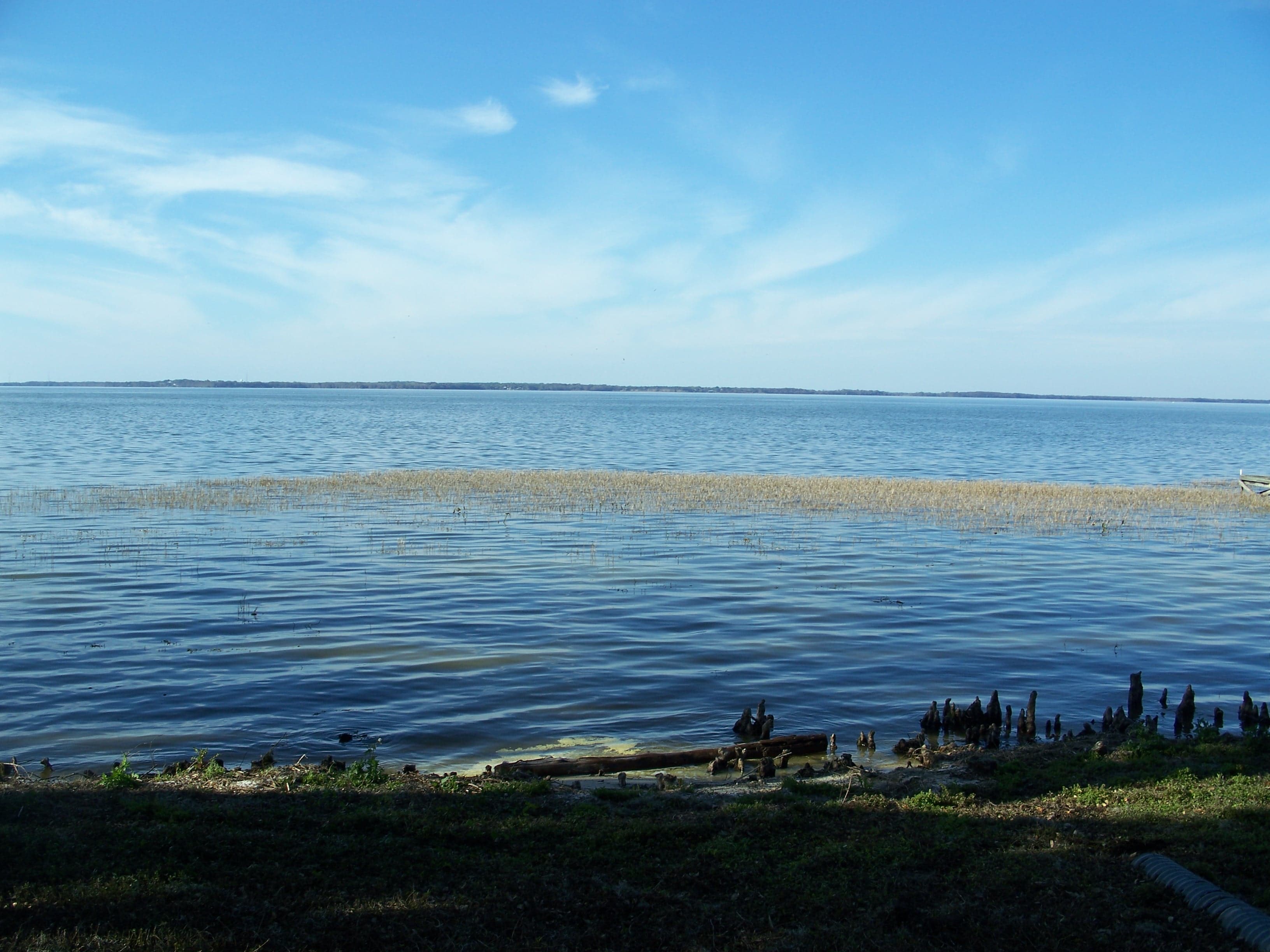
In 1921, on a shoreline that was almost entirely citrus groves, William John Howey built the first citrus juice plant in Florida. Not a packing house — those already dotted the state, sorting and crating fruit to ship north on the rails. A plant whose purpose was to take the orange apart: to squeeze it, bottle the juice, and sell the inside of the fruit rather than the fruit itself. That was a new idea on the western shore of Little Lake Harris, and Howey put it there before most of the equipment or the market for packaged juice existed.
Howey had the land for it. In 1920 he purchased 60,000 acres in Lake County and began planting citrus across the rolling ground above the lake. The next year, the juice plant went up in the town he was founding. The timeline is a little tangled in the records — some sources put the land purchase in 1920 and the plant in 1921, the town's incorporation in 1925, and the official renaming to Howey-in-the-Hills in 1927 — but the through-line holds. Everything here started with one man, his groves, and the water at the bottom of the hill.
The lake mattered to the plan in a way that's easy to miss now. Little Lake Harris is an arm of Lake Harris, connecting to it at the northwestern corner, and the whole thing sits on the Harris Chain of Lakes — a navigable string of water that runs through Dora, Eustis, Beauclair, and Carlton. Before the highway network filled in, that chain was a working corridor. Citrus country and lake country were the same country here, and Howey built his town on the seam between them, the groves climbing the hills he liked to call "the Florida Alps" while the water carried the rest.
He sold the place as much as he built it. The Floridan Hotel went up on the high ground overlooking Little Lake Harris, a stop for the buyers Howey brought down to look at grove lots. He built the twenty-room Howey Mansion in 1925. The whole town was, in a sense, a sales floor for the proposition that you could own a piece of a citrus operation in a landscape that looked like nowhere else in Florida.
What's left of the juice-plant ambition isn't the plant. It's the shape of the town and the names that survived it. After Howey's era, under C. V. Griffin, the Floridan Hotel was converted into the Administration Building for the Howey Academy. The same old hotel held the girls' dormitory, and for a stretch a portion of it served as the Town Hall — one building doing the work of a hotel, a school office, a dorm, and a seat of government as the town reorganized itself around what came after the boom. Today there's a clear spot on top of the hill overlooking Little Lake Harris where the Floridan once stood. Nothing on it but the view down to the water Howey was selling.
The lake kept doing the ordinary work it had always done. Anglers still come for the largemouth bass, the catfish, and the bluegill. Rental boats out of Mount Dora are cleared to run Carlton, Beauclair, Dora, Eustis, Harris, and Little Lake Harris — the same chain that once tied the grove town to its neighbors. Hickory Point Recreation Park sits on SR 19 right against the water, on the Tavares side.
That state road crosses the lake on the Howey Bridge, and the bridge carries its own piece of the shoreline's record. In one account preserved in the local paper's history of the crossing, a man named "Red" Mincy described how Calvin Thomas, 46, of Yalaha, drowned one Saturday after he lost control of a pickup truck and hurtled through the rail of the Howey Bridge into Little Lake Harris. The current bridge has stood for 68 years as of that 2018 telling — long enough to have become the thing people picture when they picture the town from the water.
Howey's groves are gone in the form he planted them, and the juice plant left no monument. But the claim is fixed in the record: the first place in Florida built to turn an orange into a bottle of juice stood on the west shore of this lake, in 1921, in a town that didn't yet have the name it carries now.
Presented by

Own waterfront in Leesburg?
Lake history is interesting. Shoreline conditions are practical. Horizon Marine builds docks, seawalls, and shoreline protection on Leesburg's lakes — and gives a straight answer on what your property actually needs.
Spring Lake, Brooksville: The Grove That Turned Into an Attraction
A hard freeze wiped out a Spring Lake citrus grower's living in the early 1960s, and rather than replant, the Boyett family turned the survivors into a roadside attraction that outlived the groves around it
Read →
Saddlebag Lake, Lake Wales: The Five Months of Pumping It Took to Get the Water Out
Saddlebag Lake is a closed basin with no outlet, so when it rose into 300 homes in 2005 the only way out was three pumps and two miles of pipe to Lake Rosalie — paid for by the residents at $30,000 a month
Read →
Lake Marion, Haines City: The Island House Built in the Shape of a Celtic Cross
In 1887 an Irish carpenter who had come south for his lungs started cutting cypress on a 23-acre island in Lake Marion, and built a house in the shape of a Celtic cross — his family has held the island ever since
Read →
Peace River, Fort Meade: The Thirteen Miles Where the River Drains Into the Ground
Between Bartow and Fort Meade the Peace River loses water into holes in its own bed — on one day in June 2002 the USGS measured about 32 million gallons going into the ground — and Fort Meade is where the leaking stops
Read →
Building on Little Lake Harris or another Leesburg lake?
Free waterfront assessment · License #SCC131154313