

September 29, 2026
Lake Otis, Winter Haven: The Two Parking Spaces That Unlocked the Hydrilla Money
Homeowners on a private Winter Haven lake raised about $40,000 to kill their hydrilla and needed $90,000 — so they built a public boat ramp instead, because a state rule only funds weed control on water the public can launch on
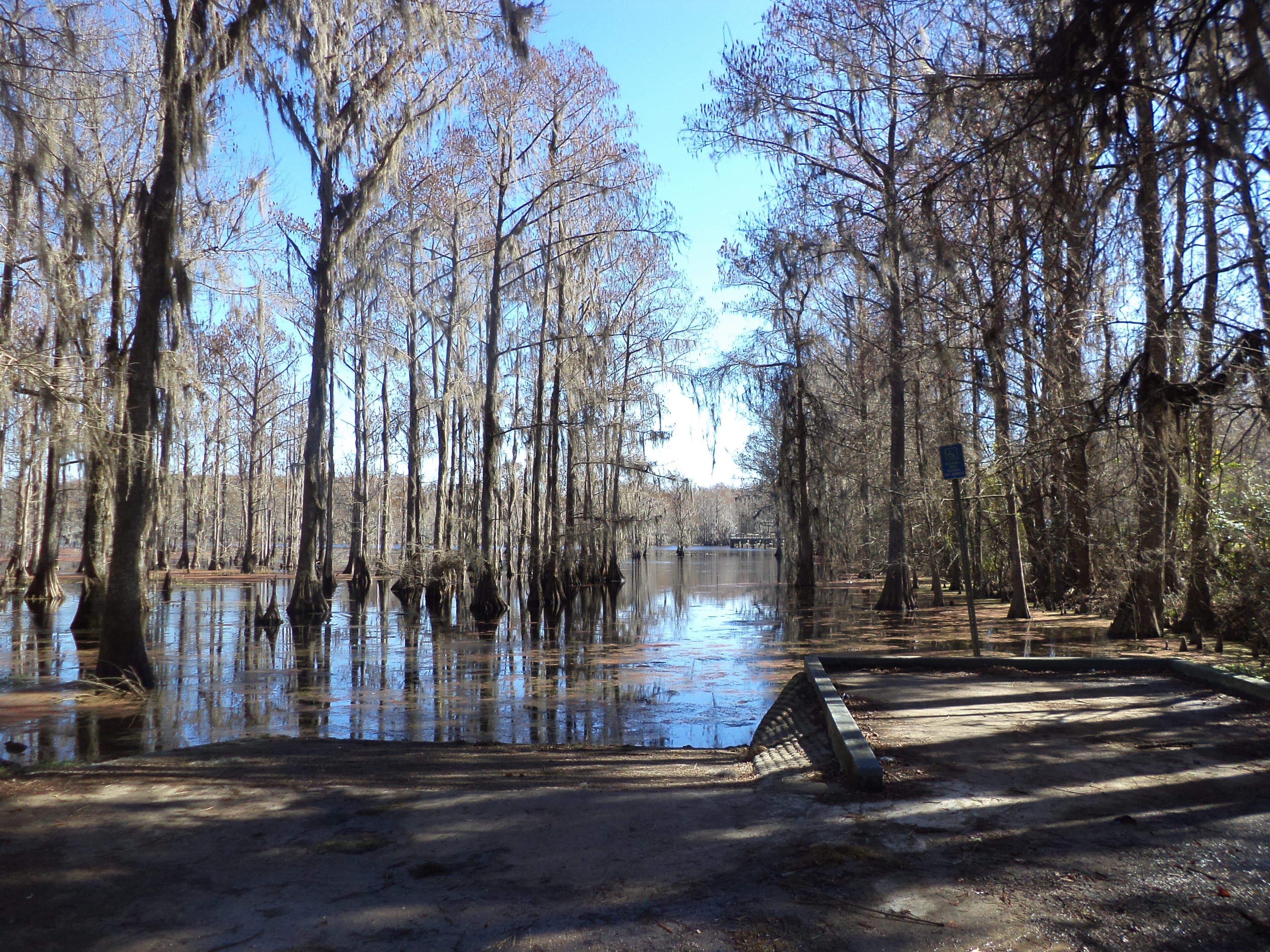
Homeowners around Lake Otis raised about $40,000 to deal with the hydrilla in their water, and then found out what the work actually cost. The first treatment alone would run between $80,000 and $90,000, and holding it down after that would take up to $20,000 a year. Florida pays for exactly this kind of work on hundreds of lakes. It would not pay for any of it here, because Lake Otis was a private lake.
The rule that decides this is Florida Administrative Code 68F-54.0035, which sets out what a waterbody has to be before state and federal aquatic plant management money can be spent on it. As the rule now reads, following an amendment that took effect in October 2012, it requires access for the boating public either by an established, improved boat ramp, or by a direct navigable connection to another eligible waterbody.
Lake Otis had neither. The City of Winter Haven's own lakes report traces the flow through its South Central Lakes: it starts at Lake Elbert, runs through an underground pipe into Lake Otis, and leaves Otis by canal for Lake Link. The Lake Region Lakes Management District — the Canal Commission — sorts the waters on its public boat ramp list into North Chain, South Chain, and independent. Otis and Link are both listed as independent.
Ingram Leedy, who owned a home on the lake, had spent more than two years on the effort, a hunt for hydrilla funding. He brought in experts from the University of Florida to evaluate the lake and called in the Southwest Florida Water Management District and the Department of Environmental Protection. He founded a nonprofit, Save Lake Otis Chain, Inc., and the group raised its roughly $40,000 from the people who lived around the water. Then he worked with Roger Griffiths, the Canal Commission's executive director, to find a piece of property for a boat ramp.
"Lake Otis is an independent lake, so convincing my neighbors to put a public boat ramp was a monumental task," Leedy told The Ledger in August 2010.
The site they found was on the west shore of Little Lake Otis, the water peninsula at the lake's south end, between Avenue L and Avenue M Southeast, on ground known as Lesnick Park. The Canal Commission paid approximately $140,000 for one parcel and about $35,000 for materials. The city bought the adjacent 50-foot flag lot for $105,000, used it to add a drainage swale and relocate a lift station, and then donated the lot to the Canal Commission. The ramp and parking area were poured in porous concrete over a six-to-eight-inch layer of gravel, so rainwater filters through and percolates into the ground to recharge the aquifer rather than collecting in a retention pond.
What that bought, on the ground, was two parking places, a turnaround spot, a boat ramp, a dock and a small grassy area. Leedy described it to the paper as a minimal boat ramp. A qualifying ramp has to have enough room to safely turn a vehicle and trailer around, and ample parking within a quarter mile. It has to carry a sign saying it is a public boat ramp or use area. There has to be at least one directional sign on the nearest paved roadway pointing the way in.
It opened in November 2010. By then, Leedy said, an FWC maintenance plan was in place and the hydrilla had been treated. The ramp was checked in March 2014 for Polk County's public access lakes directory and entered there as follows: Lake Otis, Winter Haven, 143 acres, 11.8 feet deep, maintained by the Lake Region Lakes Management District, ramp rating excellent paved. The district's current ramp list still shows it: Lake Otis, independent, 143 acres, boat ramp and fishing pier, district owned.
More than 450 public waters in Florida are eligible for aquatic plant management funding under that rule. Polk County has more of them than any other county in the state, with 85.
On July 23, 2019, at Polk County's request, David Eilers and David McIlwaine of the USF Water Institute worked four pie-shaped sections of Lake Otis for the Florida Department of Environmental Protection's Lake Vegetation Index, throwing a submerged-vegetation sampling tool called a Frodus along a five-meter belt transect in each section and identifying every species present. They came back with 44 species of wetland vegetation, 33 of them native. The submerged community was dominated by Vallisneria americana and Ceratophyllum demersum. The lake scored 48 against an impairment threshold of 37, which the assessment classified as healthy. Hydrilla is not among the 44.
Sources
Every factual claim in this story was checked against the page it came from before the story was saved. These are those pages. Our standards are on the masthead.
- Lake Otis now a public lake thanks to addition of ramp — The Ledger, Nov. 7, 2010
- Florida Administrative Code 68F-54.0035, Waters Eligible and Eligibility Criteria for Aquatic Plant Management Funds
- Winter Haven Lakes Report — City of Winter Haven Natural Resources Division
- Public Access Boat Ramps — Lake Region Lakes Management District
- Election 2010: Canal Commission Seat 1, Ingram Leedy — The Ledger, Aug. 6, 2010
- Public Access Lakes: Directory of Ramps and Canals — Lake Otis entry, Polk County Water Atlas (2014)
- Public Waters — UF/IFAS Center for Aquatic and Invasive Plants
- Lake Otis Lake Vegetation Index Assessment, USF Water Institute, July 23, 2019
Presented by

Own waterfront in Winter Haven?
Lake history is interesting. Shoreline conditions are practical. Horizon Marine builds docks, seawalls, and shoreline protection on Winter Haven's lakes — and gives a straight answer on what your property actually needs.
Lake Mattie, Auburndale: The Lake Florida Measures Other Lakes Against
Lake Mattie is one of the 71 lakes Florida uses as a reference for what a minimally disturbed lake looks like — and in 2019 the state's own update listed it at a Lake Vegetation Index score of 41 and asked whether it still qualified
Read →
Moon Lake, New Port Richey: The Foot and a Half That Doubles the Lake
Between 38.2 and 39.6 feet, Moon Lake grows from about 105 acres to 193 — the extra water standing in a 95-acre cypress swamp that a raised road cut off from the lake, and that now sets the lake's legal minimum level
Read →
Saddlebag Lake, Lake Wales: The Five Months of Pumping It Took to Get the Water Out
Saddlebag Lake is a closed basin with no outlet, so when it rose into 300 homes in 2005 the only way out was three pumps and two miles of pipe to Lake Rosalie — paid for by the residents at $30,000 a month
Read →
Lake Jessie, Winter Haven: The 180-Acre Lake Where the World Learns to Land on Water
About 500 pilots a year earn their seaplane rating on a 180-acre lake beside the Winter Haven airport — more, by one industry count, than every other seaplane school in the United States combined
Read →
Planning waterfront work in Winter Haven?
Free waterfront assessment · License #SCC131154313