

May 2, 2026
Scott Lake, Lakeland: The Day the Lake Drained Into the Ground
In June 2006, a sinkhole opened beneath Scott Lake and drained all 251 acres of it into the Floridan Aquifer — and then, slowly, the lake came back
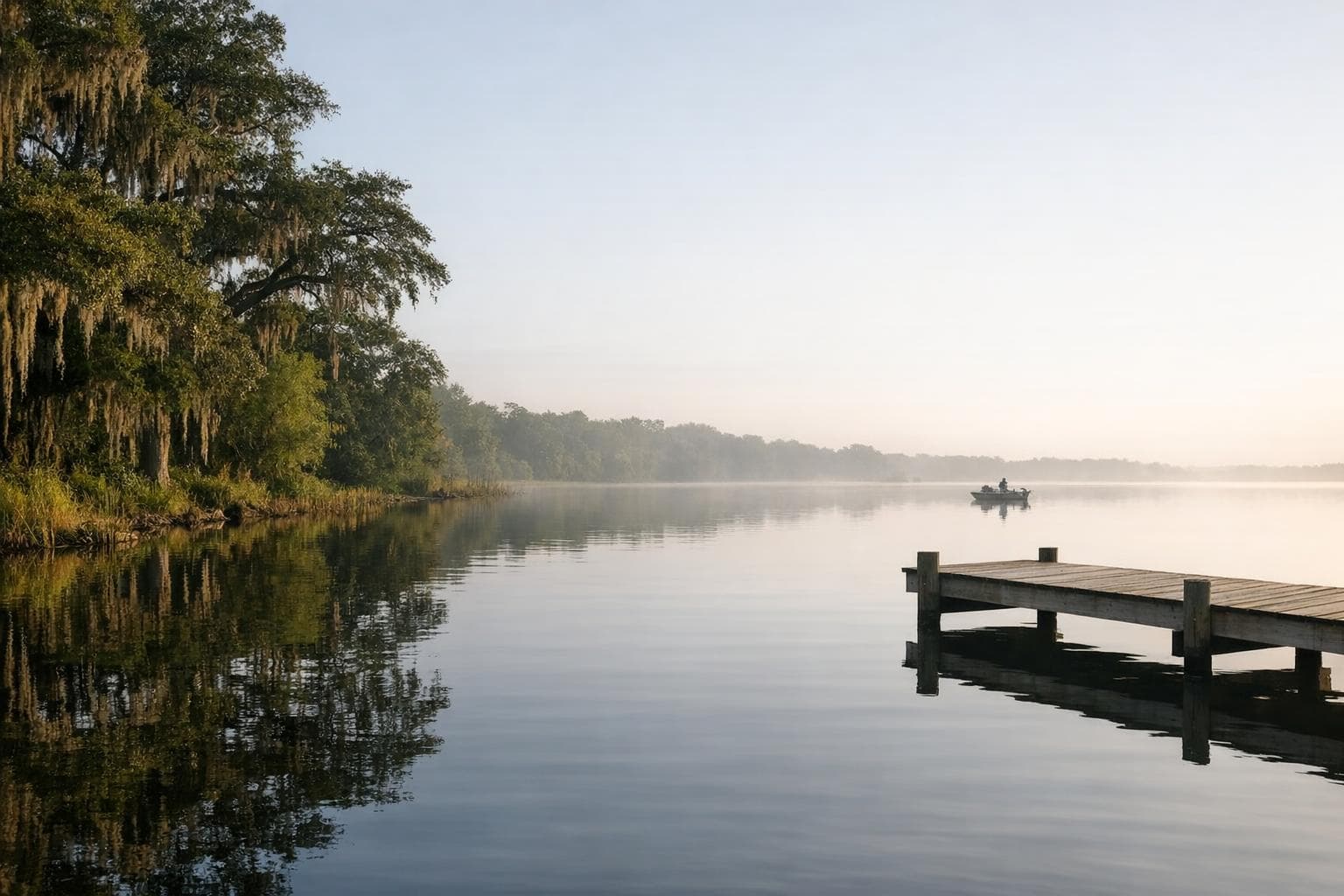
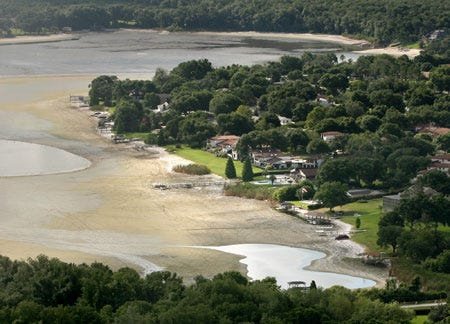
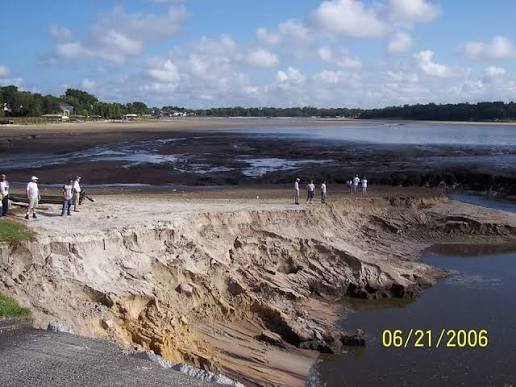
On June 14, 2006, a sinkhole opened on the bottom of Scott Lake near Pier Point, on the lake's south shore. It took a boat ramp, a dock and a gazebo with it. Over the following weeks the lake — all 251 acres of it — drained through that hole into the limestone below.
The water went into the Floridan Aquifer, the underground reservoir that supplies most of Central Florida's drinking water. Scott Lake emptied itself directly into it through a hole in its own floor. Fish stranded on drying mud. Docks ended over dirt. The shoreline kept retreating from the houses built to face it.
The peninsula sits on porous limestone, and rainwater filtering down through the soil is mildly acidic. Over thousands of years that water dissolves voids in the rock. When the roof of a void gives way, the surface above it collapses. Most Florida lakes — Scott Lake included — are old sinkhole basins that filled with water long ago and stayed full because sediment sealed the bottom.
Scott Lake had collapsed before, in geological time. The 2006 event was a reactivation, what hydrogeologists call a paleo-sinkhole reopening. A 2012 paper presented at an engineering conference described the Scott Lake collapse as part of "the cycle of formation of lake basins within the mantled karst upland areas in Central Florida."
The lake bed sat largely empty for years. Property owners learned that a private lake is not insured the way a house is. There was no claim to file, and no agency responsible for putting the water back.
Sediment did the work — clay, sand and organic muck stirred up by storms and moved by slow groundwater — packing back into the throat of the sinkhole. Year by year the void clogged. Rain that had been running straight through to the aquifer began to pool again. By 2013, The Ledger reported the lake was gradually refilling. By 2018, residents were marking its return: open water, wading birds, fish populations re-establishing, the shoreline back where the deeds put it.
Recovery took roughly a decade, and no one engineered it. There was no plug, no grout injection, no repair contract. Joe Curry, a spokesman for the Scott Lake Association, told The Ledger in 2013 that the anger of the early years had largely settled into acceptance. "It's an act of nature," he said, "just like that sinkhole over there in Seffner."
The 2006 sinkhole lies near the upper forefoot of the lake's tilted Christmas-stocking outline. Nothing marks it from the surface, and the water above it is the same color as the rest of the lake.
The ground has not entirely stopped moving. In June 2023 a new sinkhole opened off Scott Lake Road during a well-drilling operation, then reopened that September after heavy rain. Polk County officials called it active but stable.
Presented by

Own waterfront in Lakeland?
Lake history is interesting. Shoreline conditions are practical. Horizon Marine builds docks, seawalls, and shoreline protection on Lakeland's lakes — and gives a straight answer on what your property actually needs.
Lake Smart, Winter Haven: The Round Lake on the Ten-Lake Run
Lake Smart sits on a chain that crosses three cities and ten lakes, stitched together by canals that turned a scattering of round Polk County ponds into a single navigable system
Read →
Lake June-in-Winter, Lake Placid: The Bird That Lives Only on the Sand
On the sand of the Lake Wales Ridge above Lake June-in-Winter lives a bird found nowhere else on Earth — and the scrub it depends on only survives because fire keeps clearing it
Read →
Lake Marion, Haines City: The Island House Built in the Shape of a Celtic Cross
In 1887 an Irish carpenter who had come south for his lungs started cutting cypress on a 23-acre island in Lake Marion, and built a house in the shape of a Celtic cross — his family has held the island ever since
Read →
Hardee Lakes, Bowling Green: The Lake That Stayed Closed Until the Fish Grew
Lake 3 at Hardee Lakes Park was stocked with sunshine bass in 2001 and then kept shut to anglers while they grew, and when it finally opened one Saturday morning in October 2005 all eight spots were already taken
Read →
Building on Scott Lake or another Lakeland lake?
Free waterfront assessment · License #SCC131154313