April 22, 2026
What Acid-Colored Lakes Do to Aluminum Sheet Pile
Not all freshwater is the same — and on Polk County's acid-colored lakes, the wrong seawall material can fail from the inside out while still looking fine from the dock. Here's what the water chemistry data actually says.
EXCERPT: Aluminum sheet pile depends on an oxide layer that stays stable only between about pH 4 and 9, and Central Florida's tannin-stained lakes sit at the edge of that range
What Acid-Colored Lakes Do to Aluminum Sheet Pile
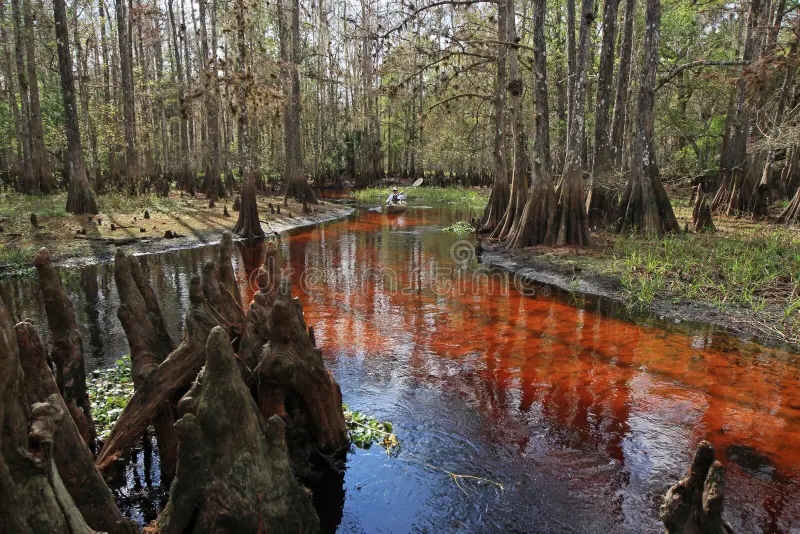 Tannin-stained red-brown water in a Florida cypress wetland — the same organic acids that color this water affect seawall material performance on Central Florida lakes
Aluminum sheet pile does not rust the way steel does. It is lighter than steel, which makes installation easier in some conditions.
Its corrosion resistance depends on a thin oxide layer that forms on the metal surface on contact with air. Corrosion engineering references, including Total Materia's treatment of the forms of aluminum corrosion, put the stable range for that passive film at roughly pH 4 to 9. Outside it, the film breaks down and the metal beneath corrodes by pitting — localized holes that deepen while the surrounding surface still looks serviceable. The damage becomes visible late, and by then it is often structural.
The EPA and the Florida Department of Environmental Protection classify the state's lakes into four categories drawn from the Shannon and Brezonik system: acid-clear, acid-colored, alkaline-clear, and alkaline-colored. Central Florida lakes appear in the acid-colored group — the darker water that runs brown or amber. The color comes from tannins released as organic matter decomposes, including the leaf litter that falls into these lakes and settles along their margins. Darker water carries more tannic acid and a lower pH.
The USGS hydrology study of Polk County, by Spechler and Kroening, describes the county's lake water as slightly acidic and soft.
Heat compounds it. Higher water temperatures accelerate chemical reaction rates, and the water here never gets cold enough to slow the process the way a northern winter does.
Aluminum walls on the wrong lake do not fail all at once. They pit — at the waterline, where the metal cycles between wet and dry, and below the surface where organic sediment sits against the wall face. Surface appearance does not indicate section loss below the waterline.
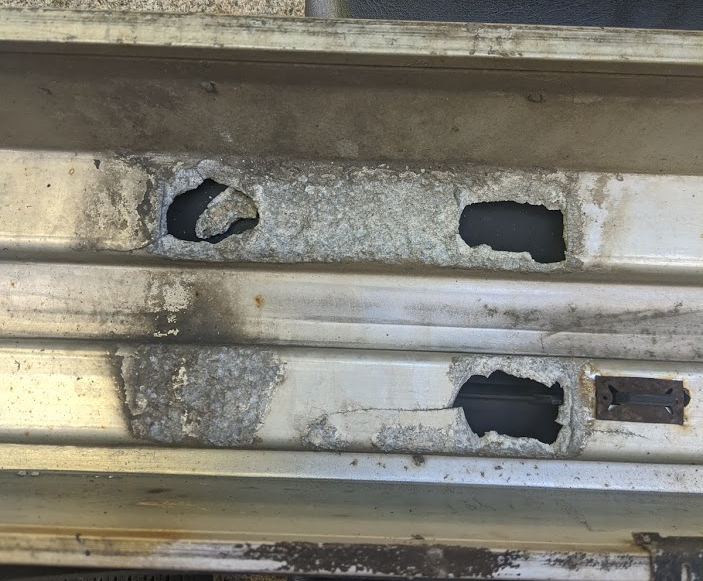 Severe pitting corrosion on aluminum metal showing holes and oxidation — the type of damage acidic water causes on aluminum seawalls
Vinyl sheet pile has no oxide layer to lose. The material is chemically inert — it does not react with organic acids, tannins, or the sulfate compounds present in some of Polk County's phosphate-influenced lakes. A vinyl wall with correct tieback engineering performs in water chemistry that would pit aluminum over time.
Vinyl has structural load limits and is not the right answer on every property, particularly where significant grade change behind the wall puts heavy backfill pressure on the structure. It can be harder to drive into rocky substrate. The cap system matters too: a wood cap requires periodic maintenance, while an aluminum cap adds longevity at higher cost.
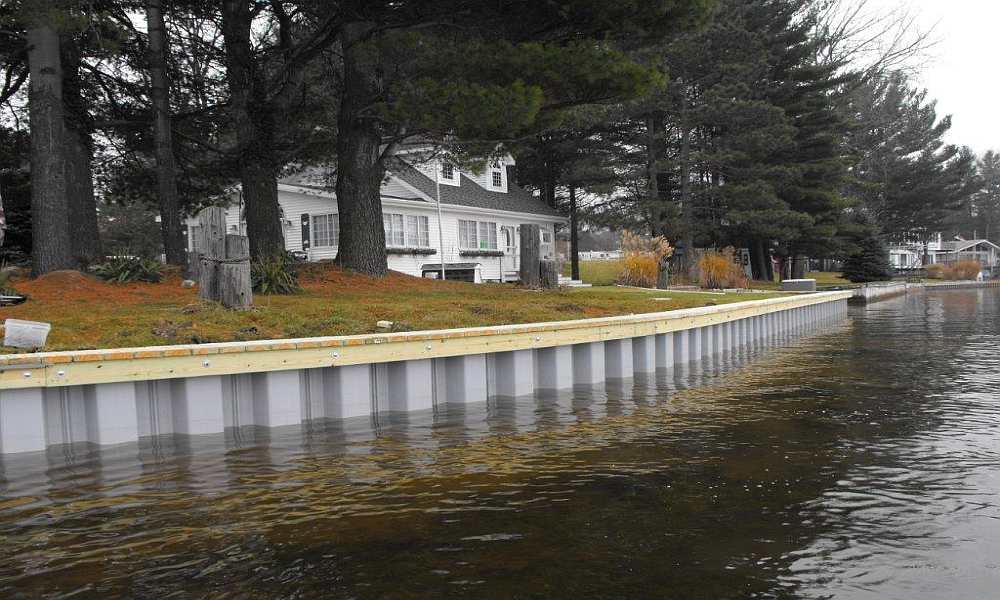 Vinyl sheet pile seawall with wood cap on a residential freshwater lake, viewed from the water
Before signing a seawall construction contract on a Florida waterfront lot, ask the marine contractor one question: what is the pH of this lake, and how does that affect which material you are recommending.
Sources: U.S. EPA / FDEP — Numeric Nutrient Criteria for Florida Inland Surface Fresh Waters; Shannon and Brezonik lake classification system; Suwannee River Water Management District — pH and Surface Water; USGS — Hydrology of Polk County, Florida (Spechler and Kroening); Total Materia — Corrosion of Aluminum, Forms of Corrosion
Published by

Horizon Marine — Docks & Seawalls
Central Florida's dock and seawall contractor. Free waterfront assessment. License #SCC131154313.
Have a waterfront project in Central Florida?
Free waterfront assessment · License #SCC131154313