

Service Areas / Clermont
Docks, Seawalls & Shoreline Work in Clermont
We build on the Clermont Chain of Lakes — Minneola, Minnehaha, Louisa, Winona and the rest of the eleven-lake system tied together by the Palatlakaha River.
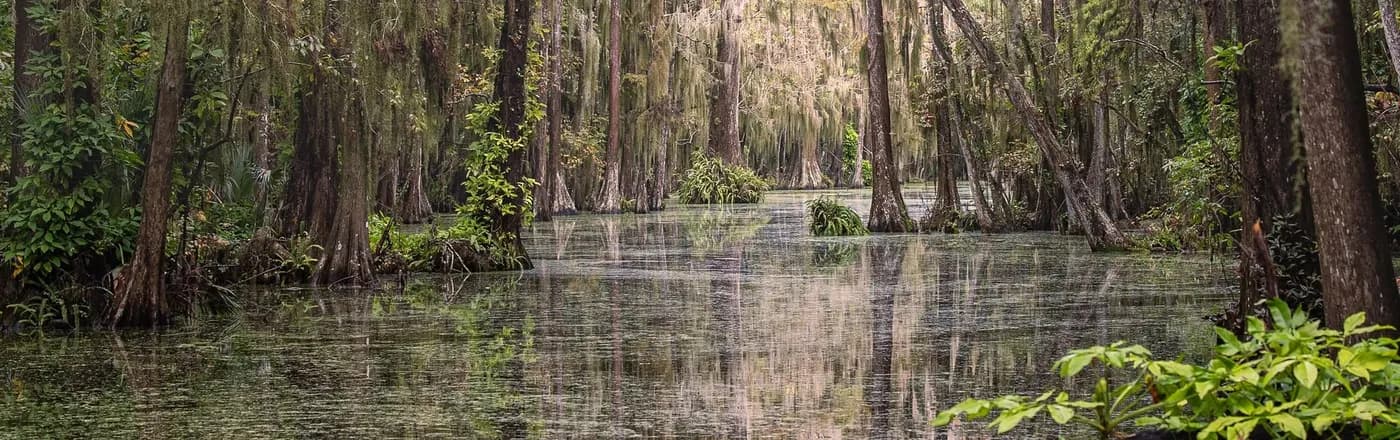
Clermont lakes we work
The Clermont Chain is eleven freshwater lakes connected by the Palatlakaha River, running southeast to northwest through Lake County. The water runs tea-colored from tannic acid, fed by groundwater and shaded by miles of cypress fringe — and the bottoms behind that fringe are organic muck before you reach stable substrate. Minneola is the busy one: open water where wakeboard boats and ski rigs run all day. Minnehaha and Louisa — Louisa being the largest lake in the chain — carry the same kind of traffic on weekends. That sustained boat wake is steady pressure on every exposed shoreline in this system.
Building on the Chain means accounting for that wake energy and that muck bottom. A dock that holds up fine on a quiet bass pond needs heavier framing and deeper pilings on Minneola's open fetch. A bank that was stable before the neighborhood filled in can start losing a foot a year once the weekend boats pick up. We build to the conditions on the specific lake, not to a generic Central Florida spec.
Our license is SCC131154313 — state certified through the Florida DBPR, not county registered. Vince Strawbridge oversees every Clermont project from the first walkthrough to the last.
What We Build in Clermont
Three ways we work your shoreline
Docks in Clermont
On the big Chain lakes — Minneola, Minnehaha, Louisa — we size the framing and piling depth for open-water wake, not just wind chop. Tannic water and cypress-muck bottoms are the norm here, so we bore and set pilings down to stable substrate beneath the organic layer rather than stopping short in the muck. On the quieter upper-chain lakes like Hiawatha and Crescent, we can build lighter and the permit path is often simpler. Either way we design around the specific lake, the lot's orientation, and how you actually use the water.
How we build it →Seawalls in Clermont
On the Clermont Chain we push vinyl sheet seawalls — vinyl doesn't corrode, leach, or spall the way concrete does on a freshwater lake, and it outlasts the alternatives by decades when it's installed right. Wake off Minneola and Minnehaha puts real lateral load on the toe of the wall, so we size the tiebacks and anchors for that exposure, not for a dead-calm canal. Where there's muck or loose sand behind the wall, it gets a proper drainage detail — we don't skip that and come back in five years to re-plumb a wall that's rotated forward.
How we build it →Shoreline & Erosion Control in Clermont
Not every eroding bank on the Chain needs a hard wall. On the quieter upper lakes, riprap or a native-vegetation living shoreline often does the job at lower cost with fewer permit hurdles, and a cypress-edged bank with good root structure already resists tannic-water erosion well. We assess whether reinforcing what's there beats tearing it out and pouring concrete. Where the wake exposure or the soil loss demands a hard structure, we say so plainly and build it.
How we build it →Clermont Permitting
Who permits your project
Properties inside Clermont city limits pull building permits through the City of Clermont Building Services Department on W. Montrose Street. Unincorporated Lake County lots — common on the south and west shores of the Chain — go through Lake County Building Services instead. Either way, any structure over the water or touching the bank also needs a St. Johns River Water Management District (SJRWMD) Environmental Resource Permit or exemption, plus Florida DEP sign-off, before a shovel goes in. We know both tracks and can tell you which applies to your parcel before your first call.
Single-family docks under 500 sq ft are often exempt from Florida DEP review, but the local building permit still applies — and seawall and shoreline work on the water frequently triggers DEP or SWFWMD review on top of it. We handle the entire path. You don't contact the agencies.
Permitting authority
City of Clermont Building Services
We confirm jurisdiction by your exact address before filing anything — the city line runs through more neighborhoods than people expect.
Building on the water in Clermont?
Free waterfront assessment · License #SCC131154313
Service Area
Waterfront areas we serve in Clermont
Outside Clermont? See all the areas we serve →
Notes from the Horizon
Stories from Clermont's lakes
We write about the water we work on. A few from the lakes around Clermont:
Lake Minneola
Lake Minneola, Clermont: The Lake That Florida Tested First
In 2020, the clearest lake in the Clermont Chain became Florida's first test site for an Israeli-designed algicide — a $1.7 million experiment to see whether something nobody had tried here could knock cyanobacteria out of a protected lake
Lake Louisa
Lake Louisa, Clermont: The Mustang on the Bottom
In 2001, drought pulled the water down far enough to show the tail of a P-51 Mustang that had been resting on the bottom of Lake Louisa since November 1944
FAQ
Clermont questions
Who issues the building permit for a dock on Lake Minneola?+
Lake Minneola's shoreline runs through both Clermont city limits and unincorporated Lake County. If your address is inside city limits, the permit comes from the City of Clermont Building Services Department. If you're in an unincorporated area — common on the south and west shores — it goes through Lake County Building Services. We check your parcel boundary before we file anything.
Does SJRWMD require a separate permit for a dock or seawall on the Chain?+
Yes. Lake County sits entirely within the St. Johns River Water Management District. Any structure over or into the water — dock, seawall, riprap, boat lift — typically needs either an SJRWMD Environmental Resource Permit or a formal exemption determination. We handle both the city or county building permit and the SJRWMD paperwork as part of our scope.
Why do you push vinyl seawalls instead of concrete on the Clermont Chain?+
Freshwater is hard on concrete over time — faces spall, panels crack at the joints, and the wall loses its line. Vinyl sheet piling doesn't corrode or spall and holds its seal across the seams. On a tannic-water lake like Minnehaha or Louisa you won't see the visual deterioration concrete shows, and the structural life is longer when the wall is set with proper tieback depth.
The Chain gets heavy boat traffic. Does that change how a dock or seawall is built?+
It does. Wake from wakeboard boats and ski rigs on a lake like Minneola creates sustained lateral and uplift loading a low-traffic lake never sees. We frame docks for that open-water exposure and size seawall tiebacks for the lateral pressure wave action builds over time. Undersizing either one on an active lake is where premature failures start.
My lot is on one of the smaller upper-chain lakes. Is the process the same?+
The permit agencies are the same, but quieter lakes like Crescent or Wilson sometimes qualify for streamlined exemptions under state statute, and the structural loads are lower so framing can be lighter. We assess each site on its own — smaller doesn't automatically mean simpler, but it often is.
Do you work outside Clermont city limits in Lake County?+
Yes. We work throughout Lake County, including unincorporated lakefront around Clermont, Minneola, and communities along the full Chain. The permitting path changes depending on whether you're inside a municipality or in the county, but sorting that out is our job, not yours.
Free Clermont waterfront assessment
Planning a dock, a seawall, or fixing an eroding bank — or just figuring out what's possible on your shoreline? We'll come take a look at no charge.
(863) 934-6218State Certified Marine Contractor · License #SCC131154313 · Fully insured · Serving Clermont & Central Florida