

May 6, 2026
Lake Louisa, Clermont: The Mustang on the Bottom
In 2001, drought pulled the water down far enough to show the tail of a P-51 Mustang that had been resting on the bottom of Lake Louisa since November 1944
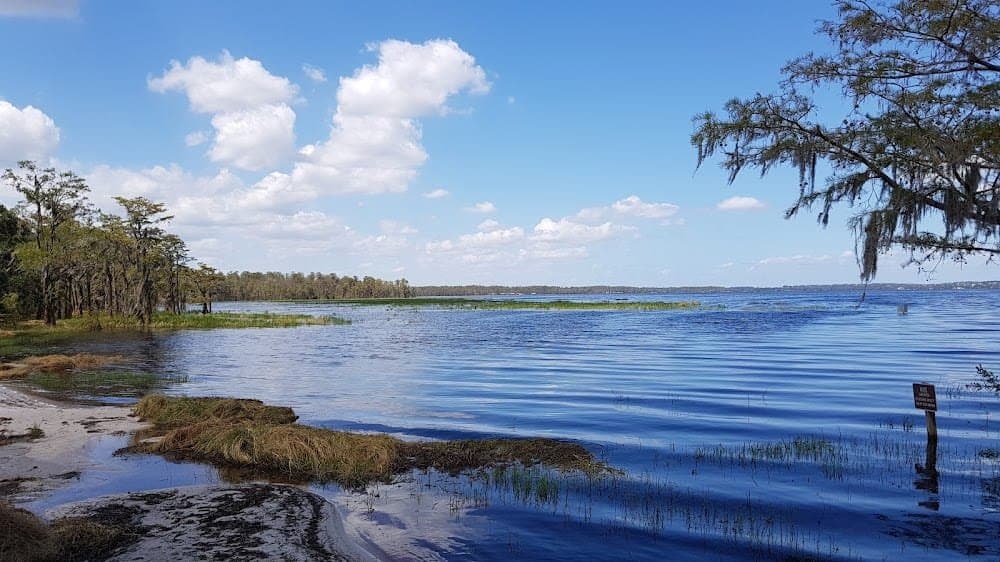
The drought of 2001 was the worst Central Florida had seen in decades, and as the water in Lake Louisa fell, something dark broke the surface near the southern shoreline. It was the tail of a P-51 Mustang. The plane had been there since November 1944.
The pilot was Second Lieutenant Frederick Gilmore, flying out of Bartow Army Air Field. He was twenty-three years old the day he went into the lake — it was his birthday. By then he had already flown twenty-nine combat missions over Africa and Italy with the 111th Reconnaissance Squadron and earned the Distinguished Flying Cross. He had survived the war overseas and come home to a training assignment in Florida. The crash that killed him happened on a routine flight over the ridge country south of Clermont.
For fifty-seven years the Mustang sat underwater. Lake Louisa is the southern anchor of the Clermont Chain, fed by clean water moving down through the Green Swamp toward the headwaters of the Palatlakaha River. Boats and anglers crossed the south end over it.
Louisa sits high. The Clermont Chain runs along the spine of the Lake Wales Ridge, and these are some of the highest-elevation lakes in peninsular Florida. They depend almost entirely on rainfall and shallow groundwater rather than on any large inflowing river. When the rain stops, the lakes drop fast. In 2001, Louisa dropped far enough to put the tail section in daylight.
The crash is recorded at the Museum of Florida History, which lists Gilmore among the Florida sites where wartime training accidents took the lives of young pilots. Bartow Army Air Field, about forty miles south, was one of dozens of training installations that filled the state during the war, and men learned to fly fighters over the lakes and pastures of Central Florida. Florida lake bottoms still hold a number of those aircraft. Louisa's is one of the few that has surfaced, and it surfaced only briefly.
The state park on the southwestern shore covers 4,372 acres, with longleaf pine restoration on land that used to be citrus groves, cypress cabins, and a paddling route up through Lake Susan toward Minnehaha. The Clermont Chain is designated Outstanding Florida Waters.
The rains returned and the water rose back over the tail section. The Mustang is still on the bottom.
Presented by

Own waterfront in Clermont?
Lake history is interesting. Shoreline conditions are practical. Horizon Marine builds docks, seawalls, and shoreline protection on Clermont's lakes — and gives a straight answer on what your property actually needs.
Lake Mattie, Auburndale: The Lake Florida Measures Other Lakes Against
Lake Mattie is one of the 71 lakes Florida uses as a reference for what a minimally disturbed lake looks like — and in 2019 the state's own update listed it at a Lake Vegetation Index score of 41 and asked whether it still qualified
Read →
Lake Pierce, Lake Wales: The Five-Day Haul From Net to Railroad
Before it was a fish camp, the north shore of Lake Pierce was a commercial netting operation that hauled its catch out over log roads on a five-day round trip to the railroad — back when the lake was called Cat Fish Lake.
Read →
Edward Medard Reservoir, Plant City: The Drawdown That Fed the Food Banks
When Hillsborough County's busiest reservoir was emptied in 2009 to rebuild its eroding bank, more than 1,300 of the stranded tilapia and catfish were filleted and sent to local food banks
Read →
Lake Eva, Haines City: Sixty Years of Piped Stormwater
For roughly sixty years the centerpiece of Haines City's signature park was fed the runoff of city streets — and it took a chemical pump and a state grant to start pulling it back
Read →
Building on Lake Louisa or another Clermont lake?
Free waterfront assessment · License #SCC131154313