

August 10, 2026
Edward Medard Reservoir, Plant City: The Mine That Became the Park
The 770-acre lake east of Brandon where a quarter-million people a year come to fish and camp was, in the 1960s, an open phosphate pit
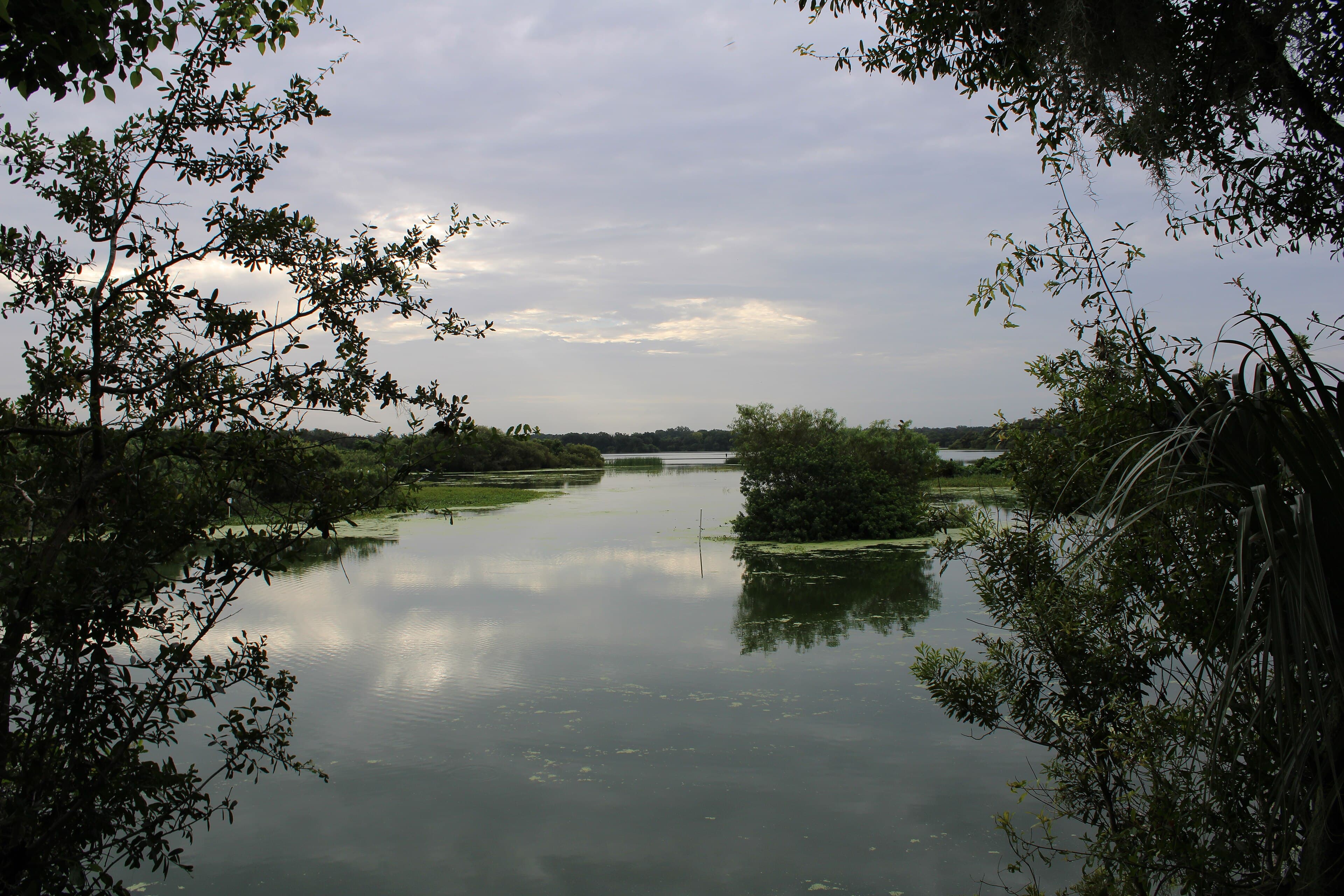
The 770-acre lake east of Brandon started as a hole. Draglines worked the ground here in the 1960s, stripping phosphate out of the earth on Turkey Creek Road south of Plant City. What they left was the shape of any worked-out mine — a pit, spoil banks, exposed ground. In 1970 the pit was impounded, water was allowed to fill it, and the flooded mine became a reservoir. Two years later, under agreement with the water management district, Hillsborough County developed the site into one of its largest regional parks. Today it draws about 250,000 visitors a year.
Polk and Hillsborough counties sit over some of the richest phosphate deposits in the country, and mining left thousands of acres of altered ground across the region — pits, settling ponds, spoil piles. Some of it stayed scarred for decades. Mined in the 1960s, diked in 1970, opened as a park two years later: the turnaround here from active mine to public reservoir was fast by any measure.
The reservoir carried an earlier name — Pleasant Grove Reservoir — and the park did too, before both were renamed for Edward Medard. The dam that holds the water back is an earthen structure at Pleasant Grove. It is the reason the lake exists as a lake and not a slow-draining pit. Everything downstream of that dike — the fishing and boating — depends on the 1970 decision to hold the water in place.
The pit filled, and the fish came. Largemouth bass, bluegill, catfish, and crappie now make up the bulk of what anglers pull out of it. The origin doesn't show in the fishing report.
What the county built around the water reads like any large regional park: a 700-acre reservoir open to boating and fishing, camping, disc golf, equestrian trails. The park runs on seasonal hours — 8 a.m. to 6 p.m. in fall and winter. None of it hints at the mining. The spoil banks a dragline left are the high ground the trails run across.
The exact geography gets described differently depending on who's writing it down. FWC puts the reservoir six miles east of Brandon, one mile south of State Route 60 on Turkey Creek Road. Other sources place it south of Plant City, or just north of Durant. One county source puts the full park at 1,284 acres, nearly double the reservoir itself, which fits a park that carries trails, campsites, and a disc golf course alongside the water.
Presented by

Own waterfront in Plant City?
Lake history is interesting. Shoreline conditions are practical. Horizon Marine builds docks, seawalls, and shoreline protection on Plant City's lakes — and gives a straight answer on what your property actually needs.
Edward Medard Reservoir, Plant City: The Drawdown That Fed the Food Banks
When Hillsborough County's busiest reservoir was emptied in 2009 to rebuild its eroding bank, more than 1,300 of the stranded tilapia and catfish were filleted and sent to local food banks
Read →
Lake Denton, Avon Park: The 51-Foot Hole Where Divers Certify
A shallow-state lake that drops to 51 feet with 30 to 40 feet of visibility became one of inland Florida's go-to lakes for learning to scuba dive
Read →
Lake Walk-in-the-Water, Lake Wales: The Lake That Lost All Its Hydrilla and Had to Be Replanted
Three 2004 hurricanes pulled every bit of submersed vegetation out of Lake Walk-in-the-Water and no one ever sprayed a drop — by FWC's account the hydrilla has not come back, and biologists have spent the years since hand-planting natives in its place
Read →
Little Lake Harris, Howey-in-the-Hills: The Summer Nobody Could Get Off the Dock
In August 2018 hydrilla filled Little Lake Harris so thickly that people couldn't get a boat away from their own docks, and by November the state was treating 2,700 acres of a 2,744-acre lake
Read →
Building on Edward Medard Reservoir or another Plant City lake?
Free waterfront assessment · License #SCC131154313