

May 18, 2026
Lake Idylwild, Winter Haven: The Garden Attraction Time Forgot
Before the ranch houses and the police training center, a 1940s garden attraction called Idylwyld Gardens drew visitors to this round little lake on Winter Haven's northwest chain
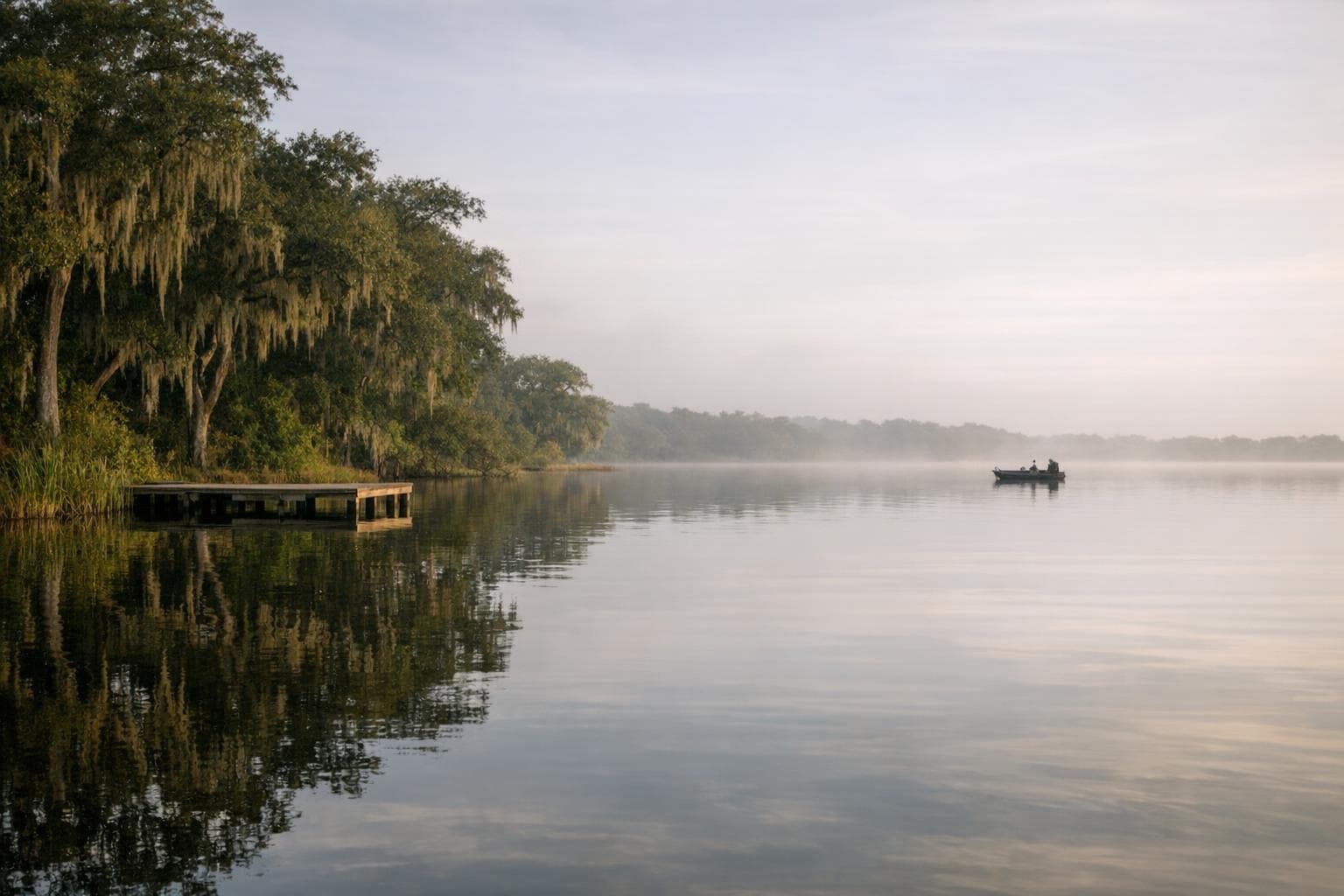
In the 1940s, if you came to Winter Haven, you didn't just see Cypress Gardens. You had options. One of them was on the shore of Lake Idylwild — a roadside attraction called Idylwyld Gardens, spelled with the older, fussier "y." It's gone now. No gate, no sign, no remnant most people could point to. But it was here, and the lake carried its name, and for a stretch of years it was part of the reason tourists made the trip.
You have to picture Winter Haven in that decade to understand why a garden attraction made sense on a 93-acre round lake tucked behind what's now the police training center on Lake Idylwild North. Dick Pope's Cypress Gardens had opened in 1936 a few miles south on Lake Eloise, and it had taught the rest of the city a lesson: lakes plus landscaping plus a little showmanship equals visitors with money. Through the 1940s and into the 1950s, smaller imitators bloomed across the chain. Most of them were modest — a stand of citrus, a few footpaths, some ornamentals, a place to take a photo. Idylwyld Gardens was one of these.
The lake itself was well suited to the role. Idylwild is almost perfectly round, about 93 acres, with clear water and a small rectangular island roughly 50 by 45 feet near the northwest side. Canals link it three ways: northwest to Lake Jessie, east to Lake Hartridge, and south through the Idylwild–Cannon Canal to Lake Cannon. In the resort era, those connections mattered. A visitor staying on one of the bigger lakes could be brought by small boat through the canals to a garden on a quieter shore, see the plantings, and be back in time for dinner. The chain functioned the way a streetcar line functioned in a city — it moved people between attractions, and every lake on the route had a chance to be a destination.
Idylwild's was the gardens. The name itself — idyl-wild, a tidy little compound meaning a wild place that's also peaceful — was exactly the kind of word a 1920s or 1930s promoter reached for when selling Florida to northerners. It belongs to the same vocabulary as Cypress Gardens, Bok Tower, Mountain Lake, Highland Park. Soft, romantic, vaguely English, faintly literary. You can hear the brochure in it.
What happened to Idylwyld Gardens is what happened to most of the smaller attractions. Cypress Gardens kept getting bigger and more elaborate. Disney was still decades away, but the postwar travel economy was already consolidating around the headline acts. The roadside garden with a few paths and a photographer couldn't compete with water-ski shows and Esther Williams films. The land was worth more as houses than as a destination. By the time the southern chain of lakes had been fully laced together by the 1915-era canals and the area had filled in residentially, the gardens were gone — absorbed into yards, lots, and eventually the institutional parcel on the north shore that became the Stoltz-Patterson Police Training Center at 36 Lake Idylwild North.
Today the lake reads as a working residential water. Woody shoreline along the southeast, a grassy edge to the northwest, houses on the northeast and west, commercial buildings on the south. The Winter Haven Moose Lodge ramp on Idylwild is where bass tournaments launch onto the south chain — Sunday Open Series, Po Boys Club, the standard local circuit. The lake is on the state's TrophyCatch list as part of the Northwest Winter Haven Chain, alongside Jessie, Hartridge, Conine, Rochelle, Haines, Smart and Fannie. It's also on the state's impaired waters list, which is its own quieter story about what a century of development around a 93-acre bowl does to water clarity.
But the name still does its job. Idylwild. Spelled now without the "y," but close enough that anyone who knew the gardens would recognize it. Most of the people who launch a bass boat here on a Saturday morning have no idea that the shoreline they're idling past was once a place tourists paid to walk through. The attraction left almost nothing behind except the word on the map — which, for a lake whose whole identity was once built on being a pleasant little destination, is a quieter ending than the brochures imagined.
Lake Jessie, Winter Haven: The 180-Acre Lake Where the World Learns to Land on Water
About 500 pilots a year earn their seaplane rating on a 180-acre lake beside the Winter Haven airport — more, by one industry count, than every other seaplane school in the United States combined
Read →
Hardee Lakes, Bowling Green: The Lake That Stayed Closed Until the Fish Grew
Lake 3 at Hardee Lakes Park was stocked with sunshine bass in 2001 and then kept shut to anglers while they grew, and when it finally opened one Saturday morning in October 2005 all eight spots were already taken
Read →
Lake Agnes, Polk City: The Shore Where Polk City Started
A Boston developer stopped to rest on the shore of Lake Agnes in the summer of 1922, and the town of Polk City grew from where he sat
Read →
Spring Lake, Brooksville: The Grove That Turned Into an Attraction
A hard freeze wiped out a Spring Lake citrus grower's living in the early 1960s, and rather than replant, the Boyett family turned the survivors into a roadside attraction that outlived the groves around it
Read →