

May 19, 2026
Tiger Lake, Frostproof: The Small Polk Lake That Drains to Two Oceans
A 2,086-acre lake in southern Polk County quietly feeds the same water system that empties into Lake Okeechobee — and from there, to both coasts
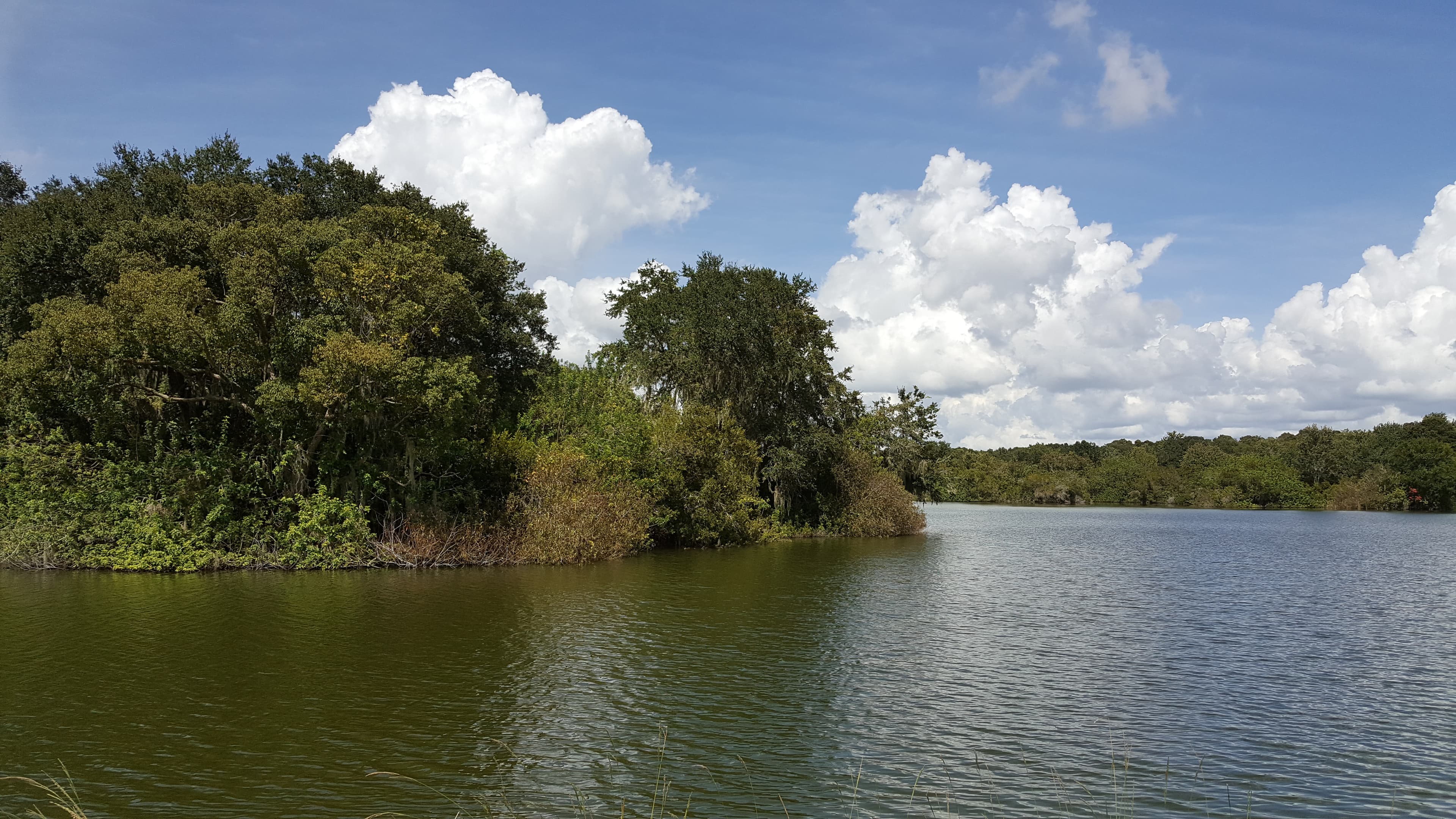
Water leaving Tiger Lake, east of Frostproof, can reach either coast. Tiger sits at the upper end of a chain that pours, eventually, into Lake Kissimmee. From Kissimmee the water drops south down the Kissimmee River into Lake Okeechobee, and from Okeechobee, depending on the season, the rains, and what the Army Corps decides to do with the gates, it moves east toward the St. Lucie and the Atlantic, or west down the Caloosahatchee to the Gulf.
The reason is the ridge. Tiger, 2,086 acres, sits along the Lake Wales Ridge, the spine of ancient dune sand that runs down the middle of the peninsula and divides the state's water into two slopes. The better-known lakes nearby — the Winter Haven chain, Lake Hollingsworth, the lakes inside the city of Lake Wales — drain west toward the Peace River and the Gulf. Tiger sits on the east side of the ridge and tips the other way, into the system that built the Everglades.
That position is why Tiger turns up in local water-quality arguments. A 2011 letter to The Ledger laid the geography out plainly: pollutants entering Tiger Lake go on into Lake Kissimmee and the Kissimmee chain of lakes, the Kissimmee River, Okeechobee, the Atlantic Ocean and the Gulf of Mexico. The letter concerned a specific dumping issue, and the route it described matches the drainage. Whatever leaves Tiger — sediment, nitrogen, phosphorus, algae — is what Lake Kissimmee, the river, and Okeechobee receive. Tiger is a headwater lake with an intact wetland buffer and a slow, vegetated outflow.
Tiger has had its own advisories. The Florida Department of Health issued blue-green algae alerts for the lake in March 2023 and again that May, when warnings went out for five Polk County lakes and two stretches of the Peace River the same week. In March 2025, FWC reported an alligator bit a kayaker on the elbow in the Tiger Lake Canal.
The shoreline around Tiger is largely undeveloped compared to the lakes closer to town. The Tiger Lake North and Tiger Lake South Wildlife Management Areas wrap much of it. There is a public ramp at the end of Tiger Lake Road, and Camp Lester, down the same road, rents cabins. Bass boats and airboats work the lake.
The citrus story is part of this too. The hard freezes of 1983, 1985, and 1989 wiped out most of the groves on this stretch of the ridge, and a lot of what was grove rows on 1970s aerial photos is now pasture, planted pine, or scrub coming back on its own — fewer rows of fertilized trees between the remaining groves and the water at the head of the chain.
Since the late 1990s, the U.S. Fish and Wildlife Service and partners have restored 18 wetlands totaling 35 acres on the Tiger Lake North and Tiger Lake South tracts, along with another 105 acres of grassland habitat.
Lake Placid, Highlands County: The Town Melvil Dewey Renamed
The librarian who invented the Dewey Decimal System renamed a whole Florida town to plant a winter branch of his New York club — and the town still carries the name he picked
Read →
Lake Elbert, Winter Haven: The Hillside That Was Meant to Be America's Largest Modernist Neighborhood
Ten glass-walled houses opened on the grapefruit-grove crest above Lake Elbert's east shore in March 1957, and 10,000 people walked through them that first weekend — the opening installment of a modernist development that stopped at ten.
Read →
Hardee Lakes, Bowling Green: The Lake That Stayed Closed Until the Fish Grew
Lake 3 at Hardee Lakes Park was stocked with sunshine bass in 2001 and then kept shut to anglers while they grew, and when it finally opened one Saturday morning in October 2005 all eight spots were already taken
Read →
Lake Walk-in-the-Water, Lake Wales: The Lake That Lost All Its Hydrilla and Had to Be Replanted
Three 2004 hurricanes pulled every bit of submersed vegetation out of Lake Walk-in-the-Water and no one ever sprayed a drop — by FWC's account the hydrilla has not come back, and biologists have spent the years since hand-planting natives in its place
Read →