

June 10, 2026
Lake Istokpoga, Lake Placid: Three Feet of Water Across 28,000 Acres
Almost 28,000 acres of water that averages barely a meter deep — and a Seminole name that warns you exactly what that combination can do
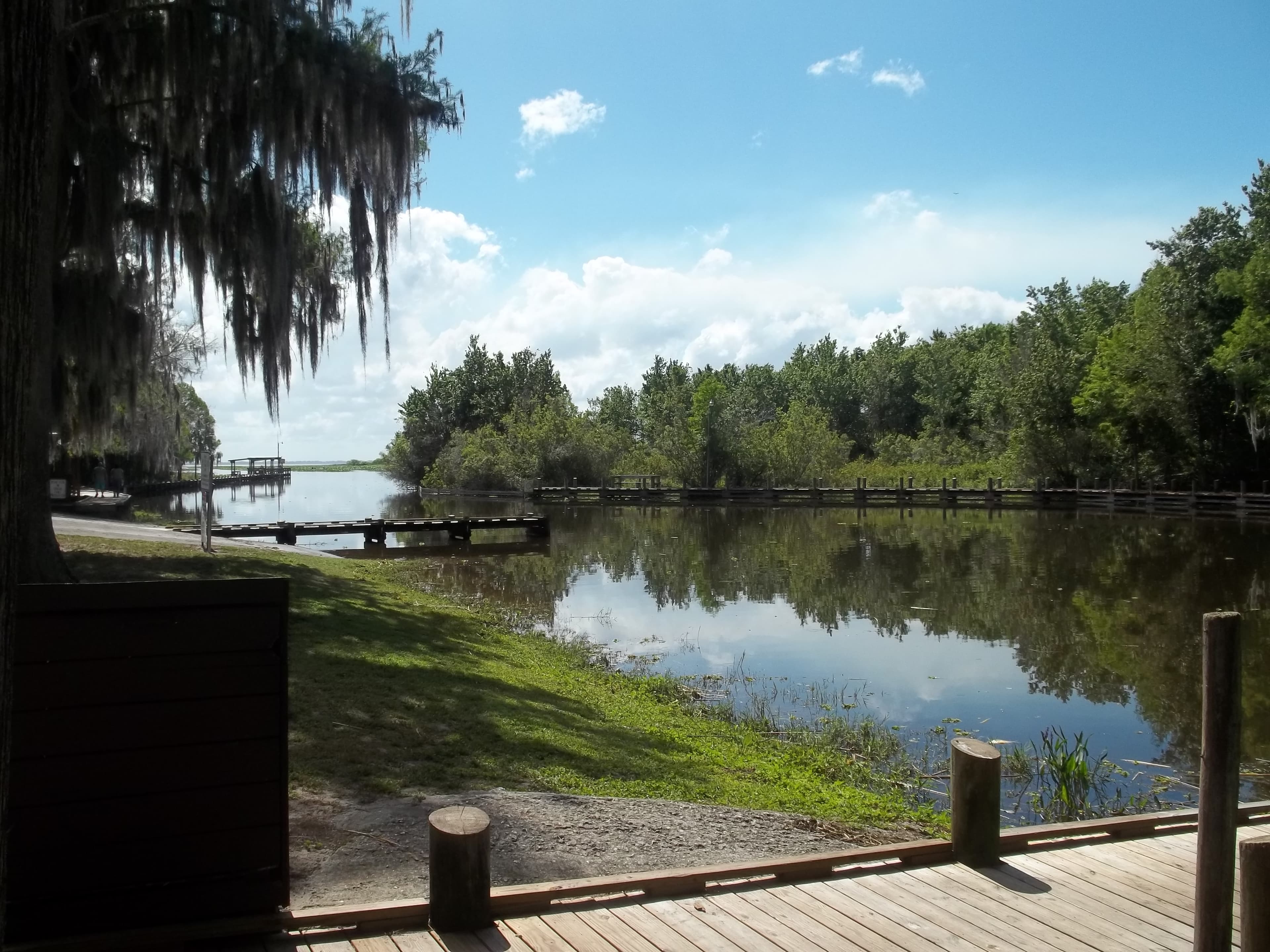
The fifth-largest natural lake in Florida averages about three feet deep. That water is spread across nearly 28,000 acres — roughly ten miles long, five wide — with a maximum depth that barely clears ten feet. Under the surface are mire and tussocks of floating vegetation, and wind running the length of the lake turns the shallows rough.
The Seminole had a word for the place. Istokpoga, in the local telling, means something close to a lake where someone was killed in the water. The legend holds that a group of Seminole tried to cross and were bogged in the mire and pulled down by whirlpools.
Whether whirlpools formed the way the legend describes, the physical setup is unusual. Water this shallow and this wide moves with the wind, and mats of vegetation break loose and drift. The bottom is soft black muck. Around the 1920s, growers brought caladium tubers up from the Amazon River Valley and found they grew well in that muck along the lake's edge on Route 621. Lake Placid still calls itself the caladium capital.
Istokpoga sits between the Kissimmee Chain to the north and Okeechobee to the south. Since Florida's TrophyCatch program launched in 2012, the lake has produced a steady run of largemouth bass over eight pounds, including a 13-pound, 14-ounce fish caught in June 2018. Bassmaster named it one of the best bass lakes of the decade in 2024. The spatterdock, bulrush, and Kissimmee grass that make the water hard to cross hold the fish.
On March 3, 1998, what was then the Florida Game and Freshwater Fish Commission came to Lorida, a small community on the shore, and presented for the first time a proposal to clear the tussock choking the water. The work has rarely stopped since. Helicopters spray herbicide over portions of the lake to knock back hydrilla, water primrose, cattails, and pickerelweed.
The water doesn't stay in Highlands County. Arbuckle Creek feeds Istokpoga, and the lake drains south through a canal system toward the Kissimmee River, then to Lake Okeechobee and on toward the Everglades. The state manages lake levels with that downstream chain in mind. At three feet average depth, a foot of water gained or lost changes thousands of acres of habitat, which is why Istokpoga carries a minimum-flow study and a management committee.
In 2021, Sea & Shoreline began work on the lake to rebuild native submerged plants. The company's lead biologist, Ryan Brushwood, described the goal as restoring native submerged meadows so the lake would function in a more stable manner.
Presented by

Own waterfront in Sebring?
Lake history is interesting. Shoreline conditions are practical. Horizon Marine builds docks, seawalls, and shoreline protection on Sebring's lakes — and gives a straight answer on what your property actually needs.
Little Lake Harris, Howey-in-the-Hills: The Summer Nobody Could Get Off the Dock
In August 2018 hydrilla filled Little Lake Harris so thickly that people couldn't get a boat away from their own docks, and by November the state was treating 2,700 acres of a 2,744-acre lake
Read →
Spring Lake, Brooksville: The Grove That Turned Into an Attraction
A hard freeze wiped out a Spring Lake citrus grower's living in the early 1960s, and rather than replant, the Boyett family turned the survivors into a roadside attraction that outlived the groves around it
Read →
Moon Lake, New Port Richey: The Foot and a Half That Doubles the Lake
Between 38.2 and 39.6 feet, Moon Lake grows from about 105 acres to 193 — the extra water standing in a 95-acre cypress swamp that a raised road cut off from the lake, and that now sets the lake's legal minimum level
Read →
Lake John, Lakeland: The Lake a Dragline Left Behind
The 99-acre lake behind the ballfields at Curtis Peterson Park in Lakeland wasn't shaped by any river — it's water sitting in ground a phosphate dragline emptied out in the 1950s
Read →
Building on Lake Istokpoga or another Sebring lake?
Free waterfront assessment · License #SCC131154313