
May 15, 2026
Lake Morton, Lakeland: The Swans Came From the Queen
The swans gliding around a downtown Lakeland lake trace their lineage to a 1957 gift from Queen Elizabeth II — a transatlantic rescue of a flock the city had nearly lost
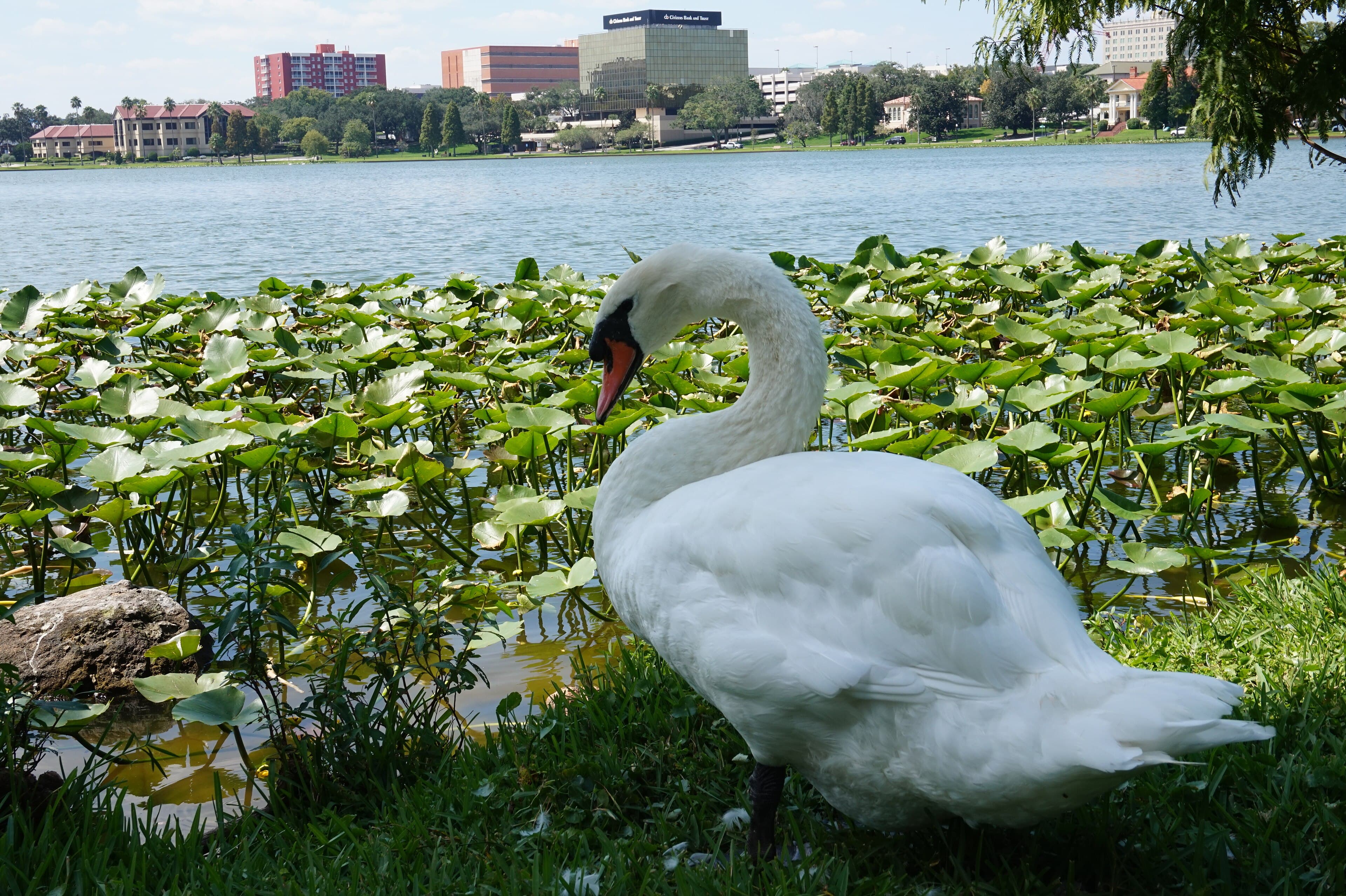
In 1957, a pair of mute swans crossed the Atlantic from England to a forty-acre lake in downtown Lakeland. They were a gift from Queen Elizabeth II, sent in response to a letter from a Lakeland resident asking for help replenishing a flock the city had been cultivating since the 1920s and had effectively lost to alligators and traffic. The cost of shipping the birds, reportedly around three hundred dollars at the time, was raised locally. Their descendants are still here, paddling past joggers and the bronze pelican statues, eating bread that visitors are no longer supposed to feed them.
The birds came from the royal flock on the Thames, where every unmarked mute swan in open water is, by ancient custom, property of the Crown. The Crown has managed that population since the twelfth century, and the annual ceremony of swan upping — counting and marking the birds — is still carried out each summer by the Queen's Swan Marker. Moving a breeding pair out of that flock and across the ocean in 1957 took a specific request, a specific approval, and the cooperation of the British government.
By the 1920s, Lake Morton had already been turned from a working waterbody into a civic centerpiece. The neighborhoods south and east of it were filling in with the brick-and-stucco houses of the Florida boom, and the public library was being planned for its northeast shore. The city put in sidewalks and benches along the water. Swans were introduced to the lake in the same decade as ornamental birds, and they became part of how the city presented itself. By the mid-1950s the flock had dwindled to nothing.
Birds came from other sources over the years as well — black swans from Australia, additional mutes from various donors — and the flock today is a mix of species and bloodlines. The 1957 pair is the one that came with a reply from a reigning monarch.
Lake Morton is shallow and can be walked around in well under an hour. Road and sidewalk ring it rather than private docks, and the frontage is almost entirely public: the library, the art museum nearby, the park lawns that slope down to the water. There is no boat ramp for powered craft. The lake is non-motorized, and the surface stays calm enough for birds to nest along the edges and for people to get close without churn or wake.
The Florida Department of Environmental Protection approved a Nutrient Reduction Plan for Lake Morton in 2021 after it exceeded the state's nutrient criteria, and in 2025 the city received nearly a million dollars in grant funding to install shoreline treatment modules that pump lake water through nutrient-reducing media and return it cleaner than it came in. Decades of stormwater runoff from the surrounding historic neighborhoods feed the nutrient load, and so does the concentrated waste of a large resident bird population.
Each January, the city rounds up the flock for a health check — weighing, banding, vaccinating, treating for parasites — and releases the birds back to the water.
Lake Rosalie, Lake Wales: The 1947 Canal That Gave the Lake a Second Way Out
Water leaves Lake Rosalie in two directions at once, and the northern route — the Zipprer Canal that kayakers now paddle — was cut through a floodplain marsh in 1947 to drain it for cattle pasture
Read →
Saddlebag Lake, Lake Wales: The Five Months of Pumping It Took to Get the Water Out
Saddlebag Lake is a closed basin with no outlet, so when it rose into 300 homes in 2005 the only way out was three pumps and two miles of pipe to Lake Rosalie — paid for by the residents at $30,000 a month
Read →
Mountain Lake, Lake Wales: The Winter Home That Led to Bok Tower
Bok Tower sits on Iron Mountain because a Philadelphia magazine editor first bought a winter-home lot on the 92-acre private lake next door, and hired the lake colony's landscape architect
Read →
Lake Otis, Winter Haven: The Two Parking Spaces That Unlocked the Hydrilla Money
Homeowners on a private Winter Haven lake raised about $40,000 to kill their hydrilla and needed $90,000 — so they built a public boat ramp instead, because a state rule only funds weed control on water the public can launch on
Read →