
November 26, 2026
Lake Tohopekaliga, Kissimmee: The Lake That Brought the Snail Kite Back
In 2004 the snail kite survey recorded no nesting at all on Lake Toho, and from 2005 through 2010 the same lake produced 41 percent of every successful snail kite nest documented in Florida
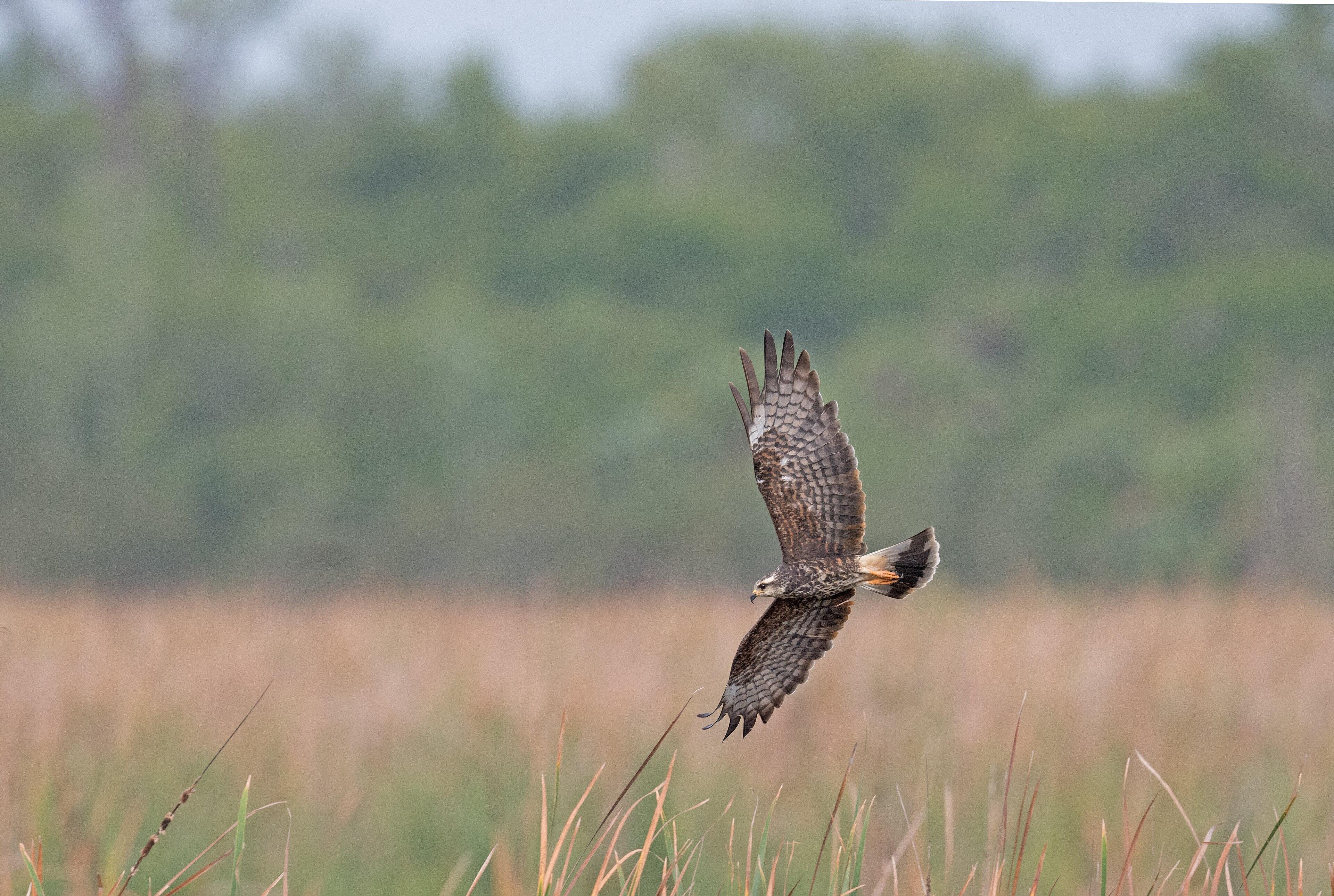
In a column published March 7, 2022, University of Florida administrator J. Scott Angle described going out on Lake Tohopekaliga — 18,810 acres southeast of Kissimmee — with Rob Fletcher, the UF ecologist who leads the statewide snail kite monitoring program, and Tyler Beck, the Florida Fish and Wildlife Conservation Commission's snail kite expert. Vicki Garcia of the U.S. Fish and Wildlife Service came along. Angle had a kite in his sights about fifteen minutes after he stepped out of his car.
The snail kite demography report prepared for the St. Johns River Water Management District records that no nesting occurred on East or West Toho in 2004, the year an intensive drawdown of the Upper Kissimmee Chain of Lakes opened the littoral zone of Lake Toho to extensive aquatic weed control. Only eight nests were detected on Lake Kissimmee that year. The next spring the crew marked 33 fledglings in the entire state, 16 of them on Lake Tohopekaliga, a record low since 2001. The statewide estimate had already fallen from roughly 3,400 adults in 1999 to 1,700 in 2002, and it would reach 700 to 800 by 2009.
Since 1997 field technicians have worked the designated wetland units from March 1 to June 30 at two- to three-week intervals, on transects run by airboat in the format of the older annual counts. Every kite sighted is inspected through binoculars and spotting scopes and logged as marked, unmarked or unknown — marked meaning the band on its leg can be read. Nestlings are banded before they fledge, so the program knows the exact age of the birds it re-sights in later years. Julia Magill leads the crew, and Brian Jeffery, the project manager, handles training, reports and permits. The program also uses GPS trackers and nest cameras.
Snail kites eat almost nothing but apple snails, hooking them out of the shell with a slender curved bill. For most of the bird's history in Florida that meant the native Florida apple snail. Then the island apple snail became established on the central Florida lakes, a much larger animal that kites handle less efficiently. Shells collected under feeding perches and at nests on Toho from 2005 through 2013 tracked the size of what the birds were taking; in timed foraging observations, adult kites averaged 228 seconds to work an exotic snail loose against 108 seconds for a native one, and the exotic shells averaged 51.6 millimeters to the natives' 37.6. Kyle Pias, Zach Welch and Wiley Kitchens built an inexpensive, easy-to-construct platform to give kites a flat, stable surface to extract snails on. The birds used it frequently, and the snails they opened there ran larger than the ones they opened on other perches. The weeds those snails feed on are what the lake's aquatic weed control targets. Fletcher, Beck and others found the kites were doing fine on the exotic snail.
From 2005 through 2010 Lake Toho accounted for 41 percent of every successful snail kite nest and 57 percent of every fledged young documented across the bird's entire range. In 2011 the survey assigned 33 percent of range-wide nesting effort to Toho, measured nest success there at 0.51, and estimated 925 kites statewide, up from 826 the year before. In 2013 the crew located 57 active nests on Toho, confirmed 24 of them successful, banded 47 nestlings and counted 30 young fledged. The statewide estimate reached 3,171 adults in 2021.
A 2013 University of Florida thesis by J. M. Olbert, built on Toho nests, identified the yellow rat snake as the most common predator of both eggs and young and the primary cause of nest failure.
The survey logged 339 active nests range-wide in 2023 and put the population at 2,820 birds, close to the 2,863 estimated for 2022. Two dry springs followed, and the University of Florida reported only 30 successful nests in the whole state in 2025, with the estimate down to about 2,000.
The margins of Lakes Okeechobee, Kissimmee and Tohopekaliga are where most boaters and anglers will ever see a snail kite, by FWC's account, and where the birds are most vulnerable to human disturbance. A kite that flies up and flaps quickly overhead instead of drifting off means a nest is probably close, and FWC asks anyone who sees that to leave the area immediately. The recommended buffer around a snail kite nest is about 145 yards.
Sources
Every factual claim in this story was checked against the page it came from before the story was saved. These are those pages. Our standards are on the masthead.
- Signs of hope for endangered Everglade snail kite - The Invading Sea (J. Scott Angle, March 7, 2022)
- Conservation of the Endangered Everglades Snail Kite - UF/IFAS Wildlife Ecology and Conservation (March 14, 2022)
- Endangered snail kites - small birds, big Lake Toho impacts - Osceola News-Gazette
- Snail Kite Demography, Final Report 2006-2007, SJRWMD Special Publication SJ2008-SP4
- Everglade Snail Kite 5-Year Review, U.S. Fish and Wildlife Service
- Snail Kite Demography Annual Progress Report 2013, Fletcher et al.
- Monitoring - Snail Kite, University of Florida / USGS
- About Us - Snail Kite, University of Florida
- Everglade Snail Kite - Florida Fish and Wildlife Conservation Commission
- An artificial perch to help Snail Kites handle an exotic Apple Snail - Pias, Welch and Kitchens, USGS Publications Warehouse
- Snail Kite Demography Annual Report 2011, Reichert et al.
- Florida Cooperative Fish and Wildlife Research Unit Annual Report 2024
- Snail Kite Population Showing Strain in Dry Years - Audubon Florida, Paul Gray (January 20, 2026)
- Snail Kites - Florida Fish and Wildlife Conservation Commission
Lake Kissimmee, Polk County: The Cow Camp That Has Been Keeping 1876 Since 1977
A ranger who answers to Mr. Chester has been keeping the year at 1876 on the Lake Kissimmee shore since the park opened in 1977, with fifty scrub cattle and six cracker ponies to make the point
Read →
Lake Hollingsworth, Lakeland: The Octagon Walter Engle Laid Out in Buoys
Walter Engle's first powerboat course on Lake Hollingsworth was an octagon of buoys a mile and two-thirds around, and it got too fast for its own drivers
Read →
Lake Wire, Lakeland: The Telegraph Crews Named It, and the Railroad Came Looking for the Wire
In May 1867 a telegraph crew pushing a line toward Cuba skirted a 22-acre pond in northern Polk County and left it named Lake Wire, and sixteen years later that same wire was one of the reasons a railroad put its base camp on the shore
Read →
Lake Rosalie, Lake Wales: The 1947 Canal That Gave the Lake a Second Way Out
Water leaves Lake Rosalie in two directions at once, and the northern route — the Zipprer Canal that kayakers now paddle — was cut through a floodplain marsh in 1947 to drain it for cattle pasture
Read →