

September 23, 2026
Lake Walk-in-the-Water, Lake Wales: The Lake That Lost All Its Hydrilla and Had to Be Replanted
Three 2004 hurricanes pulled every bit of submersed vegetation out of Lake Walk-in-the-Water and no one ever sprayed a drop — by FWC's account the hydrilla has not come back, and biologists have spent the years since hand-planting natives in its place
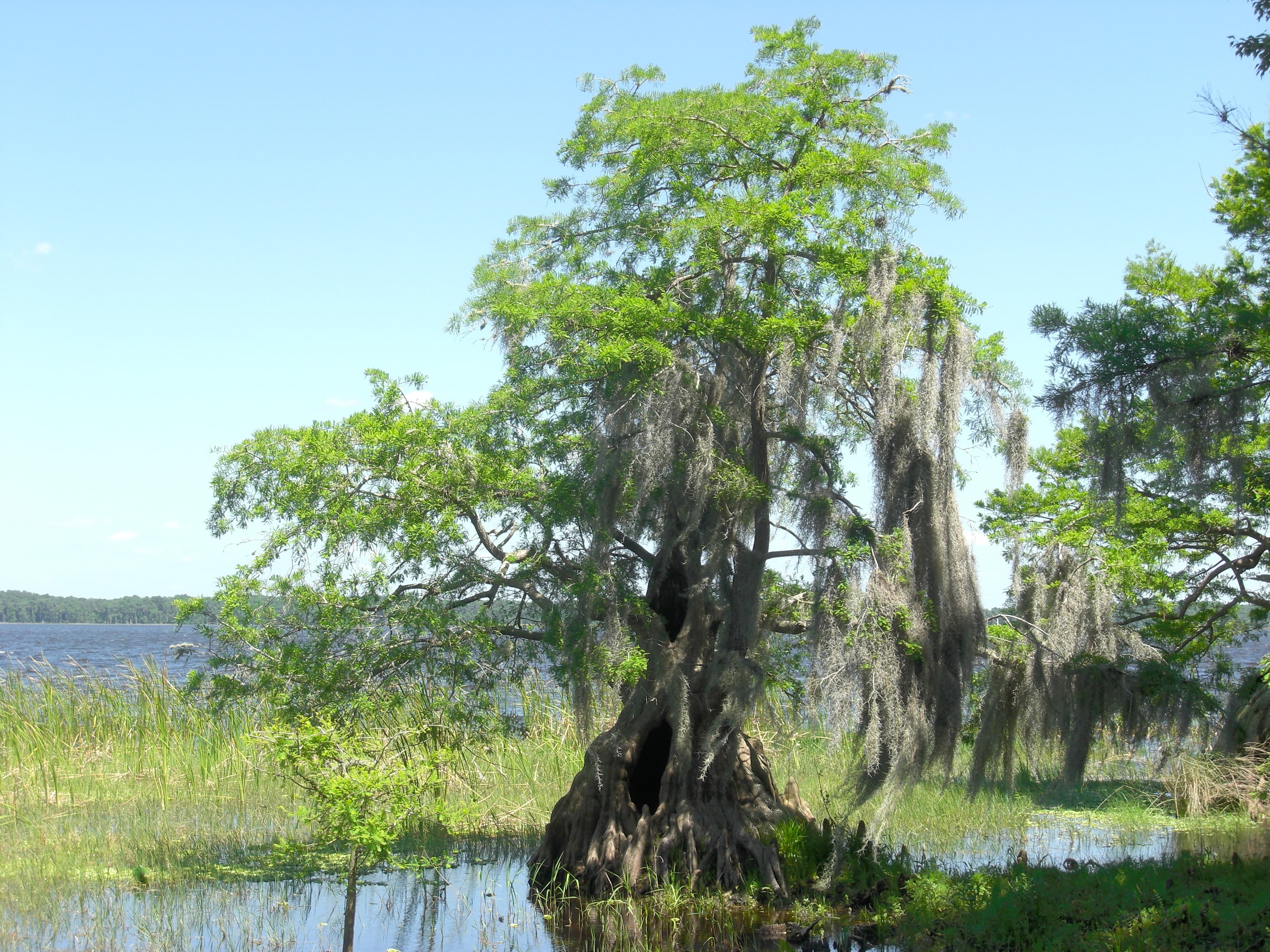
Over August and September of 2004, hurricanes pulled every bit of submersed aquatic vegetation out of Lake Weohyakapka, the roughly 7,500-acre Polk County lake ten miles east of Lake Wales that almost everyone calls Walk-in-the-Water. Nearly all of what came out was hydrilla, the invasive plant the Florida Fish and Wildlife Conservation Commission's own written position calls difficult if not impossible to eradicate with current technology and expensive to manage. Nobody sprayed a drop. FWC's account of the 2004 storms notes that the lake no longer has hydrilla even though its Invasive Plant Management program conducted no hydrilla treatments there.
Fifteen months before the storms, in May 2003, FWC biologists had named Walk-in-the-Water one of Florida's ten best bass lakes, the only Polk County water on the list. Writing it up for The Ledger, Del Milligan told readers the surest way to boat a ten-pounder was a wild shiner drifted around the open-water hydrilla, and that 130 bass of eight pounds or better had been entered in the state's Big Catch program from this lake the year before.
Hurricanes Charley, Frances and Jeanne all made landfall in Florida as major hurricanes in 2004, and wind-driven wave action uprooted the plants and stirred the bottom. Five FWC researchers — Kevin Johnson, Jason Dotson, William Pouder, Nicholas Trippel and Robert Eisenhauer — later measured what went with them, setting the pre-hurricane years of 1999 through 2004 against 2005 through 2009 at Walk-in-the-Water and at the St. Johns Water Management Area, which lost its hydrilla in the same season. Their paper ran in Lake and Reservoir Management in 2014. When hydrilla covered a high percentage of both waters, the bass population held more juvenile, age-1 fish; with no hydrilla at all, it held fewer. Directed fishing effort declined over the same span, and so did angler expenditures and catches of trophy-sized fish. FWC's summary of hurricane damage in Florida lakes adds one more line to that list: reduced expenditures at the tackle shops that supported the fishery.
On April 27, 2011, FWC's Division of Habitat and Species Conservation approved a written agency position on hydrilla management. It opposes the deliberate introduction of hydrilla into waterbodies where it is not present, and says the agency prefers to manage for native aquatic plants. It also says that in waterbodies where native submersed aquatic plants are absent or limited, hydrilla at low to moderate densities can be beneficial to fish and wildlife, and that FWC will manage the plant waterbody by waterbody using a risk-based approach.
The storms had taken all of the lake's submersed aquatic vegetation, not only the hydrilla. In the years after 2004 FWC ran habitat restoration projects on the lake aimed mainly at bulrush, the reed FWC's own fishing forecast for the lake lists under its local name, buggy whips. In late 2010 the agency sank five fish attractors built mostly of brush piles from orange and oak trees.
During the week of March 5, 2012, FWC crews electrofishing the lake measured 22 largemouth bass over eight pounds, including several in the 10- and 11-pound classes and one above 12, plus seven in the seven-pound class. Most of them came out of deeper bulrush rather than open water. Fifteen of the 22 were fitted with yellow reward tags for a statewide trophy-bass study run out of FWC's Lakeland office by regional administrator Bill Pouder.
On Feb. 8, 2015, Greg Smock, a 63-year-old angler visiting from Zanesville, Ohio, set the hook on a ten-inch wild shiner in an opening in a lily-pad patch mixed with Kissimmee grass on the north end of the lake. "It was almost like somebody threw a cherry bomb in the water," he told The Ledger. The bass weighed 15 pounds, 8 ounces, the largest caught in the Polk County area since a 16.20-pounder came out of Lake Kissimmee in 2006.
In September 2020, FWC and Polk County Parks and Natural Resources reported that more than 5,000 mature Illinois pondweed plants, a native submerged plant commonly called peppergrass, had been hand collected from a drawdown underway on East Lake Tohopekaliga and replanted at two locations along Walk-in-the-Water's northern shoreline. On Jan. 26, 2021, FWC announced it had finished refurbishing the lake's fish attractors, deploying 40 artificial trees at each of seven buoyed sites, 280 in all. In May 2022 it began transplanting 24,000 eelgrass plants into the lake's shallow-water marshes, habitat listed as benefiting the endangered Everglade snail kite along with bass, crappie and panfish.
FWC's black bass forecast still tells anglers that the hurricanes removed all the hydrilla from Lake Weohyakapka many years ago, and that the lake holds large areas of vegetation to target lunker-size bass without it. Its biologists tag more largemouth bass over eight pounds here every year than in any other nearby waterbody.
Sources
Every factual claim in this story was checked against the page it came from before the story was saved. These are those pages. Our standards are on the masthead.
- Effects of hurricane-induced hydrilla reduction on the largemouth bass fishery at two central Florida lakes (AGRIS record, Johnson, Dotson, Pouder, Trippel, Eisenhauer, 2014)
- Effects of Hurricanes on Aquatic Vegetation and Fisheries in Florida Lakes | FWC
- Walk-in-the-Water Ranks in Top 10 - The Ledger, May 15, 2003
- FWC Hydrilla Management Position - UF/IFAS Center for Aquatic and Invasive Plants
- Big Bass in Reeds On Walk-in-Water - The Ledger, March 28, 2012
- 15 1/2-Pounder on Walk-in-the-Water - The Ledger, Feb. 25, 2015
- Polk County partners with FWC on restoration project at Lake Walk-in-Water - Polk County Water Atlas, Sept. 28, 2020
- Lake Walk-In-Water conservation project complete | FWC, Jan. 26, 2021
- FWC transplants aquatic plants to help restore Lake Walk-in-Water - Polk County Water Atlas, May 13, 2022
- Black Bass Fishing | FWC
- Walk-in-Water | FWC
Presented by

Own waterfront in Lake Wales?
Lake history is interesting. Shoreline conditions are practical. Horizon Marine builds docks, seawalls, and shoreline protection on Lake Wales's lakes — and gives a straight answer on what your property actually needs.
Peace River, Fort Meade: The Thirteen Miles Where the River Drains Into the Ground
Between Bartow and Fort Meade the Peace River loses water into holes in its own bed — on one day in June 2002 the USGS measured about 32 million gallons going into the ground — and Fort Meade is where the leaking stops
Read →
Lake Griffin, Leesburg: The Drawdown That Brought the Bass Back
In the mid-1980s, biologists drained part of Lake Griffin on purpose — and the bass came back so hard the creel surveys still mark those years as the high water line
Read →
Moon Lake, New Port Richey: The Foot and a Half That Doubles the Lake
Between 38.2 and 39.6 feet, Moon Lake grows from about 105 acres to 193 — the extra water standing in a 95-acre cypress swamp that a raised road cut off from the lake, and that now sets the lake's legal minimum level
Read →
Hardee Lakes, Bowling Green: The Lake That Stayed Closed Until the Fish Grew
Lake 3 at Hardee Lakes Park was stocked with sunshine bass in 2001 and then kept shut to anglers while they grew, and when it finally opened one Saturday morning in October 2005 all eight spots were already taken
Read →
Planning waterfront work in Lake Wales?
Free waterfront assessment · License #SCC131154313