

May 25, 2026
The Town That Kept Its Oranges
Christmas Day 1894 was one of Florida's most beautiful days, and four days later the citrus industry was gone
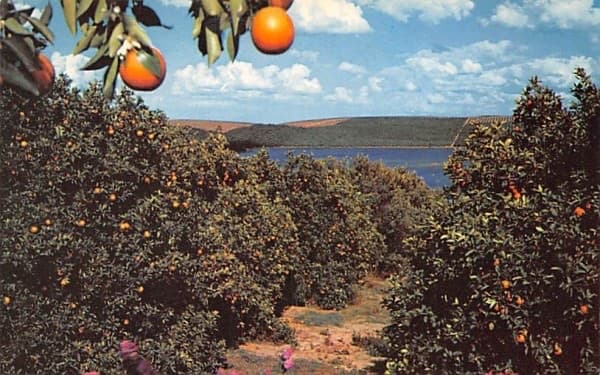
Christmas Day in 1894 fell on a Tuesday. The Orlando Sentinel, looking back a hundred and ten years later, called it "one of Florida's most beautiful days." Down in Polk County, the morning of December 29 came in around eighty-five degrees. Growers walked their groves in shirtsleeves.
Then a terrific rainstorm came through, and the temperature collapsed behind it.
By the time the sun came up on the twenty-ninth, the citrus was freezing on the branch. Four days separated the postcard from the catastrophe.
What happened in those four days became the dividing line in Florida agriculture. Before the freeze, the 1894 harvest had brought in five million boxes of citrus. Six years later, in 1901, the entire state managed 975,000. The damage to Florida's economy ran past one hundred million dollars in 1895 currency — the methodology behind that figure is not in the record, but no one who has written about it has tried to argue it down.
The freeze of December was not the end of it. A second freeze came in February of 1895, and it was the second one that killed what the first one had only wounded. Trees that had been cut back to the stump and were pushing new green growth in the January warmth — those were the ones that died in February. The commercial citrus belt of northeast Florida, which had been the heart of the industry, was finished. Accounts of the timing differ slightly in the record; some sources refer to "the Great Freeze of 1895" as a single event, others to back-to-back freezes spanning both winters. The damage was the same either way.
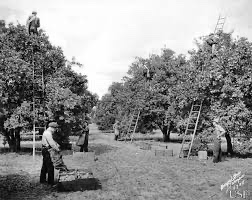
There is a story, repeated by the Orange County Regional History Center and by the Orlando Sentinel, that the freeze "scared some citrus-growing English settlers into skedaddling so fast they left unwashed dishes on the dining room table." Both sources call it legend rather than record. Whether any specific table was actually left set, no one can say. That the groves were abandoned in numbers large enough to generate the legend — that part the harvest figures confirm.
The industry moved south. It had to. The freeze line in December had reached Tampa and the Manatee River Valley, but the groves further inland and further down the ridge had come through in better shape. Among them was a small settlement in southern Polk County called Keystone City.
Keystone City's trees lived. Not all of them, but enough — enough that when the second freeze came in February, the settlement still had fruit on the branch. The local account, carried by The Ledger in 2018, puts it plainly: local citrus groves survived the killer freezes of December 1894 and February 1895, which wiped out commercial citrus in the Northeast Florida heartland at that time.
The town renamed itself Frostproof.
The name was not modesty. It was advertising. A grower looking for new land in 1896 or 1897, holding a railroad map and the memory of a dead grove in Sanford or DeLand, would read the word and stop reading. According to the local history site frostproof.net — a town promotional source, and worth flagging as such — a Frostproof grower sent the only Florida citrus entered in the Atlanta Fair of 1897. Every other grove that might have competed was gone or still recovering.
A man named Carson chose Frostproof for exactly this reason. The Wikipedia entry on the town's history is specific about it: his choice was based on the town's relatively minor damage from the freeze of December 1894. He was not picking a place. He was picking a temperature record.
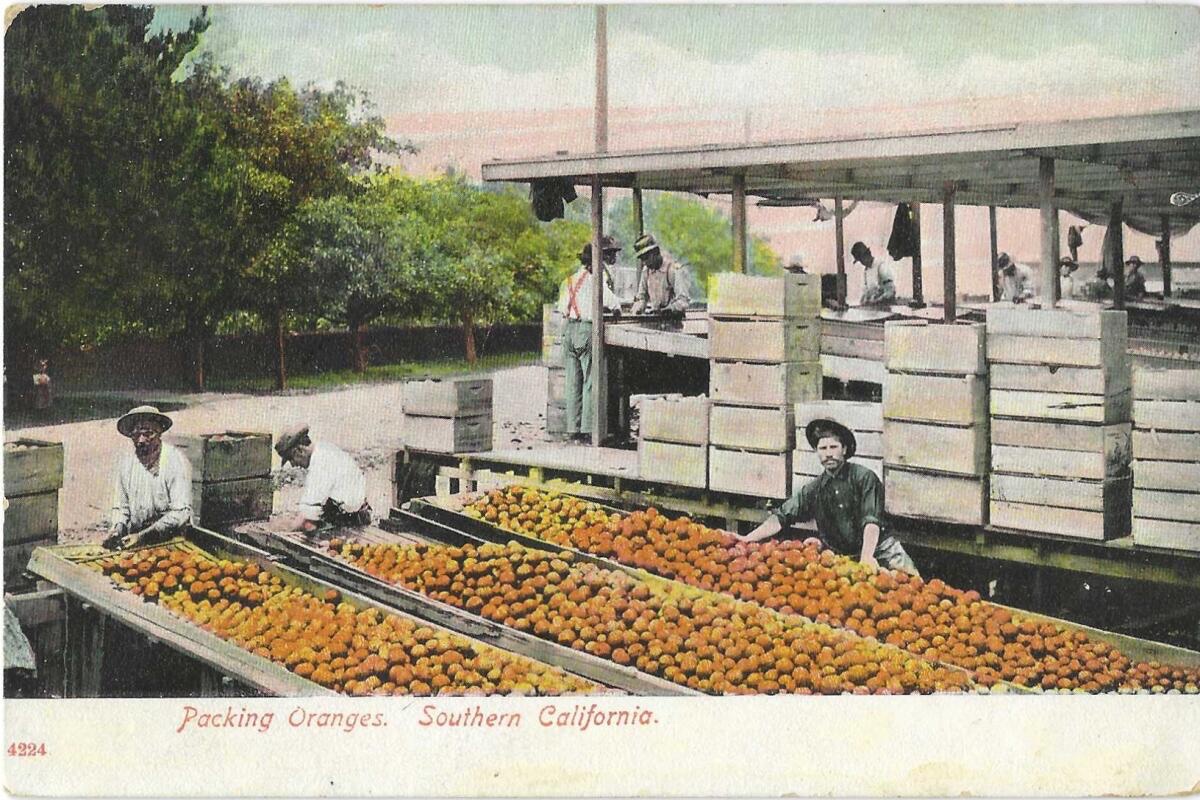
The industry took decades to recover. That is the phrase used by the Volusia County historical society, and it is not a figure of speech — the 1894 production number of five million boxes was not matched again for a long time, and when it was matched, it was matched by groves planted somewhere else. The center of gravity of Florida citrus shifted south along the ridge, into Polk and Highlands and points below, and it stayed there.
Frostproof is still called Frostproof. The town sits on the ridge in southern Polk County, surrounded now by groves that exist because of the decision made by growers who read the name on a map in 1896 and believed it.
The legend about the dishes on the table is probably not literally true. The harvest numbers are.
Five million boxes in 1894. Nine hundred and seventy-five thousand in 1901. Between those two figures sits a warm Christmas, a rainstorm, a morning at eighty-five degrees, and four days.
Presented by

Central Florida is built at the edge of land and water.
Horizon Marine works where that history meets today's lakefront properties — docks, seawalls, shoreline protection, and permitted marine construction across Polk, Osceola, Orange, Hillsborough, and Lake counties. License #SCC131154313.
About Horizon Marine →Orlando Can Keep Walt Disney. We've Got George Jenkins.
George Jenkins arrived in Florida at seventeen with nine dollars and built something Lakeland still lives inside. The story of Publix, told from the city that never let him leave.
Read →
What the Hill Says
The hill that rolls cars uphill seems to have been invented in stages, and most of the people who did the inventing never left a name.
Read →
The Water Underneath
The canals that made Winter Haven famous were dug to haul citrus fruit, and the company that built them went bankrupt in two years
Read →
The Man Who Bought Florida by the Quarter
In 1881, a Pennsylvania saw manufacturer wrote a check to the State of Florida for one million dollars and walked out owning four million acres
Read →
Planning waterfront work in Orlando?
Free waterfront assessment · License #SCC131154313