

April 19, 2026
Bill Dance Fished Your Lakes — The Bass History Behind Polk County's Waterfront
The chain of lakes outside your window has been on national television for over fifty years. Here's the history behind the water you're looking at every day.
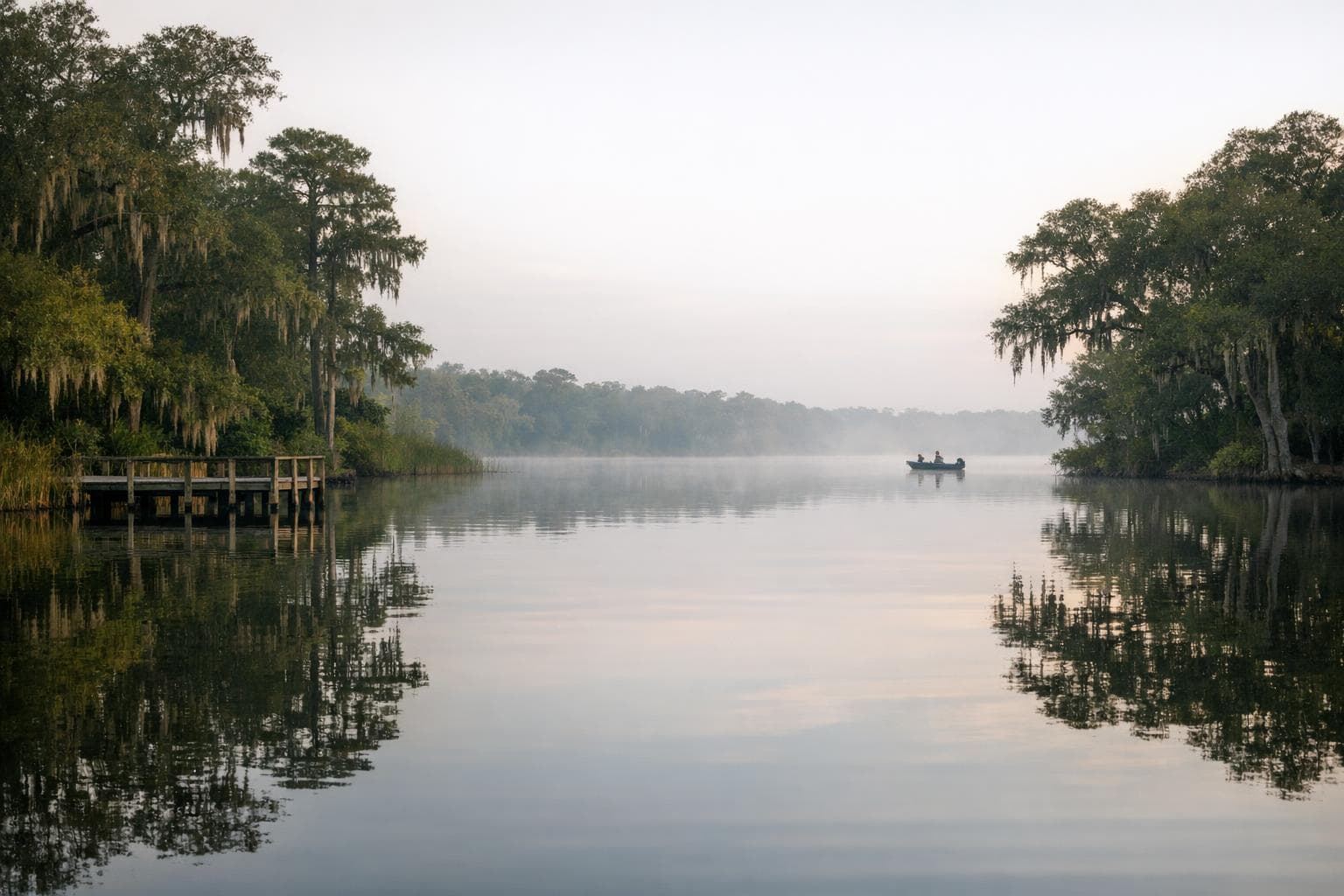
Most people who move to Central Florida don't know that the chain of lakes they're looking at has been on national television for over fifty years. The bass behind their dock — or something its grandparent ate — may have appeared on Bill Dance Outdoors. That's not a promotional claim. It's just true.
William George Dance Jr. was born in Lynchburg, Tennessee in 1940 and spent his childhood wading Mulberry Creek with his grandfather. He was supposed to become a doctor. His father was a physician. His grandfather was a physician. Four generations of Dances had gone into medicine before him, and Bill was enrolled in medical school in Memphis when he came upon a motorcycle accident late one night and was the first person to reach the scene. That was the end of his medical career. "It was very traumatic, and it affected me deeply," he later said. "At that moment I knew I didn't want to be a doctor anymore."
What he wanted to do was fish.
In the summer of 1967, an insurance salesman from Alabama named Ray Scott organized what he called "The Biggest, Most Important Happening in Bass Fishing History" — the All-American Invitational Bass Tournament on Beaver Lake in Springdale, Arkansas. Bill Dance entered, borrowing a 60-horsepower outboard so he could beat everyone off the line at the shotgun start. He took off and threw his worm into the water and, before it hit bottom, a bass struck. That fish — the first bass ever caught in what would become the Bass Anglers Sportsman Society — belongs to Bill Dance. He finished second in the tournament. The winner was a man named Stan Sloan.
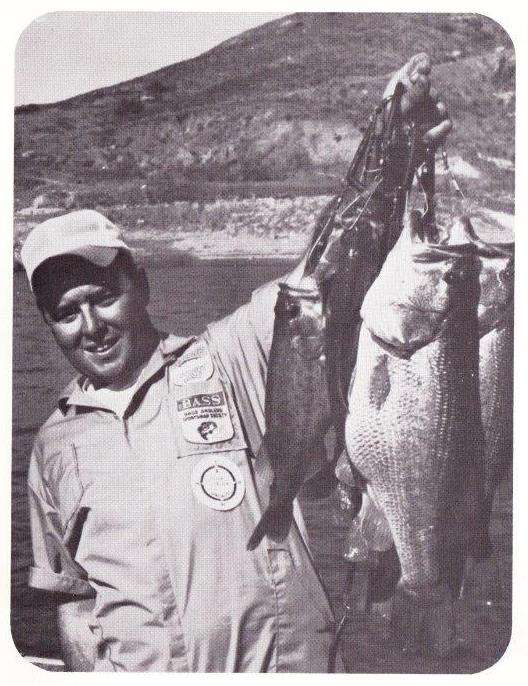 Bill Dance holding bass stringer in early B.A.S.S. tournament, circa late 1960s
Three years later, B.A.S.S. named Dance their first Angler of the Year. He would win the title again in 1974 and 1977. In a fourteen-year competitive career, he won 23 national tournament championships, qualified for eight of nine possible Bassmaster Classics, and finished in the money in 64 of 78 career B.A.S.S. events. He retired from competition in 1980 at the age of 39. Nobody could figure out why he stopped when he did. He had probably just said what he needed to say on the water.
The television show had already started by then. A fishing lure manufacturer that sponsored him in 1968 suggested he ought to start a show to promote their product. Dance agreed, and launched Bill Dance Outdoors on WHBQ, an ABC affiliate out of Memphis. He wore aviator sunglasses and an orange University of Tennessee baseball cap that a football coach named Doug Dickey had sent him as a thank-you note. The hat became the most recognizable piece of headwear in the history of American fishing television. The show ran. It is still running. More than 2,000 episodes over five decades, on ESPN, TNN, Outdoor Life Network, NBC Sports, and others.
And he filmed a lot of them in Central Florida.
The lakes in the Kissimmee Chain — Toho, Kissimmee, Hatchineha and the others — have been a destination for serious bass anglers since before most of the subdivisions on their shores existed. In 1977, when the Bassmaster Classic was hosted for the first time on a lake that wasn't kept secret from the media and public in advance, the venue chosen was the Kissimmee Chain. Rick Clunn won that tournament, claiming his second consecutive Classic title with a three-day total of 27 pounds and 7 ounces in what the records describe as "notoriously tough fishing conditions." The state record bass — 17 pounds, 4 ounces — came from an unnamed lake in Polk County. In 2001, Dean Rojas weighed a single five-bass limit of 45 pounds 2 ounces at Lake Tohopekaliga, a record that still stands.
 Aerial view of Lake Tohopekaliga Kissimmee Florida with lighthouse and marsh grass
Lake Toho sits in Osceola County. But the Kissimmee Chain runs through Polk and Osceola both, and the Winter Haven Chain — twenty-some lakes connected by canals in the heart of Polk County — has been producing double-digit bass since before anyone was keeping records. This is the water that Bill Dance was fishing when the cameras were rolling and America was watching on Saturday mornings.
None of that makes the fishing better for you today. What it means is that the lakes outside your window have been looked at carefully, for a long time, by people who understood what they were seeing. The Florida-strain largemouth bass is a different animal from the fish Dance grew up chasing in Tennessee — bigger, slower to grow, more sensitive to the particular rhythms of a warm-water ecosystem that doesn't have a real winter. The guides who work Toho and Kissimmee and Walk-in-Water will tell you the fish move differently here than anywhere else. You can't simply apply what you learned somewhere else and expect it to translate.
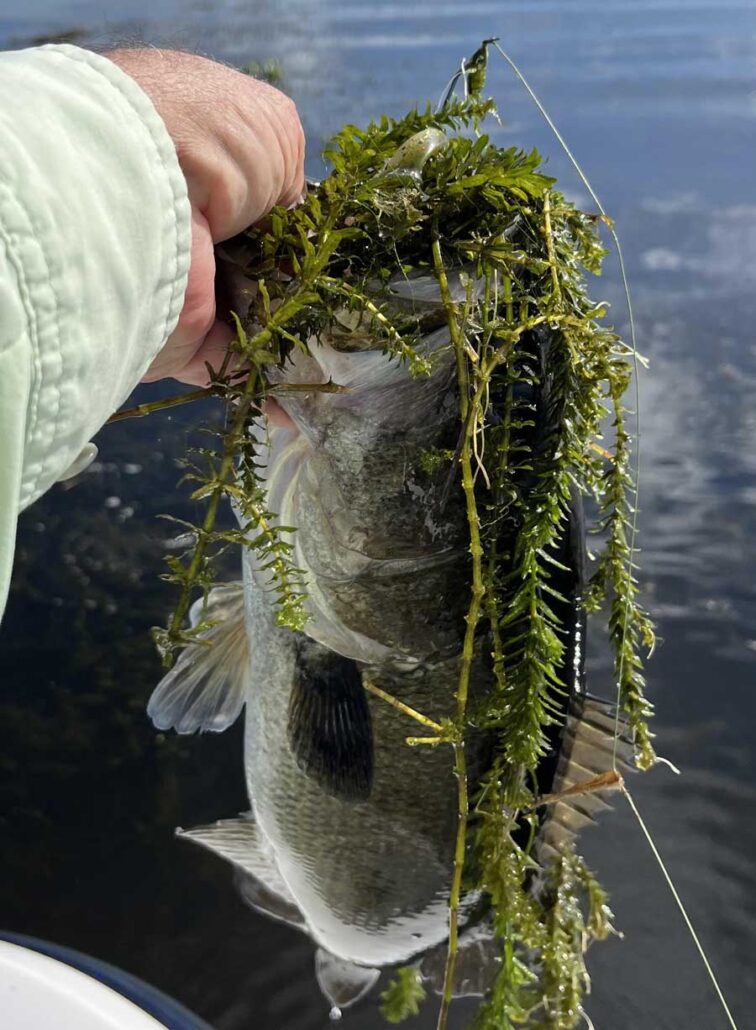 Florida largemouth bass pulled from hydrilla mat on Central Florida lake
Dance understood that. His television show was built on the idea that local knowledge matters — that you need to know what the fish are doing in this water, right now, not what the fish were doing last week somewhere else. That's why the show ran for fifty-seven years. He was teaching people to pay attention.
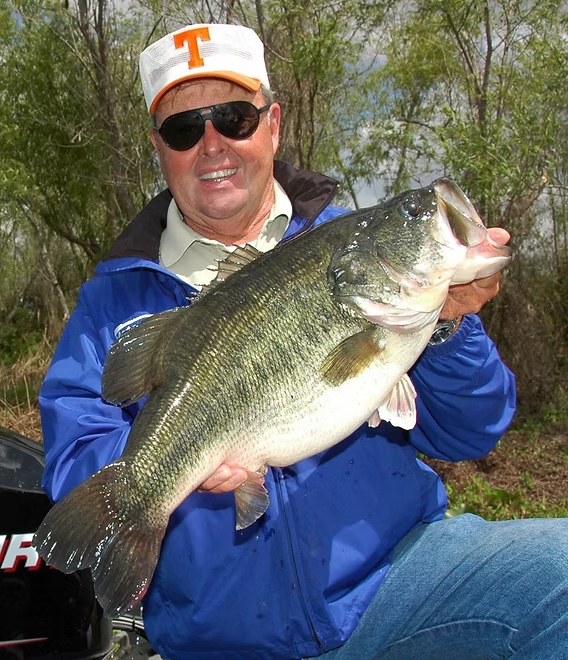 Bill Dance holding large Florida-strain largemouth bass wearing orange University of Tennessee cap
The people who live on these lakes now mostly aren't anglers. They bought waterfront property because the water is there and it's beautiful and it connects them to something that moves. That's a perfectly good reason. But the water they're looking at is the same water that produced some of the largest largemouth bass ever weighed in the history of organized competitive fishing. That history doesn't go away just because the neighborhood went in.
While We're Here
Lakeland's own Joe Niekro won 221 games in the major leagues and pitched in a World Series. What fewer people know is that he also had a fishing show, filmed on the same Central Florida lakes Bill Dance made famous. It never found a wide audience. But the people who lived here knew the other half of the story: he was just as good skipping a bait underneath overhanging live oaks as he was confounding MLB batters.
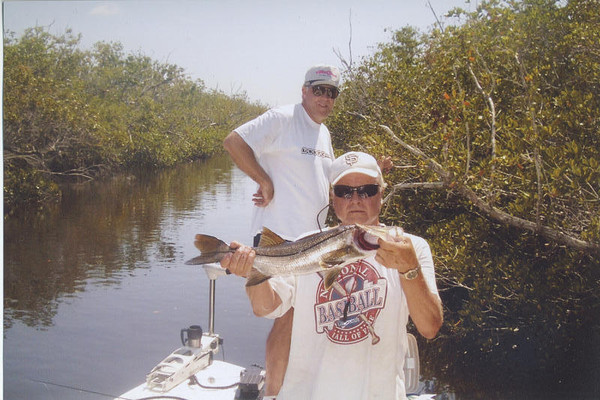 Joe Niekro holding snook in Florida mangrove channel, Central Florida fishing trip
Some places just do that to people.
Presented by

Own waterfront in Mulberry?
Lake history is interesting. Shoreline conditions are practical. Horizon Marine builds docks, seawalls, and shoreline protection on Mulberry's lakes — and gives a straight answer on what your property actually needs.
Moon Lake, New Port Richey: The Foot and a Half That Doubles the Lake
Between 38.2 and 39.6 feet, Moon Lake grows from about 105 acres to 193 — the extra water standing in a 95-acre cypress swamp that a raised road cut off from the lake, and that now sets the lake's legal minimum level
Read →
Lake Eva, Haines City: Sixty Years of Piped Stormwater
For roughly sixty years the centerpiece of Haines City's signature park was fed the runoff of city streets — and it took a chemical pump and a state grant to start pulling it back
Read →
Moon Lake, New Port Richey: The Four Miles of Roses in the Pine Flats
In the 1930s a Clearwater hotel man ringed a Pasco County lake with 35,000 rose bushes and four miles of blooms, and drew Rex Beach and a Vanderbilt to a dude ranch in the pine flats
Read →
Lake John, Lakeland: The Lake a Dragline Left Behind
The 99-acre lake behind the ballfields at Curtis Peterson Park in Lakeland wasn't shaped by any river — it's water sitting in ground a phosphate dragline emptied out in the 1950s
Read →
Planning waterfront work in Mulberry?
Free waterfront assessment · License #SCC131154313